How Portugal Play at the 2026 World Cup

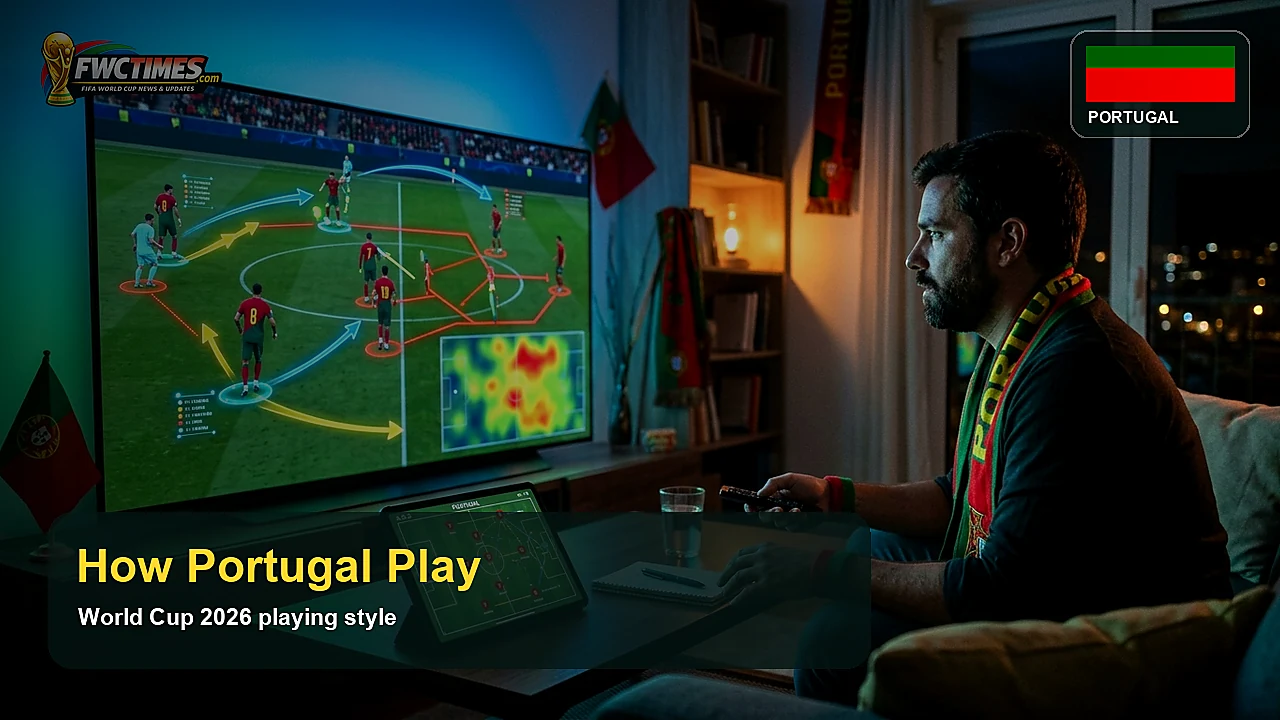
The Portugal playing style World Cup 2026 approach runs on a possession-heavy system installed by head coach Roberto Martinez. Martinez has designed the tactical framework to maximize the squad’s technical midfield depth and wide attacking speed. In fact, Portugal focuses on controlling the tempo of matches, using sustained possession to break down compact blocks. This tactical setup aims to dominate the middle third while releasing wingers into space.
This campaign presents a significant test of Martinez’s tactical flexibility. The coaching staff shifts between a vertical 4-3-3 and a compact 3-4-2-1 back-five shape depending on the opponent. This shape-shifting allows Portugal to adapt to match situations without losing their possession identity. As a result, the squad remains highly balanced in both attack and defense.
The physical load of the 104-match schedule requires careful player management. Playing in the North American heat makes constant high-intensity pressing unsustainable for the players. Martinez uses possession dominance as a defensive shield, forcing the opponent to run while Portugal recycles the ball. This recovery focus is what keeps Portugal among the tournament favorites.
Martinez’s Flexible Tactical Systems
Roberto Martinez has installed two primary shapes to manage Portugal’s rich player roster. The team defaults to a vertical 4-3-3 that prioritizes attacking width and central midfield triangles. When facing transition-heavy opponents, Martinez shifts the squad into a structured 3-4-2-1 back-five shape. This system provides defensive stability while allowing the wing-backs to push high.
In both shapes, the priority remains controlling the rhythm of the match. The defenders build play patiently from the back, with Ruben Dias acting as the central organizer. This approach draws the opponent’s press forward, opening passing lanes into the midfield. The 4-3-3 formation World Cup guide shows how this shape compares to other possession systems.
Cristiano Ronaldo’s Role at Age 41
Cristiano Ronaldo remains a central figure in Portugal’s attacking plans at the age of 41. Martinez utilizes Ronaldo as an elite box finisher, relying on his legendary movement and clinical touch in the area. His presence alone drags centre-backs deep, opening channels for the advanced midfielders. Ronaldo also acts as a mental leader and role model for the squad.
The tactical integration of a 41-year-old striker presents specific challenges for the coaching staff. Critics argue that Ronaldo’s static positioning makes the attack predictable and reliant on crosses. Younger options like Rafael Leao and Pedro Neto provide more vertical speed on the counterattack. Martinez must balance Ronaldo’s finishing instincts with the need for high-pressing transitions.
The Midfield Engine of Fernandes and Vitinha
The central midfield carries the operational weight of Portugal’s possession system. Bruno Fernandes acts as the primary creative engine, playmaking in the pockets of space behind the strikers. Fernandes links the play and delivers high-quality passes into the final third. His vision is what unlocks compact low blocks during sustained possession.
Vitinha operates next to him as the technical pivot, controlling the rhythm and recycling the ball. Alongside Joao Neves, Vitinha ensures the team keeps possession under pressure. This midfield control is what allows Portugal to dictate match conditions. The possession football World Cup guide explains how midfield pivots control matches.
Winger Threat with Leao and Neto
Rafael Leao and Pedro Neto provide the raw speed and direct threat on the flanks. Leao plays on the left wing, using his dribbling to challenge fullbacks in 1v1 situations. Neto operates on the right, stretching the opponent’s defensive line to create space centrally. Both wingers sprint forward in transition, providing immediate width.
This wide threat prevents the opponent’s block from sitting too narrow. When the wingers stretch the defense, Fernandes and Vitinha find space to drive forward. This combination of wide speed and central playmaking is Portugal’s primary attacking weapon. The high press World Cup guide explores how pressing teams defend against these wide overloads.
Key Vulnerabilities of the Portuguese System
The biggest tactical risk is Portugal’s vulnerability to counterattacks when the press fails. Because the fullbacks and midfielders push high to support possession, the centre-backs can be left exposed. Rúben Dias must coordinate the defensive line perfectly to intercept long passes. Fast transition teams look to exploit these wide channels before Portugal can recover.
The team’s reliance on crossing when Ronaldo plays is another concern. If opponents block the wide delivery channels, the attack can become stagnant. Portugal must keep their play vertical, utilizing central combinations to create chances. This tactical variety is essential for breaking down disciplined low blocks.
Expert Verdict
Portugal enters the 2026 World Cup with one of the most technically complete squads in the field. Martinez has built a possession system that can dictate play against any opponent. The flexible shapes and the Fernandes-Vitinha midfield give Portugal a championship floor. The key to their campaign will be managing Ronaldo’s integration without slowing their transition speed.
If they can balance their possession control with fast vertical play, Portugal will reach the final rounds. The squad has the depth to handle the physical load of the long schedule. Martinez’s tactical adjustments in knockout matches will decide their ceiling. Portugal is built to dominate, and they have the tools to win.