World Cup Dark Horses: Five Contenders to Watch

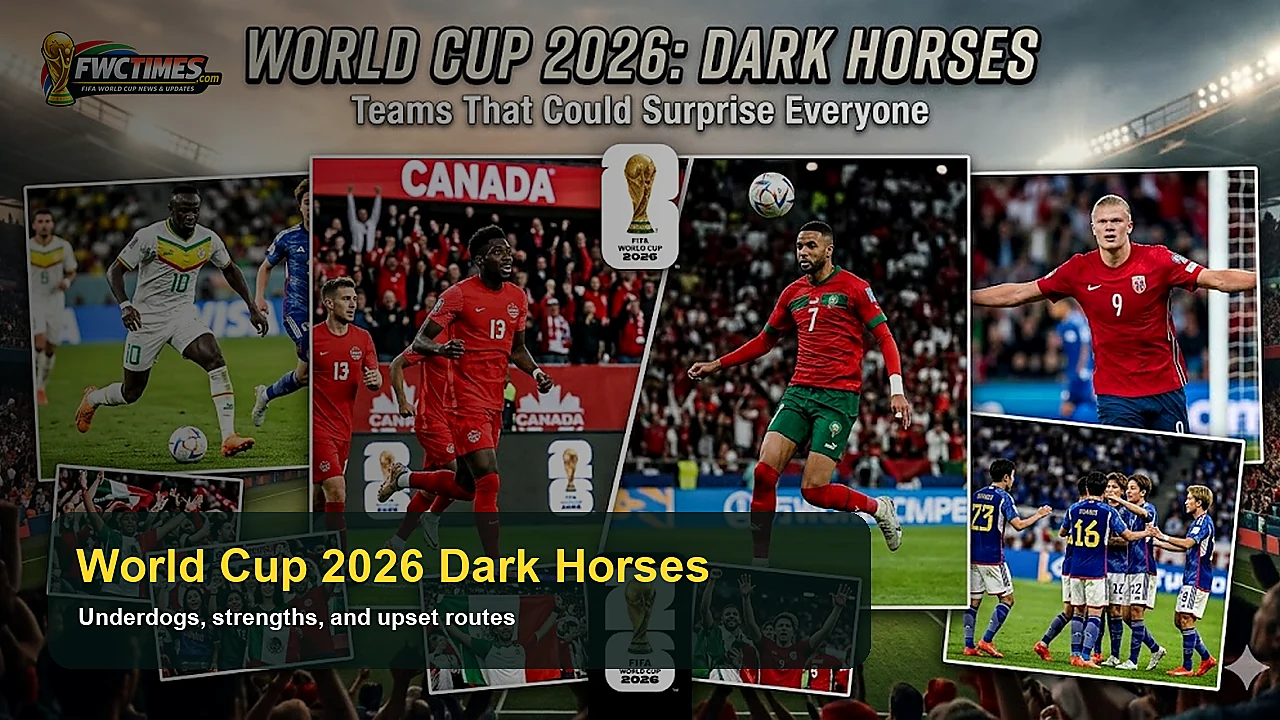
The top World Cup dark horses combine tactical flexibility, elite individual creators, and defensive discipline to challenge the tournament favorites. These non-traditional powerhouses can capitalize on expectations pressure that burden teams like France and Argentina. In fact, historical tournaments show that structured outsiders frequently disrupt the knockout brackets with well-planned systems. Studying these dark horses reveals which teams are built to survive the grueling tournament path.
Many digital publishers focus exclusively on squad valuations when predicting the champion. This focus ignores the value of tactical coordination and team chemistry under intense pressure. So we must examine how these outsiders organize their blocks and manage transition phases. The expanded format of the FIFA World Cup 2026 will test squad depth and recovery stamina.
Defining the Best World Cup Dark Horses
A dark horse is more than an underdog team that hopes for a lucky bounce. They possess a defined, repeatable tactical method that can neutralize elite possession-heavy systems. On top of that, they have players with top-tier club experience who understand high-stakes matches. This combination of system and experience is what makes them dangerous opponents.
Top Five Contenders to Shock the Tournament
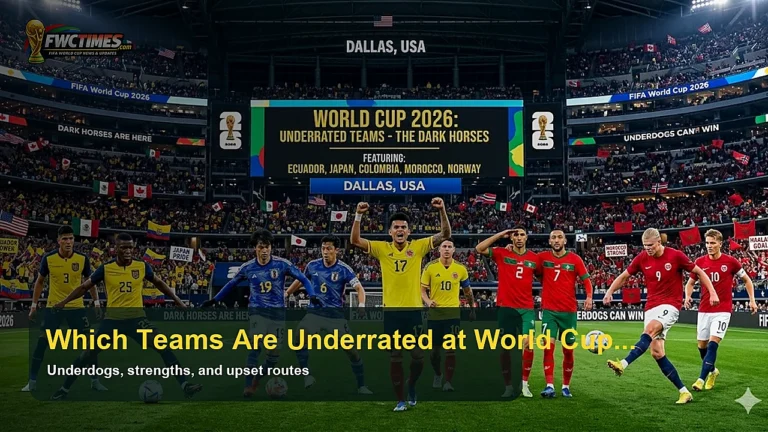
We evaluate five nations that enter the tournament with the systems needed to cause major upsets. Their tactical profiles show a high potential to advance deep into the knockout rounds. These teams represent the most dangerous outsiders in the competition.
Colombia’s Unbeaten Momentum
Colombia enters the tournament with massive confidence after an exceptional CONMEBOL qualifying campaign. Under manager Néstor Lorenzo, the squad balances attacking flair with defensive responsibility. The system utilizes Luis Díaz’s vertical speed and James Rodríguez’s precise delivery to unlock compact defenses. This tactical balance makes Colombia one of the most feared World Cup dark horses.
Japan’s High-Tempo System
Japan relies on collective discipline and high-tempo vertical transitions to overwhelm opponents. Hajime Moriyasu has drilled his players to switch shapes fluidly between a 3-4-3 and a 5-4-1 block. Takefusa Kubo provides individual quality in wide areas, creating numerical advantages on the counter. Their tactical maturity makes them a massive threat to any possession-based favorite.
Austria’s Counter-Pressing Machine
Austria utilizes Ralf Rangnick’s Gegenpressing philosophy to choke opponent build-up play in central areas. Their narrow mid-block forces midfielders to make rushed decisions, generating turnovers close to goal. Marcel Sabitzer coordinates these pressing triggers, ensuring the team steps up as a single unit. This high-intensity approach is extremely difficult to play against in short tournament formats.
Uruguay’s Intense Pressure
Uruguay plays a high-energy pressing system under the demanding style of Marcelo Bielsa. The squad relies on Darwin Núñez’s vertical runs and Federico Valverde’s engine in central midfield. They apply constant man-to-man pressure across the pitch, forcing technical opponents into physical duels. This intense physical approach can wear down favorites over ninety minutes.
Ecuador’s Rigid Defense
Ecuador combines physical superiority with a highly structured 4-3-3 shape to secure clean sheets. Their defensive system focuses on central compactness, anchored by the covering runs of Moisés Caicedo. They drop into a compact mid-block and exploit wide spaces during transition phases. This defensive organization makes Ecuador one of the hardest sides to break down.
Key Statistics of the Dark Horses
Qualifying statistics demonstrate the tactical efficiency of these five non-favorites. Their defensive discipline and attacking returns show they can compete with the elite. These numbers highlight why they present a significant challenge to top seeds.
| Nation | Qualifying Record | Tactical System | Primary Strength |
|---|---|---|---|
| Colombia | Second in CONMEBOL | Flexible 4-2-3-1 | Set-piece delivery |
| Japan | AFC leaders | Flexible 3-4-3 | Wide overloads |
| Austria | Qualifying runner-up | Narrow 4-2-2-2 | Gegenpressing regains |
| Uruguay | Bielsa man-marking | Aggressive 4-3-3 | Midfield engine |
| Ecuador | Solid block | Compact 4-3-3 | Transition speed |
These numbers show that these squads possess the structural maturity needed for tournament success. They enter the group stages with clear tactical designs. As a result, they represent high-value contenders that can disrupt the standard tournament predictions.
Tactical Challenges for Out-of-Possession Systems
The biggest obstacle for these dark horses is maintaining energy across an expanded schedule. Finalists must complete eight matches, which places extreme physical demands on squad depth. So high-pressing systems like Austria and Uruguay risk late-tournament fatigue or muscle injuries. Coaches must rotate their midfields effectively to preserve their tactical intensity.
Another vulnerability is the reliance on a few key individuals for creative output. If opponents isolate James Rodríguez or Takefusa Kubo, these teams can struggle to score. Unlike the deepest favorites, they lack world-class backups to replace injured playmakers. So tactical adaptability will decide if they can survive deep knockout matches.
Expert Verdict
Colombia represents the best-positioned dark horse to reach the later stages of the 2026 tournament. Néstor Lorenzo’s system matches tactical discipline with the creative flair needed to win tight games. If their central defenders avoid individual errors, they can reach the semi-finals. Still, they must maintain composure when favorites dominate possession phases.
Japan will also surprise teams due to Hajime Moriyasu’s flexible defensive shapes. Their ability to switch systems during matches will confuse opponent game plans. Yet they must improve their finishing efficiency inside the box. The dark horse that balances physical recovery with tactical discipline will progress the furthest.
Frequently Asked Questions
Who are the top dark horses for World Cup 2026?
Colombia, Japan, Austria, Uruguay, and Ecuador are the top dark horses to watch. Colombia enters on an unbeaten qualifying run, while Japan uses a highly flexible 3-4-3 shape. Austria relies on Ralf Rangnick’s Gegenpressing style. Uruguay plays with Bielsa’s high-intensity man-marking, and Ecuador boasts central defensive solidity.
Why is Colombia considered a strong dark horse?
Colombia is considered a strong contender due to their balanced system under Néstor Lorenzo. They combine defensive solidity with the creative talents of James Rodríguez and Luis Díaz. The squad has demonstrated tactical resilience, going undefeated across highly competitive CONMEBOL qualifying matches. Their set-piece delivery gives them an extra scoring weapon.
How does Japan’s tactical system work?
Japan utilizes a flexible 3-4-3 shape that focuses on high-tempo pressing and wide overloads. Under Hajime Moriyasu, the team can shift to a compact 5-4-1 block when defending deep. Their players coordinate their movements to trap opponents and launch rapid vertical counter-attacks. Takefusa Kubo provides the individual creativity to break down defensive blocks.
What challenges do dark horses face in the expanded format?
The primary challenge is surviving the physical demands of playing eight matches to reach the final. Teams that play high-intensity pressing styles risk fatigue and injury to key players. Unlike the favorites, dark horses lack deep rosters to replace their world-class starters. So squad rotation and physical recovery are critical tournament factors.