World Cup 2026 Referees: Official Selection Guide

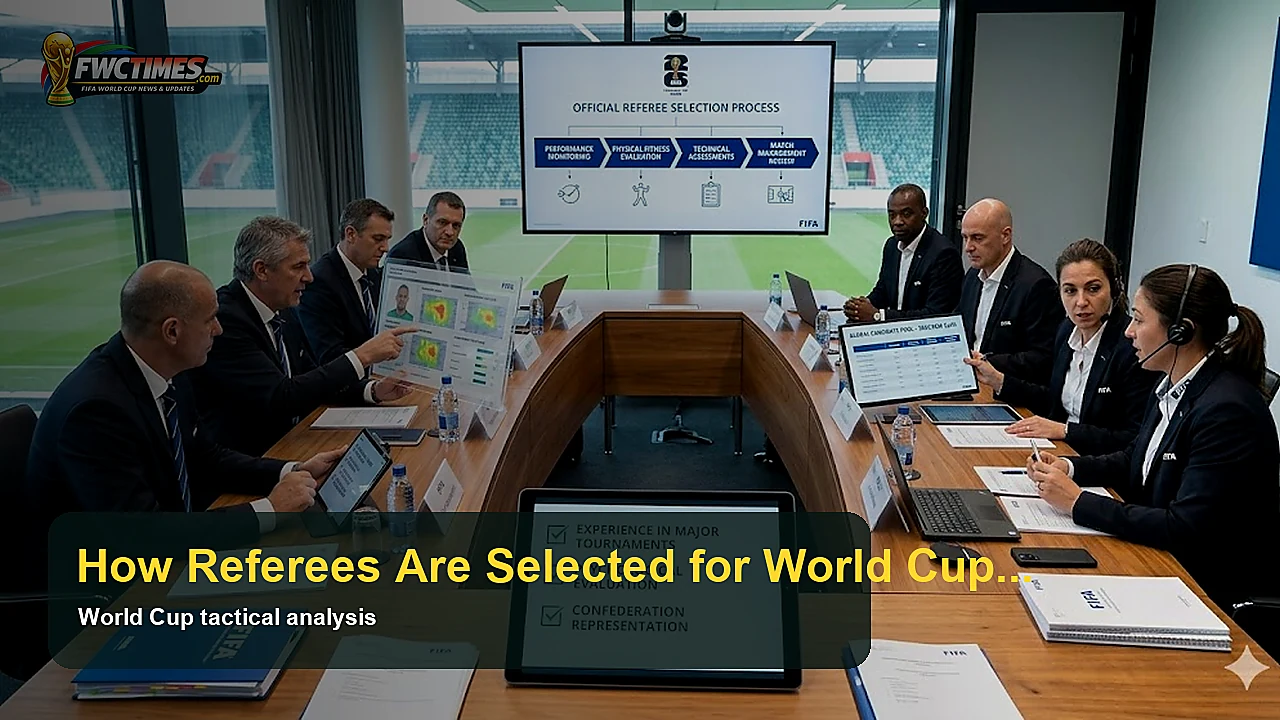
The World Cup 2026 referees selection process is a three-year undertaking by the FIFA Referees Committee to ensure elite officiating. On April 9, 2026, FIFA officially announced the final cohort of match officials tasked with managing the expanded tournament. In fact, the committee selected 170 total officials from all six football confederations, representing 50 different member associations. This tactical guide breaks down the selection criteria, preparation, and guidelines for the match officials.
The physical load of the expanded 104-match schedule places extreme physical demands on the refereeing team. Running multiple games across differing altitudes in Mexico and summer heat in the United States requires elite physical conditioning. As a result, the selected officials participated in intensive fitness seminars, medical screenings, and psychological evaluations. This physical preparation ensures that referees can maintain mental focus and position proximity throughout 90 minutes.
The history of the tournament shows that consistent officiating is essential for maintaining match flow and player safety. FIFA has updated guidelines for the 2026 tournament, focusing on combating time-wasting and protecting key creative players. The coaching staff of many nations must adapt their tactics to accommodate stricter refereeing interpretations on restarts and substitutions. The selected officials enter the group stage having completed specialized preparatory courses to align their standards.
The Official Refereeing Cohort of 170 Officials
FIFA Referees Committee finalized the selection on April 9, 2026, following a three-year monitoring phase of candidates in domestic leagues. The final cohort of 170 match officials consists of 52 Referees, 88 Assistant Referees, and 30 Video Match Officials (VMOs). This selection follows a quality first principle, monitoring candidate performances in domestic and continental matches. The officials represent a global pool, ensuring representation across all confederations.
The selected referees participate in practical training sessions utilizing local youth teams to simulate active match scenarios. This training allows officials to practice positioning, visual angles, and communication with Assistant Referees and VMOs. The World Cup 2026 Officiating guide explores how these officials coordinate their decisions utilizing advanced video systems. The cohort includes experienced leaders who have managed Champions League and Copa Libertadores finals.
Stricter Guidelines on Time-Wasting and Restarts
The selected referees have received strict instructions to combat time-wasting and maintain a high tempo of play. FIFA has introduced a visible five-second countdown for goal kicks and throw-ins to prevent players from delaying restarts. If the ball is not in play by the end of the countdown, possession is awarded to the opponent. The best managers World Cup 2026 rankings show how coaches adapt their team setups to these stricter countdown rules.
Referees must also enforce the new ten-second substitution exit rule, requiring substituted players to leave the pitch immediately. If a player delays, the referee can issue a yellow card. The official will add the lost time to the half. The 2026 Tactical Trends guide explains how these anti-time-wasting rules affect team strategies. Referees will also enforce the one-minute treatment rule for injured players to stop simulated injuries.
Official Selection Statistics
The selection details demonstrate the global representation of the officiating team. These officials have been monitored across three years of continental competitions. They enter the tournament with extensive international experience.
| Official Role | Count | Selection Focus | Monitoring Period | | :— | :—: | :— | :—: | | **Referees** | 52 | On-Field Game Control | 3 Years | | **Assistant Referees** | 88 | Offside & Touchline Support | 3 Years | | **Video Match Officials** | 30 | VAR and Review Room | 3 Years | | **Total Officials** | 170 | Global Match Management | 3 Years |
This data shows that FIFA has assembled a highly trained cohort to manage the expanded tournament. The officials enter the group stage with a clear understanding of the committee’s technical requirements. This uniform interpretation of the rules is essential for ensuring fair competition.
Key Challenges Facing the Referees
The biggest challenge facing the referees is maintaining consistent decision-making across the 104 matches of the tournament. With different confederations utilizing varying styles of play, officials must adapt to different physical contact levels. Referees must protect creative players from persistent fouling without disrupting the flow of the game with excessive whistles. This balance requires excellent reading of the game and tactical awareness from the on-field official.
Referees also face a physical challenge when managing matches in high-altitude stadiums. The reduced oxygen capacity affects recovery times, making it harder for the referee to remain close to the action. If a referee falls behind the play, their visual angle is compromised, increasing the risk of incorrect calls. The USA coaching change guide shows how physical preparation affects performance levels at high altitudes.
Expert Verdict
The World Cup 2026 referees cohort represents the most prepared officiating team in tournament history. FIFA has focused on physical fitness and uniform technical interpretations to ensure consistent game management. The inclusion of 30 specialized Video Match Officials will provide critical support during high-variance situations. The key to successful officiating will be the strict enforcement of the five-second countdown rules.
If the officials establish control early, they will prevent matches from becoming overly physical. The opening group stage fixtures will set the standard for contact levels and time-wasting enforcement. Coaches who prepare their players to respect the ten-second substitution rule will avoid cheap disciplinary sanctions. FIFA has provided the tools for consistent officiating, but the referees must execute these guidelines under pressure.