Overrated Teams World Cup: Major Contenders Analyzed

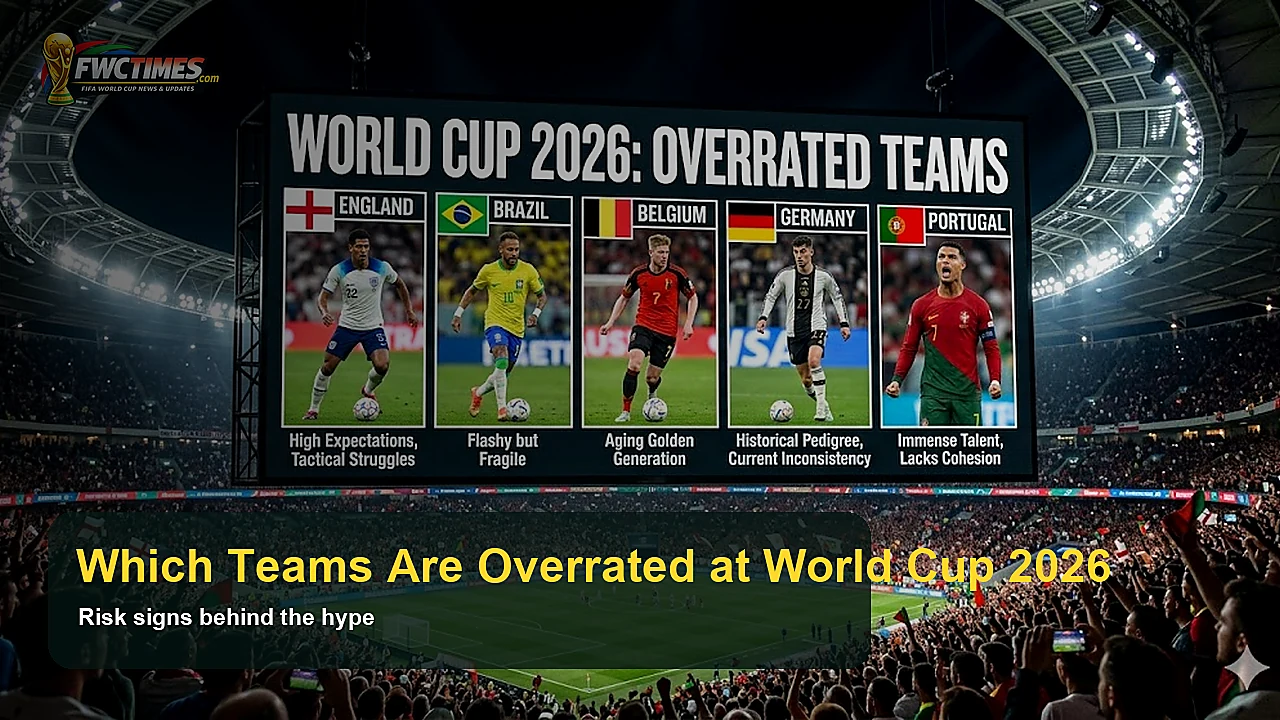
The most overrated teams World Cup contenders carry major tactical flaws that are hidden by their star-studded rosters. Traditional powerhouses like England, Brazil, and Belgium enter the tournament with massive expectations from fans. Yet their structural weaknesses make a deep knockout run highly unlikely. Analyzing these vulnerabilities shows why reputation alone does not win trophies.
Many digital publishers focus only on individual player values when predicting tournament success. This approach ignores the tactical coordination required to survive intense international matches. So we must examine how these squads handle transitions, defensive organization, and opponent low blocks. A team with world-class players can still fail if the manager cannot build a cohesive system.
What Makes a Team Overrated?
A squad becomes overrated when public perception runs ahead of tactical reality. Fans look at club trophies and assume those performances will transfer to the national team. Yet international football features less training time and fewer automatic player relationships. As a result, teams with elite individuals often struggle to break down compact defensive structures.
Tactical Analysis of the Most Overrated Teams World Cup Contenders
We analyze the specific tactical reasons why these major nations might struggle to reach their targets. Their issues range from defensive transition vulnerabilities to structural imbalance in midfield. Examining these factors reveals why reputation alone cannot secure the trophy.
England under Thomas Tuchel
England enters the tournament as one of the favorites due to their talented attacking roster. Yet manager Thomas Tuchel has shifted the team toward a rigid, tournament-oriented defensive shape. This system prioritizes structural security but often sacrifices the creative freedom of their best players. So the team could struggle to break down low blocks in the knockout rounds.
Tuchel has also made controversial squad selections, omitting creative players in favor of high-intensity runners. This choice puts immense pressure on a few individuals to generate goalscoring chances. If opponents neutralize their primary creators, England lacks the tactical variety to adjust. Their predictable build-up play makes them a high-risk contender despite their star names.
Brazil’s Defensive Transition Woes
Brazil remains a legendary name but they face a difficult tactical transition under Carlo Ancelotti. The manager has experimented with a fluid shape that resembles a 4-2-4 formation in possession. This setup creates numerical overloads in attack but leaves the midfield completely exposed. So opponents can easily exploit the space behind the attackers during transitions.
Brazil also lacks elite depth at the fullback positions to support this aggressive system. Their defenders must cover massive horizontal spaces when the midfield pivot gets dragged forward. Since they struggle to manage these wide areas, they concede high-value chances on the counter. Their attacking flair might not compensate for this severe defensive fragility.
Belgium’s Fragile Transition Phase
Belgium’s status as a top team persists even though their golden generation has faded. Under manager Rudi Garcia, the team plays a high-tempo 4-2-3-1 system that invites chaotic transitions. This direct approach leads to entertaining matches but exposes their inexperienced central defenders. Since they lack defensive coordination, they struggle against structured pressing systems.
The squad relies heavily on aging stars like Kevin De Bruyne to control match tempo. If opponents press him aggressively, the entire attacking structure breaks down. On top of that, their bench lacks the pedigree to rescue matches when the plan fails. They represent a highly volatile side that could exit early.
Portugal’s Tactical Identity Crisis
Portugal possesses some of the best technical depth in international football. Yet they lack a clear tactical identity, often looking less than the sum of their parts. The main challenge is balancing the team’s shape around Cristiano Ronaldo’s fixed position. His presence forces the midfielders to play predictable crosses rather than utilizing fluid central combinations.
When they play without a fixed focal point, Portugal’s attack looks far more dangerous. Yet the coaching staff remains hesitant to drop the forward for big matches. This hesitation creates tactical compromise that slows down their build-up play. So structured opponents can easily defend against their predictable attacking patterns.
Team Comparison and Key Vulnerabilities
We summarize the primary tactical concerns facing these overrated teams World Cup contenders. These flaws must be resolved before the tournament starts. Each team faces a unique challenge to balance their roster.
| Team | Coach | Tactical System | Primary Weakness |
|---|---|---|---|
| England | Thomas Tuchel | Rigid 4-2-3-1 | Lack of creative variety |
| Brazil | Carlo Ancelotti | Fluid 4-2-4 | Defensive transitions |
| Belgium | Rudi Garcia | Direct 4-2-3-1 | Central defensive depth |
| Portugal | Roberto Martinez | Fixed Attacking Shape | Predictable build-up |
These weaknesses show that even the most valuable squads face significant structural issues. Coaches must find a balance between attacking talent and defensive stability. As a result, the group stage matches will quickly expose which systems are fragile.
Expert Verdict
England remains the most overrated contender due to the clash between squad profile and tactical style. Thomas Tuchel’s rigid structure will limit their attacking potential against deep defensive lines. While they will cruise through the group stage, they will struggle against elite opponents. Brazil faces similar risks if Carlo Ancelotti does not solve their transition defense.
The key tactical trend of the tournament will be the triumph of structure over individual reputation. Teams with clear zonal discipline and balanced shapes will progress further than disjointed star rosters. So we expect several major nations to exit before the semi-finals. Pragmatism and physical fitness will ultimately decide the champions in the North American summer.
Frequently Asked Questions
Why is England considered overrated?
England is considered overrated because their rigid tactical structure under Thomas Tuchel limits their creative freedom. The system focuses heavily on defensive stability, which can make their build-up play predictable. Critics also point to controversial squad selections that omit creative midfielders. So they struggle to break down compact tournament low blocks.
What is Brazil’s biggest tactical flaw?
Brazil’s biggest tactical flaw is their vulnerability in defensive transitions under Carlo Ancelotti. The team’s fluid attacking shape often leaves the central midfield exposed. On top of that, they lack elite depth at the fullback positions to defend wide areas. This imbalance allows organized opponents to launch dangerous counter-attacks.
How does Portugal’s system limit their squad potential?
Portugal’s system is limited by the tactical compromise of playing Cristiano Ronaldo as a fixed focal point. This setup restricts their movement and makes their attacking patterns highly predictable. Their technical midfielders look far more fluid when utilizing interchanging forward lines. Yet the coaching staff remains hesitant to change this structure.
Can an overrated team still win the World Cup?
Yes, an overrated team can win if they adapt their system during the tournament. Knockout football is highly unpredictable and often turns on single moments of individual quality. If a manager makes correct tactical adjustments, they can overcome their initial flaws. Still, their path is far more difficult than public reputation suggests.