Underrated Teams World Cup: Five Sides to Watch

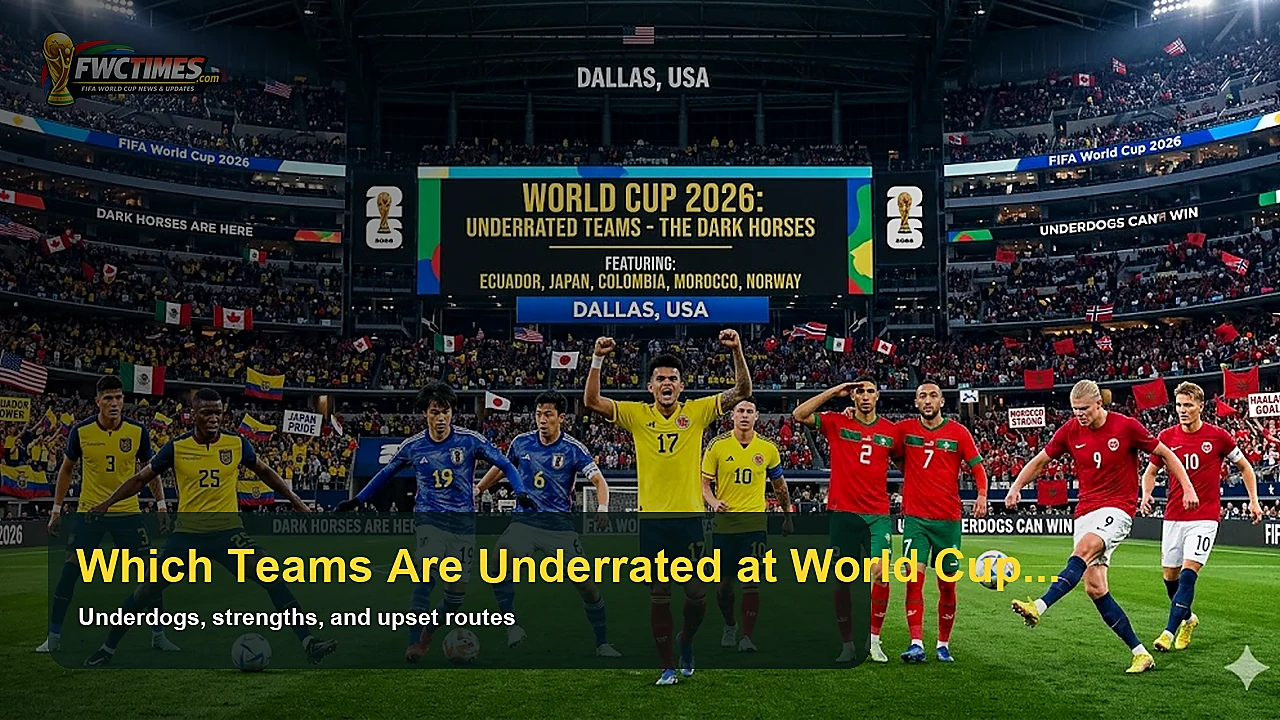
The most underrated teams World Cup contenders combine tactical cohesion and unique systemic strengths to challenge traditional football powers. While global headlines focus on the highly valued favorites, several outsiders enter the tournament with elite coordination. These squads possess established playing styles that can neutralize star-studded opponents in the knockout stages. Studying these dark horses reveals which teams might cause the biggest tournament upsets.
Many commentators rely on squad valuations to predict success in international matches. This focus ignores how a unified tactical plan can overcome individual talent gaps. So we must examine the specific systems of the most dangerous outsiders in the competition. The expanded tournament format will reward teams that execute their tactical patterns with high discipline.
What Defines the Best Underrated Teams World Cup Candidates?
The most dangerous outsiders are characterized by a single, highly refined tactical mechanism. They do not try to dominate every phase of the match. Instead, they master one specific style, such as high-intensity pressing or zonal low blocks. This clarity of purpose allows them to perform consistently under extreme tournament pressure.
Detailed Tactical Breakdown of Underrated Teams World Cup Contenders
We analyze five national teams that possess the tactical tools to surprise the favorites. Each squad has a clear route to success based on their recent qualifying campaigns. Our breakdown explains the mechanisms that make them dangerous.
Colombia’s Tactical Revival
Colombia enters the tournament on a long unbeaten run under manager Néstor Lorenzo. Their fluid system blends individual creativity with strict defensive positioning. Luis Díaz provides direct vertical threat on the flank, while James Rodríguez orchestrates the tempo from central spaces. This balanced structure makes Colombia a highly dangerous knockout opponent.
Morocco’s Compact Low Block
Morocco remains one of the hardest teams to break down in international football. They drop into a narrow zonal block, compressing the space between their defensive lines. Fullbacks Achraf Hakimi and Noussair Mazraoui balance defensive protection with rapid attacking outlets. Their transition efficiency allows Morocco to threaten opponents without dominating possession.
Japan’s Organized Pressing Wave
Japan uses a flexible 3-4-3 shape that relies on collective running and wide overloads. Under Hajime Moriyasu, they coordinate their pressing triggers to trap opponents in wide areas. Creative attackers like Takefusa Kubo exploit these regains to attack the box directly. Their experience in major European leagues provides the tactical maturity needed for deep tournament runs.
Austria’s Counter-Pressing Machine
Austria plays a high-intensity Gegenpressing style under the guidance of Ralf Rangnick. They deploy a narrow mid-block to choke opponent build-up play in the central third. Midfielders like Marcel Sabitzer initiate these pressing triggers, forcing quick turnovers near the opponent’s box. This aggressive system prevents favorites from establishing their preferred possession rhythm.
Ecuador’s Physical Solidity
Ecuador combines physical dominance with a structured 4-3-3 shape to control matches. Their defensive block focuses on central compactness, led by the energy of Moisés Caicedo. They sit in a mid-block and use their physical superiority to win individual duels. This defensive stability makes them extremely difficult to beat in the group stages.
Key Statistics of Underrated Teams World Cup Contenders
Qualifying data shows why these nations represent high-value dark horses. Their records demonstrate elite defensive numbers or consistent attacking output. Studying these metrics shows why they cannot be underestimated.
| Nation | Qualifying Record | Primary System | Key Tactical Player |
|---|---|---|---|
| Colombia | Unbeaten run | Flexible 4-2-3-1 | James Rodriguez |
| Morocco | Semi-finalists 2022 | Compact 5-4-1 | Achraf Hakimi |
| Japan | Asian leaders | Flexible 3-4-3 | Takefusa Kubo |
| Austria | High-intensity press | Narrow 4-2-2-2 | Marcel Sabitzer |
| Ecuador | Solid defense | Aggressive 4-3-3 | Moises Caicedo |
These records confirm that these underrated sides enter the tournament with functional tactical models. They possess the stability required to survive low-scoring matches. As a result, favorites will face severe tests if they underestimate these structured teams.
Obstacles to Knockout Success
The primary challenge for these dark horses is maintaining physical intensity across the long schedule. The expanded format requires finalists to play eight matches. So teams that rely on aggressive pressing systems might experience fatigue in later rounds. Coaches must manage player energy levels carefully to avoid late-game collapses.
Another risk is the lack of individual depth in key positions. If a primary creator or defensive anchor gets injured, the system can fail. Unlike the major favorites, these nations cannot easily replace their world-class starters. This dependency makes squad health a critical factor for their tournament paths.
Expert Verdict
Colombia represents the most dangerous underrated team entering the 2026 tournament. Néstor Lorenzo has built a highly balanced system that maximizes the talents of James Rodríguez and Luis Díaz. If they maintain their defensive cohesion, they can reach the semi-finals. Still, they must avoid individual errors when facing elite European pressing blocks.
Austria will be the most tactically interesting story due to Ralf Rangnick’s Gegenpressing style. Their high-intensity model will disrupt favorites who prefer slow build-up play. Yet the summer heat in the USA will test their physical limits. The team that manages these external factors will progress the furthest.
Frequently Asked Questions
Which underrated teams should I watch at World Cup 2026?
Colombia, Morocco, Japan, Austria, and Ecuador are the top underrated teams to watch. Colombia enters with an unbeaten run, while Morocco relies on defensive compactness. Japan and Austria use aggressive pressing systems to disrupt opponents. Ecuador combines physical dominance with central midfield solidity.
How does Néstor Lorenzo’s Colombia play?
Colombia plays a flexible system that balances defensive structure with attacking creativity. The system utilizes Luis Díaz’s vertical speed and James Rodríguez’s playmaking skills. They focus on quick transitions and defensive cohesion to control matches. This approach has led to a long unbeaten run in qualifying.
Why is Austria considered a dangerous dark horse?
Austria is dangerous because they play a highly structured Gegenpressing style under Ralf Rangnick. They focus on winning the ball back quickly in the opponent’s half. This high-intensity pressing disrupts teams that prefer slow, possession-heavy build-up play. Still, they must manage their energy levels in hot summer climates.
Can an underrated team reach the semi-finals in 2026?
Yes, Morocco proved in 2022 that a disciplined low-block system can reach the semi-finals. The expanded 2026 format requires tactical consistency across eight matches. If an underrated team maintains defensive organization and avoids key injuries, they can progress deep. Their success depends on tactical discipline rather than reputation.