High Press at World Cup 2026: Who Does It Best?

The high press is no longer a stylistic choice at international level — it is a survival mechanism. At World Cup 2026, the teams that manage their pressing intensity across a potential eight-match run over 39 days will separate from those who burn out by the knockout rounds. The question is not who presses, but who presses with enough discipline to still press in the 85th minute of a quarterfinal.
Pressing has evolved far beyond the blunt instrument it was in the late 2000s. Modern pressing is trigger-based, coordinated, and deliberately rationed. PPDA — Passes Per Defensive Action — is the key metric that analysts use to measure pressing intensity. A lower PPDA score means a team allows fewer passes in the attacking two-thirds before engaging. Among the top qualifying sides heading into 2026, PPDA data shows a consistent downward trend, confirming that the elite teams are pressing more aggressively than any previous World Cup generation.
## What Is the High Press and How Does It Work?
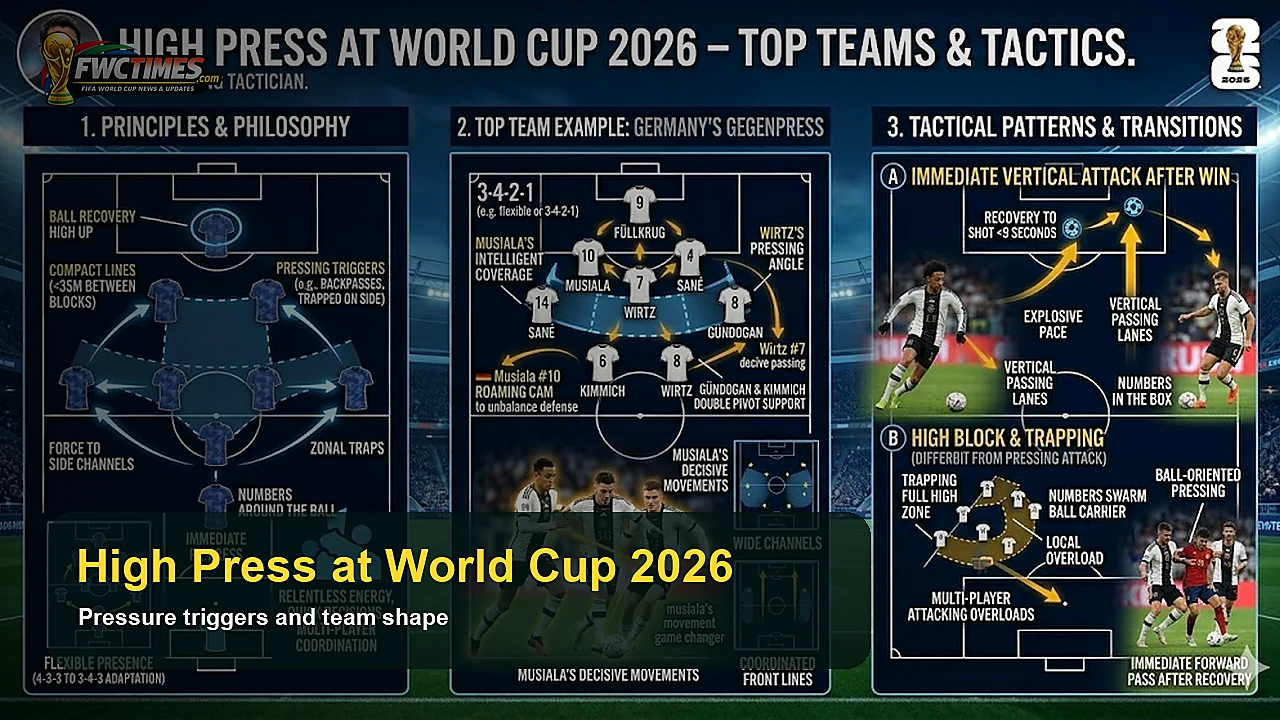
The high press is a defensive strategy built around winning the ball back in the opponent’s half rather than retreating into a defensive shape. Teams that press high aim to force errors and turnovers close to the opposition goal, cutting out the time and space needed to build attacks. At its most intense form, pioneered by coaches like Ralf Rangnick, the press becomes a sustained collective hunt rather than individual pressure.
Pressing triggers are the moments that start the press. Common triggers include a poor first touch, a backward pass to the goalkeeper, a ball played to the touchline, or a slow defensive centre-back receiving under pressure. Elite pressing sides train their squads to read these triggers instantly and coordinate simultaneous movement from multiple players. The press only works when everyone moves together — a single player going too early or too late breaks the trap.
In tournaments, the press must be calculated and rationed. No team can maintain maximum pressing intensity for 90 minutes across seven or eight matches. Coaches plan pressing bursts — short windows of four to six minutes where full-unit pressure is applied after specific triggers. These bursts force mistakes in dangerous zones while preserving enough physical output to sustain performance across multiple knockout rounds. That discipline is what separates elite pressing teams from those who give everything in the group stage and fade.
## Austria: The Gegenpressing Blueprint
Ralf Rangnick did not just coach Gegenpressing — he invented it. The term itself, meaning “counter-pressing” in German, describes the principle of winning the ball back within seconds of losing it, specifically within three seconds, in the opponent’s half. Rangnick developed and refined this system across his work with Schalke, RB Leipzig, and Red Bull Salzburg before bringing it to the Austrian national team. Austria’s qualification campaign was built entirely on this identity.
Under Rangnick, Austria typically sets up in a 3-4-3 or 4-2-3-1 shape depending on the opponent, with two intense central midfielders as the engine of the press. Konrad Laimer and Florian Seiwald — alongside Nicolas Schlager in deeper roles — form the unit that initiates the pressing triggers. When the press is on, Austria’s forward line joins immediately, collapsing space on all sides within moments of a turnover. Austria’s first World Cup in 28 years comes with a system that is more coherent and structured than almost any other side in the tournament.
The Gegenpressing system also demands specific defensive positioning when Austria is in possession. Players maintain short distances to each other, so that when possession is lost, the nearest three or four players can immediately surround the ball. This compactness in both phases is why the system works — it removes the transition moments that would otherwise leave Austria exposed.
Austria’s players in the pressing roles are built specifically for this system. Laimer, with his engine at Bayern Munich, is the prototype Rangnick midfielder — relentless, intelligent, and capable of pressing at full intensity in bursts across the full ninety minutes. The 4-3-3 formation used by Austria during their pressing phase also suits the wide pressing shape that traps opponents in their own wide zones.
## Japan: Organized Chaos Pressing
Japan under Hajime Moriyasu has built one of the most tactically coherent pressing systems in Asia and one of the most interesting in the entire 2026 field. Japan’s approach is frequently called “organized chaos” because their pressing looks frantic to the opposition but is structured and coordinated internally. Their 3-4-3 and 3-4-2-1 shapes allow them to press aggressively with three forwards while maintaining a secure back three to cover transitions.
Key players Takefusa Kubo, Ritsu Doan, and Hiroki Ito drive the pressing unit at different points on the pitch. Kubo’s pressing from the right side forces opponents left, where Japan’s coordinated mid-press traps are most effective. Doan applies pressure higher up, and Ito contributes from the left in a way that closes off passing lanes into wide areas. Japan’s pressing design routes the ball into pre-planned zones, making the press feel intuitive even though it is meticulously drilled.
Japan’s ability to switch between a high press and a compact defensive block within the same match is what makes them particularly dangerous. When the press is bypassed, Japan do not panic and chase. They immediately drop into their organized defensive shape and reset, waiting for the next trigger opportunity. That flexibility allows them to compete against both possession-heavy European sides and physical African or South American opponents.
## England and Spain: Pressing With an Identity Reset
Thomas Tuchel inherited an England squad with enormous talent but inconsistent defensive structure. Since taking the role, Tuchel has installed a more structured pressing identity described by analysts as bringing “German discipline” to an English squad that previously pressed with individual effort rather than collective coordination. England’s pressing under Tuchel uses defensive protocols — pre-agreed trigger points and defensive shape recovery mechanisms — that make the press feel less dependent on individual energy.
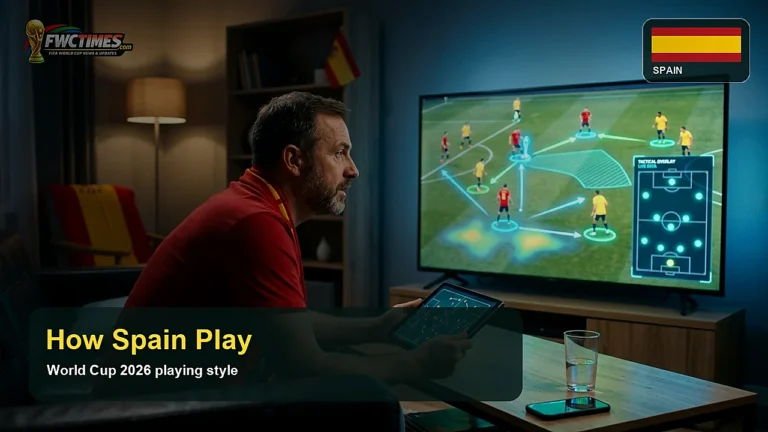
Spain bring a different kind of pressing intensity. Their approach uses controlled pressing triggers tied to their positional play system. When Spain’s midfield engine loses the ball, the press begins from the nearest player and spreads outward in a coordinated wave. Spain’s A/B squad rotation advantage matters here — with their depth in the 26-man roster, La Roja can field pressing-capable substitutes who understand the exact same press triggers as the starting players. Fresh legs pressing to the same system in the 70th minute is a significant structural edge.
Argentina and Germany round out the pressing elite in different ways. Argentina’s evolved high-press system under Scaloni has Rodrigo De Paul initiating most of the pressing triggers from midfield, while Messi preserves energy within the system for offensive transitions. Germany under their current setup have become more trigger-conscious in their pressing rather than possession-oriented, a shift reflected in their PPDA trend downward through qualifying.
## How Teams Counter the High Press
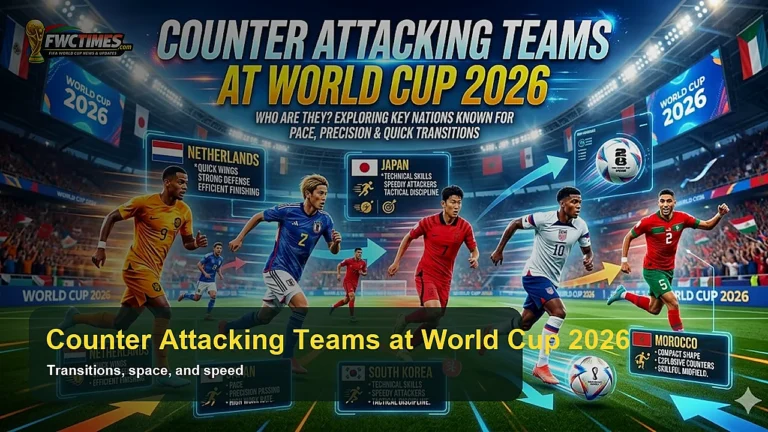
The most effective counter to the high press at World Cup 2026 is the low block combined with rapid vertical transition. Morocco built their 2022 semifinal run almost entirely on this model, and they arrive at 2026 with the same structural blueprint. Under their current setup, Morocco sits in a disciplined 4-2-3-1 that shifts into a 4-2-2-2 shape depending on the phase. Their central lines stay compact, policing the Zone 14 area directly in front of the penalty box, and their defensive shape absorbs pressing waves rather than trying to play through them.
Achraf Hakimi is Morocco’s primary counter outlet when they win the ball deep against a pressing team. His speed and directness allow Morocco to transition from deep defence to an immediate attacking threat within two or three passes. Against a pressing side that has pushed its full-backs high and its midfield forward, the space behind the press is exactly where Hakimi thrives. Morocco used this combination to eliminate Spain and Portugal in 2022, and the same model is in place for 2026.
USA will likely deploy a mid-block approach for much of the tournament — controlling the middle third, conserving energy in the North American heat, and waiting for pressing teams to overextend. Italy and Turkey also prioritize positional discipline over high-volume duels, making them structurally resistant to being pressed out of the game. For pressing teams, the encounter against a well-organized low block is the hardest test. High press works best against sides trying to build possession from the back — teams that sit and counter simply wait for the pressing energy to expire.
The physical demands of the three-nation tournament format also naturally limit pressing intensity. Travel across the USA, Canada, and Mexico, with climate variations from coastal cities to altitude venues like Mexico City, makes sustained high-intensity pressing across seven or eight matches physically punishing in a way that no club season fully replicates. Coaches heading into 2026 know this, and their pressing plans are built around four-quarter management rather than full-game pressure.
## Why Pressing Cannot Last 90 Minutes at World Cup 2026
FIFA has mandated three-minute hydration breaks at the 22nd minute of each half across all 104 matches of the 2026 tournament. These are not optional — they happen regardless of weather conditions or game state. Smart coaching staffs treat these as structured tactical windows rather than commercial interruptions. Laptops and video equipment are permitted during these breaks, allowing analysts to show real-time footage to players on the pitch.
Pressing teams use these four tactical windows — before the first break, between the breaks, and after the second break — as their pressing phase management. Coaches reset the press instructions at the 22nd minute, reinforce the plan at half-time, and adjust pressing triggers again at the 67th minute. This four-quarter structure has changed how pressing is planned, turning a 90-minute tactical identity into four manageable blocks of controlled intensity.
Over the 39-day tournament span, physical sustainability becomes the critical variable. A team that presses at maximum PPDA intensity in group stage matches risks arriving at the quarterfinals with a squad that physically cannot maintain the press. Set pieces add another dimension — over 30% of goals in modern high-level football come from dead-ball situations. Pressing teams must balance their high defensive line with strong set-piece organization, since the space behind their defensive line is exactly where opponents will aim long free kicks and corner deliveries.
## High Press at the 4-3-3 Formation Level
The most press-compatible formation at World Cup 2026 is the 4-3-3, and its variants create the structural spine that most pressing teams rely on. Three attacking players can apply first-line pressure while two of three midfielders form the second-line press wave. The shape allows the pressing team to cover wide areas and central lanes simultaneously without leaving too much space behind. Austria, Japan, and Spain all use variations of this structure during their pressing phases, though each adjusts the positioning and trigger points to fit their specific squad profiles. The 4-3-3 formation at World Cup 2026 creates a natural pressing template that is now considered the baseline for modern tournament football.
## Expert Verdict
Austria under Ralf Rangnick is the most tactically compelling pressing story at World Cup 2026. No other team has the originator of Gegenpressing as their head coach. Rangnick’s system is not an interpretation or an adaptation — it is the source code. Austria’s players, particularly their midfield engine of Laimer and Seiwald, are built specifically for this demanding role. Their ability to sustain Gegenpressing in coordinated bursts rather than constant pressure gives them a structural advantage over less disciplined pressing sides. If Austria progress to the knockout rounds with their energy reserves intact, they become a genuine disruption risk for any opponent.
The key risk for all pressing teams at this tournament is the 39-day physical toll. Pressing at full intensity burns more energy per match than any other defensive system. A team that does not manage their pressing bursts across the group stage and Round of 32 will reach the quarterfinals physically depleted. The teams that survive deepest in 2026 will not be the ones that pressed the hardest in June — they will be the ones that pressed the smartest.
## Frequently Asked Questions