
Set Pieces World Cup: How Dead Balls Decide Matches

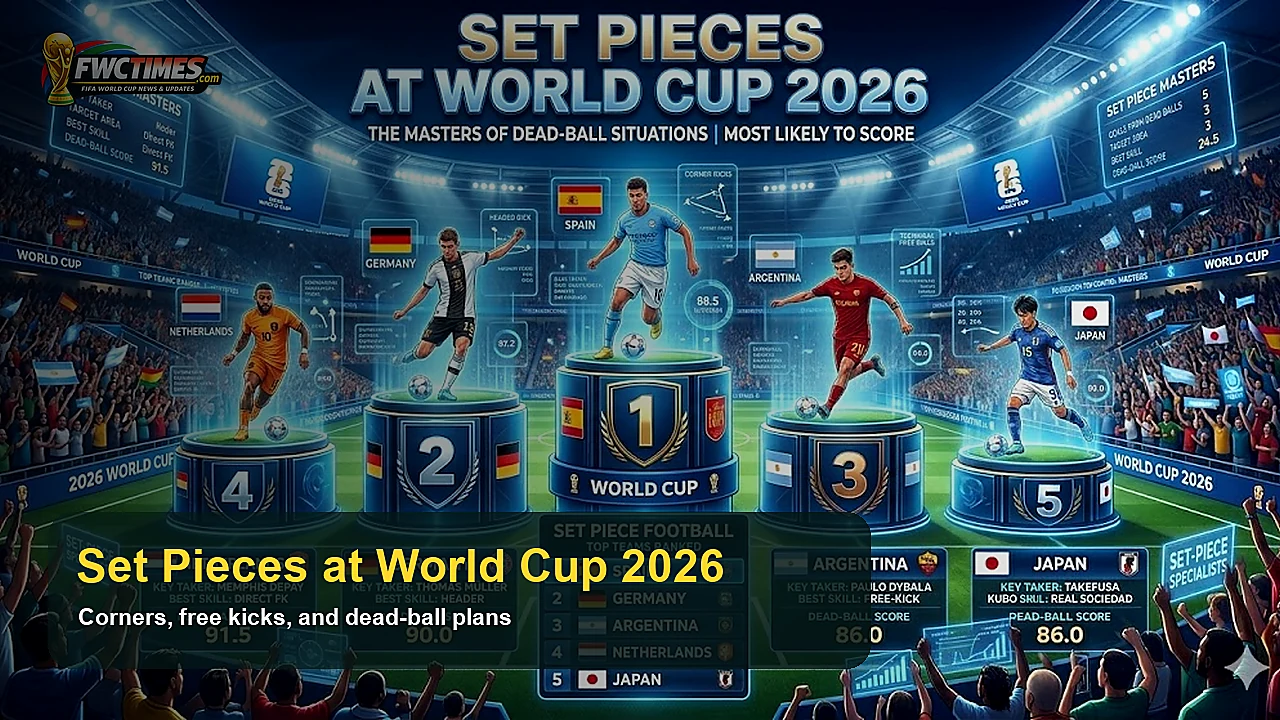
Set pieces World Cup routines will decide many low-scoring knockout matches as national teams struggle to create open-play chances. In international football, coaches have very limited training time to establish complex passing patterns. So they focus heavily on highly structured dead-ball situations to generate high-value goalscoring opportunities. Studying how teams use these setups reveals a critical avenue for tournament success.
Many tournament favorites hire specialist coaches to design custom plays for corners and free kicks. These routines utilize blocking techniques, decoy runs, and crowded boxes to confuse opponent defenders. In fact, statistics show that dead balls account for over thirty percent of goals in modern international tournaments. As a result, set-piece efficiency has become a cornerstone of modern tactical preparation.
This tactical guide analyzes the most dangerous teams from dead-ball situations. We examine how they structure their attacking runs and manage defensive zones. The expanded forty-eight team field makes these details more important than ever before.
The Strategic Value of Set Pieces World Cup Tactics
Dead-ball situations allow coaches to control variables in a highly chaotic sport. Players start from static positions, making it easier to execute rehearsed combinations. On top of that, set pieces give physically dominant teams a massive advantage in the box. A single well-placed corner can rescue a match when the opponent defends in a low block.
Best Teams from Dead-Ball Situations
Several nations enter the tournament with highly advanced set-piece departments. Their success relies on elite delivery and coordinated movement rather than raw height alone. These teams treat dead balls as a primary scoring method.
England’s Choreographed Routines
England has established themselves as a dominant force in set-piece situations under their current coaching staff. Their system features aggressive blocking routines to isolate their best headers. They run complex decoy patterns to drag markers away from the target zone. This organization makes them the most dangerous side from corner kicks.
France’s Physical Dominance
France utilizes their athletic squad profiles to control the box during restarts. Didier Deschamps coordinates his players to attack the near post and create second-ball opportunities. Their physical power makes it extremely difficult for opponents to clear the ball cleanly. As a result, France scores consistently from scramble situations around the six-yard area.
Colombia’s Elite Delivery
Colombia relies on the exceptional passing quality of James Rodriguez to unlock defenses. His precise left-footed delivery allows runners to attack space with full confidence. The coaching staff designs routines that target the gap between the goalkeeper and the defensive line. This high-quality service makes every free kick a high-value opportunity.
Morocco’s Defensive Discipline
Morocco demonstrates how defensive set-piece organization wins tournament matches. They utilize a hybrid marking system that covers key zones while tracking aggressive runners. Their players coordinate their jumps to clear delivery before it reaches the danger zone. Once they clear the ball, they launch rapid counter-attacks down the flanks.
Attacking and Defensive Set-Piece Statistics
The numbers illustrate the high value of dead-ball efficiency in recent international campaigns. Teams that excel in these situations consistently progress deeper in tournaments. Studying these statistics reveals why coaches invest heavily in specialist staff.
| Nation | Set-Piece Goals in Qualifying | Primary Attack Method | Set-Piece Specialist Coach |
|---|---|---|---|
| England | 8 | Near-post screens | Yes |
| France | 6 | Far-post overloads | Yes |
| Colombia | 7 | Outswinging crosses | Yes |
| Morocco | 5 | Second-ball attacks | Yes |
These numbers show that top teams treat set pieces as primary attacking weapons. Coordinated runs and elite delivery yield consistent returns. As a result, defenders must maintain concentration throughout the match to prevent conceding easy opportunities.
Key Obstacles and Referee Scrutiny
The biggest challenge for set-piece teams is the rising level of referee inspection. FIFA has instructed officials to penalize blocking and shirt-pulling inside the box. So aggressive screens can result in direct penalties or disallowed goals. Coaches must adapt their routines to maintain pressure without committing clear fouls.
Predictability also limits the effectiveness of dead-ball routines. Opponents analyze film to map out a team’s preferred target zones and blocking paths. So teams must introduce variations, such as short corners or disguised free kicks. A diverse playbook prevents the opponent defense from adjusting their positioning early.
Expert Verdict
England possesses the most complete set-piece system entering the 2026 tournament. Their combination of physical height and choreographed blocking routines is extremely difficult to defend. If their delivery remains consistent, they will score multiple goals from corner situations. Still, they must avoid overreliance on these routines when open play breaks down.
We expect set-piece efficiency to decide several crucial knockout matches in the North American summer. The extreme heat will tire defenders and lead to lapses in concentration late in games. Teams that remain disciplined during defensive restarts will progress further. So dead-ball details will separate the champion from the rest of the field.
Frequently Asked Questions
Why are set pieces so important at the World Cup?
Set pieces are important because national teams have very little training time to establish complex passing systems. Rehearsed dead-ball routines provide a reliable way to score against compact defensive shapes. Statistics show that set pieces account for over thirty percent of goals in major tournaments. So coaches prioritize these situations during tactical preparation.
Which team is best at set pieces?
England is widely considered the best set-piece team due to their highly organized blocking routines and size. France also dominates restarts through physical power and near-post runs. Colombia remains extremely dangerous due to the elite delivery quality of James Rodriguez. These nations use custom plays to unlock tight matches.
What is a blocking routine in set pieces?
A blocking routine involves players intentionally shielding defenders to create space for a teammate. This tactic resembles basketball screens, freeing the primary header to attack the ball without interference. Still, players must execute these blocks carefully to avoid referee fouls. FIFA officials will scrutinize off-the-ball contact closely during the tournament.
How do teams defend against set pieces?
Teams defend set pieces using a mix of zonal and man-marking systems. Zonal marking allows defenders to protect key areas, while man-markers track the opponent’s best headers. Goalkeepers must also command their six-yard box to claim or punch incoming crosses. Collecting second balls is critical to prevent follow-up shots.