How England Play at the 2026 World Cup

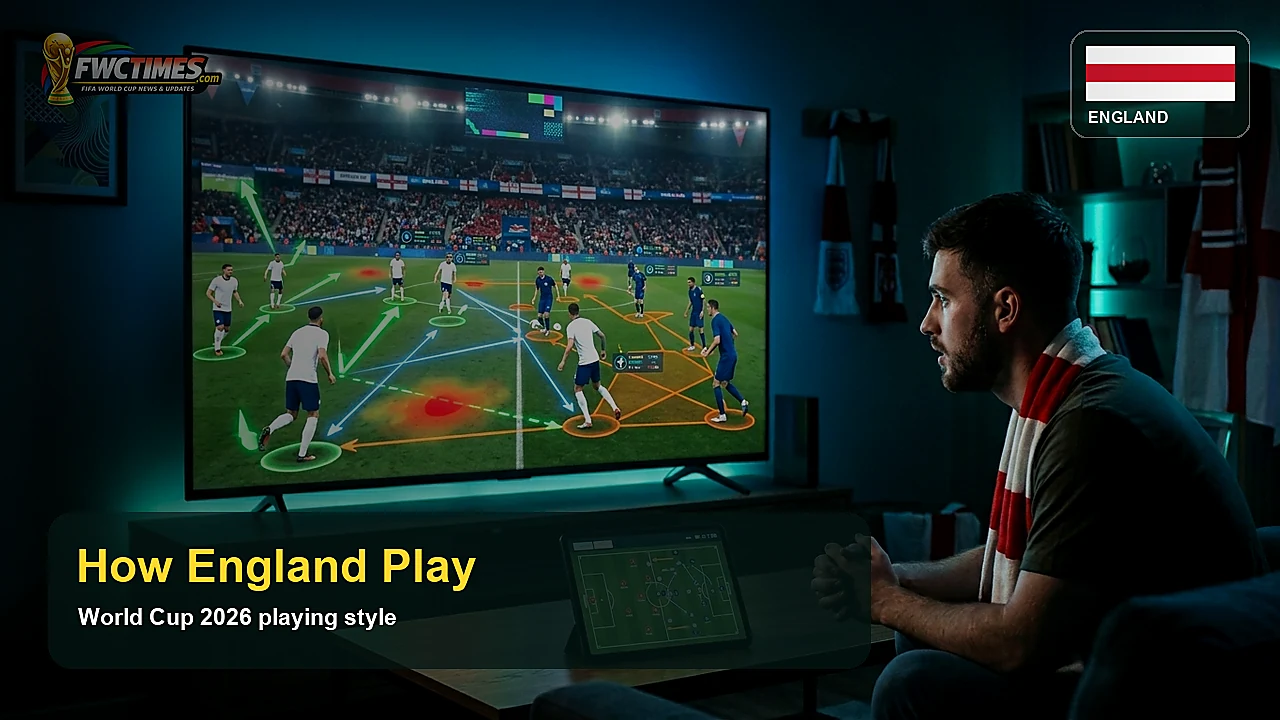
The England playing style World Cup 2026 approach runs on a structured 4-2-3-1 system installed by head coach Thomas Tuchel. Tuchel has brought tactical discipline, positional balance, and defensive security to the Three Lions’ squad. In fact, England completed their qualifying campaign with a perfect record, winning all eight matches without conceding a single goal. This tactical blueprint prioritizes team structure over individual star power.
This campaign is Tuchel’s first major international tournament in charge of England. The German manager took the role on January 1, 2025, and has extended his contract through UEFA Euro 2028. The coaching staff has selected a balanced squad, choosing tactical fit over reputation. As a result, England plays with a clear defensive organization that is difficult to break down.
The physical load of the 104-match schedule dictates England’s tactical approach. Tuchel avoids a constant high press, preferring to manage physical output across the matches. The squad sits in a compact mid-block, waiting for specific triggers to initiate pressure. This physical management is essential for surviving the long knockout rounds in the summer heat.
Tuchel’s Balanced 4-2-3-1 System
Thomas Tuchel has installed the 4-2-3-1 shape to ensure England keeps midfield control. The system uses a double pivot to shield the defense and protect the centre of the pitch. This pairing allows England to build attacks patiently without risking turnovers in dangerous areas. On top of that, it provides a stable platform that supports the attacking line.
In possession, the shape shifts into a 3-2-5 structure as the left-back inverts into the midfield. Myles Lewis-Skelly has filled this hybrid role, stepping inside to create a box build-up. This rotation allows the wide forwards to push high and stretch the opponent’s defensive line. The 4-2-3-1 formation World Cup guide shows how this shape compares to other systems.
Harry Kane as the Attacking Hub
Harry Kane remains the focal point of the English attack as the primary striker. Tuchel uses Kane as a link-play hub, encouraging him to drop deep to connect with runners. This movement drags the opponent’s centre-backs out of position, opening lanes for the midfielders. Kane’s passing range makes him highly effective at releasing the wingers into space.
This role allows Kane to conserve energy while still influencing the attacking phase. The wide forwards, including Bukayo Saka, run into the open space behind the defensive line. Kane’s ability to hold up the play is central to how England controls tempo. The possession football World Cup guide explains how striker hold-up play supports possession systems.
Jude Bellingham in the Ten Position
Jude Bellingham operates as the central attacking midfielder in the number ten role. Tuchel uses Bellingham as a box-to-box threat who arrives late in the penalty area. This positioning utilizes his physical power and goal-scoring instincts without overloading his defensive duties. Bellingham competes with other playmakers for this central creative role.
Tuchel prioritizes team balance, meaning Bellingham must work within a structured press. He cannot roam freely if it exposes the space behind him. This discipline ensures the midfield remains compact out of possession. In fact, Bellingham’s role is carefully integrated into the overall team plan.
Perfect Defensive Record in Qualifying
England secured their place at the World Cup by dominating UEFA Group K. The squad won all eight of their qualifying matches, scoring 22 goals. Remarkably, they became the first European team to complete qualifying without conceding a single goal. This record proves the effectiveness of Tuchel’s defensive organization.
| Statistic | Value | | :— | :— | | Group Position | 1st (Group K) | | Matches Played | 8 | | Wins | 8 | | Draws | 0 | | Losses | 0 | | Goals Scored | 22 | | Goals Conceded | 0 |
This perfect defensive record gives the squad massive confidence entering the tournament. Tuchel has focused on maintaining this compactness in pre-tournament friendlies. The team enters the group stage as one of the hardest sides to score against.
Key Vulnerabilities of the English System
The biggest tactical risk is the potential conflict between England’s attacking stars. If Tuchel tries to play Kane, Bellingham, and Foden together without balance, the midfield can lose structure. The team can become slow and predictable in transition when too many players drop deep. This risk is why Tuchel has emphasized balance over individuals.
The system also places a significant physical load on the inverted fullback. If Lewis-Skelly is caught high in midfield during a transition, the left flank is left exposed. Fast wingers can exploit this wide channel before the double pivot can cover the space. This vulnerability requires perfect coordination between the defenders.
Expert Verdict
England enters the 2026 World Cup with their most structured tactical system in decades. Tuchel has removed the individual dependency of the past, installing a cohesive team unit. The perfect qualifying record shows that England has the defensive foundation to win the tournament. The key will be managing the squad’s physical energy across eight matches.
If England can avoid central overloads and keep their defensive discipline, they will reach the final rounds. The match against physical group opponents will test their tactical patience. Tuchel’s tournament experience gives England a significant edge in knockout matches. England is built to survive, and they have the tools to win.