How Spain Play at the 2026 World Cup

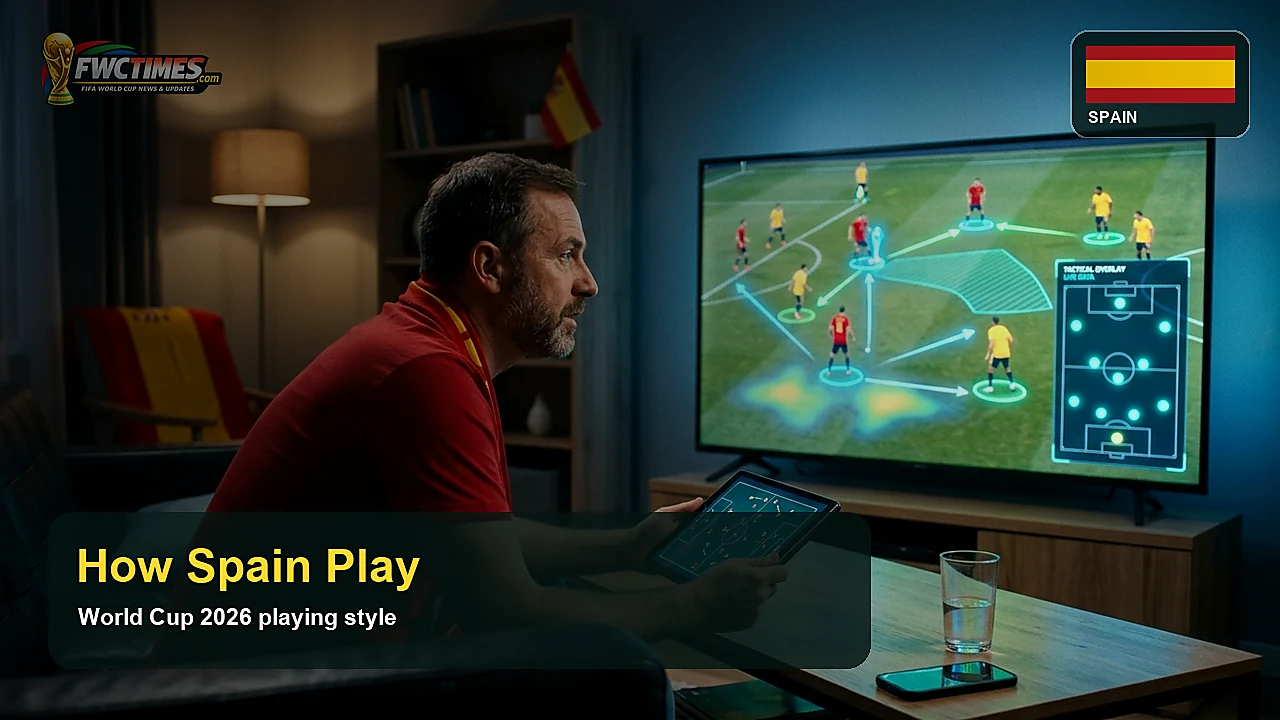
The Spain playing style World Cup 2026 approach runs on a vertical 4-3-3 system installed by head coach Luis de la Fuente. De la Fuente has transformed the squad from the slow possession models of the past into a high-intensity transition machine. In fact, Spain won UEFA Qualifying Group E with an unbeaten record, conceding only three goals. This tactical setup combines midfield control with explosive speed on the flanks.
This tournament is Spain’s first major challenge since their victory at UEFA Euro 2024. The coaching staff has extended their contracts through 2028, showing the federation’s trust in this project. The system relies heavily on youth academy talents who understand the tactical principles of positional play. As a result, Spain plays with a high degree of tactical cohesion across all lines.
The physical load of the 48-team schedule dictates Spain’s roster management. De la Fuente uses a functional squad rotation model to keep key players fresh across the matches. This strategy helps the squad maintain their intense pressing style without suffering physical decline. This physical readiness is what makes Spain a top contender for the trophy.
The Vertical 4-3-3 System
Luis de la Fuente has modernized Spain’s traditional 4-3-3 shape to prioritize vertical speed. The system focuses on direct attacking transitions rather than endless horizontal recycling. When Spain wins the ball, the midfielders look to release the wingers immediately. This directness catches the opponent before they can organize their defensive shape.
In possession, the shape can morph into a 3-2-5 structure as the fullbacks support the attack. This movement creates numerical superiority in the opponent’s half, making it easy to create overloads. The double pivot provides security behind the attack, preventing counterattacks. The 4-3-3 formation World Cup guide shows how this shape compares to other systems.
Rodri as the Midfield Metronome and Captain
Rodri serves as the anchor pivot, captain, and metronome of the entire Spanish system. He operates as the single pivot in front of the back four, screening the defense and intercepting passes. Rodri reads the flow of the match, deciding when to play forward and when to recycle. His ball security allows Spain to sustain pressure in the opponent’s half.
Rodri’s positioning is critical for maintaining Spain’s high defensive line. When the centre-backs push high, Rodri remains close to cover the central spaces. This positioning prevents opponents from launching direct counterattacks through the center of the pitch. In fact, Rodri’s presence is what gives the attacking midfielders the freedom to push forward.
Winger Threat with Yamal and Williams
The system relies on Lamine Yamal and Nico Williams to provide explosive threat on the flanks. Yamal operates on the right wing, using his dribbling to cut inside and create shooting angles. Williams provides raw pace on the left, stretching the opponent’s defensive line to create space. Both wingers challenge fullbacks in 1v1 situations constantly.
This wide threat forces the opponent’s defense to sit wider, opening central channels. The attacking midfielders, including Pedri, run into these open spaces to support the striker. This combination of wide pace and central runs is Spain’s primary attacking weapon. The possession football World Cup guide explains how wide rotations help break down low blocks.
High Press and Positional Play
Spain’s defensive phase runs on an aggressive high press and a high defensive line. The front three triggers the press the moment the opponent attempts to build from the back. The midfielders step up to close passing lanes, forcing the opponent to play long clearances. The high press World Cup guide explores the mechanics of this coordinated pressure.
If the opponent plays through the press, Spain drops into a compact mid-block. The shape becomes a narrow 4-1-4-1, with Rodri sitting between the lines. They compress the space in midfield, isolating the ball-carrier and forcing turnovers. This defensive discipline is why Spain conceded so few goals during qualifying.
UEFA Qualifying Standings and Statistics
Spain qualified directly by winning UEFA Group E with 16 points. The squad recorded five wins and one draw across their six qualifying matches. They scored 22 goals while conceding only three, reflecting their balanced tactical system. Spain enters Group H alongside Cape Verde, Saudi Arabia, and Uruguay.
| Statistic | Value | | :— | :— | | Group Position | 1st (Group E) | | Matches Played | 6 | | Wins | 5 | | Draws | 1 | | Losses | 0 | | Goals Scored | 22 | | Goals Conceded | 3 |
This record shows that De la Fuente’s vertical approach has improved Spain’s scoring efficiency. The squad enters the tournament with a clear understanding of their tactical roles. This statistical dominance makes them one of the favorites to win the World Cup.
Key Vulnerabilities of the Spanish System
The biggest tactical risk is the space behind Spain’s high defensive line. If the opponent plays a quick long ball over the top, the centre-backs can be caught in footraces. Fast counter-attacking teams look to exploit this space before the goalkeeper can sweep. This vulnerability requires perfect timing from the central defenders.
The system also depends heavily on Rodri’s physical fitness. If Rodri is unavailable or fatigued, Spain loses the anchor that holds the midfield together. The backup pivots struggle to match his reading of the game and defensive presence. This dependency makes Rodri the most critical player in the Spanish squad.
Expert Verdict
Spain enters the 2026 World Cup with a complete system that combines possession with vertical speed. De la Fuente has created a team that is dangerous in both slow build-up and fast transition. The vertical 4-3-3 shape and Yamal’s individual brilliance give Spain a very high ceiling. The key to their tournament will be managing physical fatigue across the long matches.
If they can maintain their pressing intensity, Spain will be difficult to beat. Their group match against Uruguay will be a significant test of their physical resilience. De la Fuente’s structured rotations should keep the squad fresh for the knockout rounds. Spain has the tools to lift the trophy, but they must defend the space behind their high line.