World Cup 2026 Predictions: Tactical Favorites

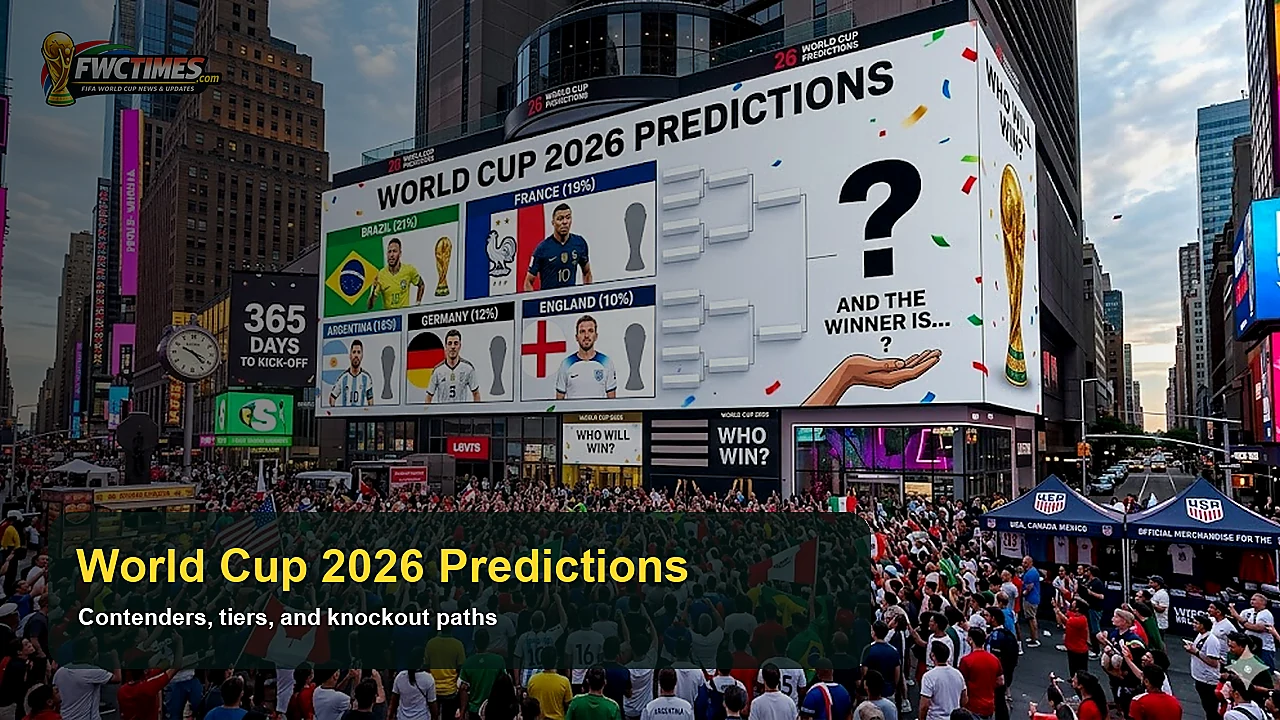
The World Cup 2026 Predictions models highlight Spain, France, England, and Brazil as the primary contenders to lift the trophy in New York. In the largest tournament in football history, predictive algorithms analyze qualifying form, roster depth, and tactical stability. In fact, the expansion to 48 teams introduces a Round of 32 knockout phase, adding an extra match to the schedule. This new structure requires the eventual champion to maintain tactical consistency across eight matches.
The physical load of the expanded 104-match schedule is a central variable in all simulation models. Playing matches across three host nations with differing climates and altitudes increases the likelihood of squad rotation. As a result, predictions favor teams with deep, position-agnostic rosters that can absorb injuries without changing their shape. Roster depth in key defensive and midfield areas is what separates the elite tier from the field.
The history of the tournament shows that defensive structure combined with transition efficiency wins titles. Argentina proved this in 2022 by blending defensive compactness with Messi’s free-roaming quarterback playmaking. The coaching staff of the top-seeded nations has designed highly vertical systems to match the modern trends of the game. Every predictive model favors teams that can control matches through quick transition phases.
Spain as the Algorithmic Favorite
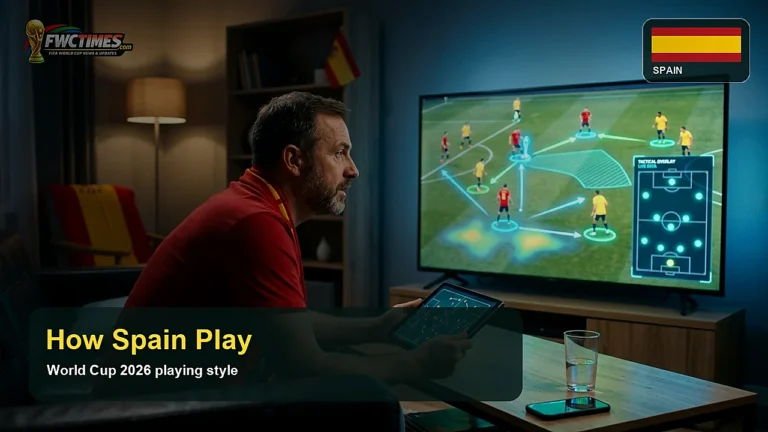
Spain has emerged as the leading favorite across supercomputer simulations and predictive markets. Opta’s predictive model backs Luis de la Fuente’s squad due to their tactical consistency and young core. Spain’s vertical 4-3-3 system combines midfield control with explosive pace on the flanks. The Spain playing style World Cup 2026 guide explores how this vertical approach dominates opponents.
Predictions also note a historical trend favoring Spain: every single World Cup-winning head coach has been a native of the country they managed. De la Fuente fits this criterion perfectly, and his contract extension through 2028 reflects the federation’s complete trust. Spain’s ability to transition between a 4-3-3 and a 3-2-5 possession shape makes them the most complete team. The 4-3-3 formation World Cup guide compares these positional systems in detail.
France and Brazil’s Attacking Threat
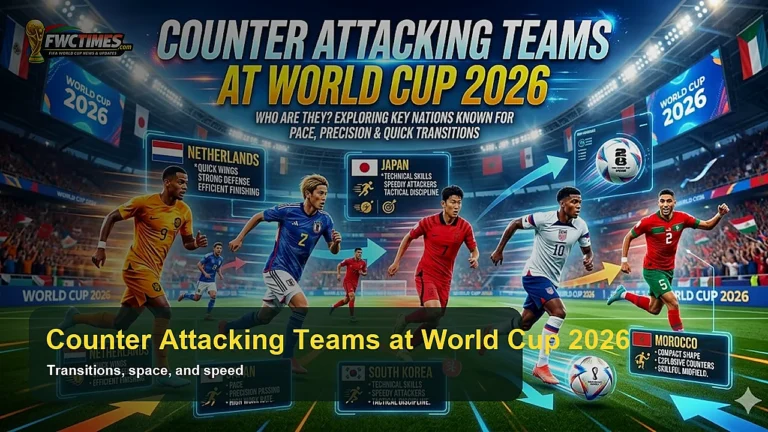
France is consistently ranked in the top tier of contenders by bookmakers and predictive analysts. Didier Deschamps has constructed a robust counter-attacking system that utilizes the vertical pace of Kylian Mbappé. The squad’s depth in all positions allows France to adapt their system to any tournament opponent. The France playing style World Cup 2026 guide explains how their transition-heavy system breaks down elite teams.
Brazil remains a dominant force in predictive ratings despite missing Rodrygo due to a torn ACL. Roster projections favor Brazil due to the individual quality of Vinicius Junior and their attacking depth. Brazil’s fluid front line shifts positions fluidly, creating defensive dilemmas for opponents who utilize man-marking schemes. The Brazil playing style World Cup 2026 guide details how their attacking shape creates space.
Argentina’s Title Defense and England’s Challenge
Defending champions Argentina enter the tournament with strong predictive backing to retain their title. Lionel Scaloni builds the system around Messi as a free-roaming playmaker, supported by an energetic midfield engine. The squad’s CONMEBOL qualifying record demonstrates their defensive resilience, conceding only 14 goals. The Argentina playing style World Cup 2026 guide details how they manage spatial control.
England’s challenge relies on a highly efficient attacking system built around striker Harry Kane. The coaching staff has integrated young creative talents like Bukayo Saka and Cole Palmer to support Kane’s hold-up play. England’s structured mid-block provides defensive security, preventing opponents from launching quick transitions. The 4-2-3-1 formation World Cup guide shows how playmakers operate behind a focal point.
Statistical Projections and Favorites Tier List
Supercomputer simulations run thousands of tournament iterations to calculate the probability of each nation reaching the final. The elite tier consists of five teams that dominate these statistical projections.
| Team | Roster Strength | Key Tactical Anchor | Win Probability (Tier) | | :— | :— | :— | :—: | | **Spain** | Elite | Rodri | Favorite (Tier 1) | | **France** | Elite | Aurélien Tchouaméni | Contender (Tier 1) | | **England** | High | Declan Rice | Contender (Tier 1) | | **Brazil** | High | Bruno Guimarães | Contender (Tier 2) | | **Argentina** | High | Enzo Fernández | Contender (Tier 2) |
This data shows that Spain and France possess a statistical edge due to midfield control and roster depth. The squads enter the group stage with established tactical identities, reducing the likelihood of early upsets. This structural stability is key for navigating the expanded tournament bracket.
Key Unpredictables in the 48-Team Format
The biggest tactical risk for favorites is the introduction of the Round of 32 knockout match. An extra single-elimination game increases the probability of random events, such as red cards or penalty shootouts, disrupting projections. This format rewards teams that can control matches and avoid high-variance defensive situations. High-pressing sides must manage their physical workload to prevent late-game fatigue.
Tactical variables like pressing intensity and set-piece efficiency will decide matches between evenly matched opponents. The best pressing teams World Cup 2026 guide shows how pressing data predicts defensive performance. Teams that rely on a single star player are vulnerable if that player suffers from injury. Roster depth and tactical flexibility are the ultimate differentiators in this expanded format.
Expert Verdict
The 2026 World Cup will produce the most tactically demanding knockout phase in history. Spain enters the tournament with the most complete system, combining vertical speed with Rodri’s midfield control. France possesses the individual quality to win matches in transition, making them the most dangerous counter-attacking threat. The key to winning the tournament will be managing physical recovery across the eight matches.
If Spain maintains their tactical consistency, they are the most likely team to lift the trophy in New York. The high altitudes in Mexico and summer heat in the USA will test squad depth. Coaches who rotate their squads during the group stage will keep their key finishers fresh. Spain’s vertical model looks the most sustainable system to navigate the expanded bracket.