Best Attacking Teams World Cup 2026: Tactical Analysis

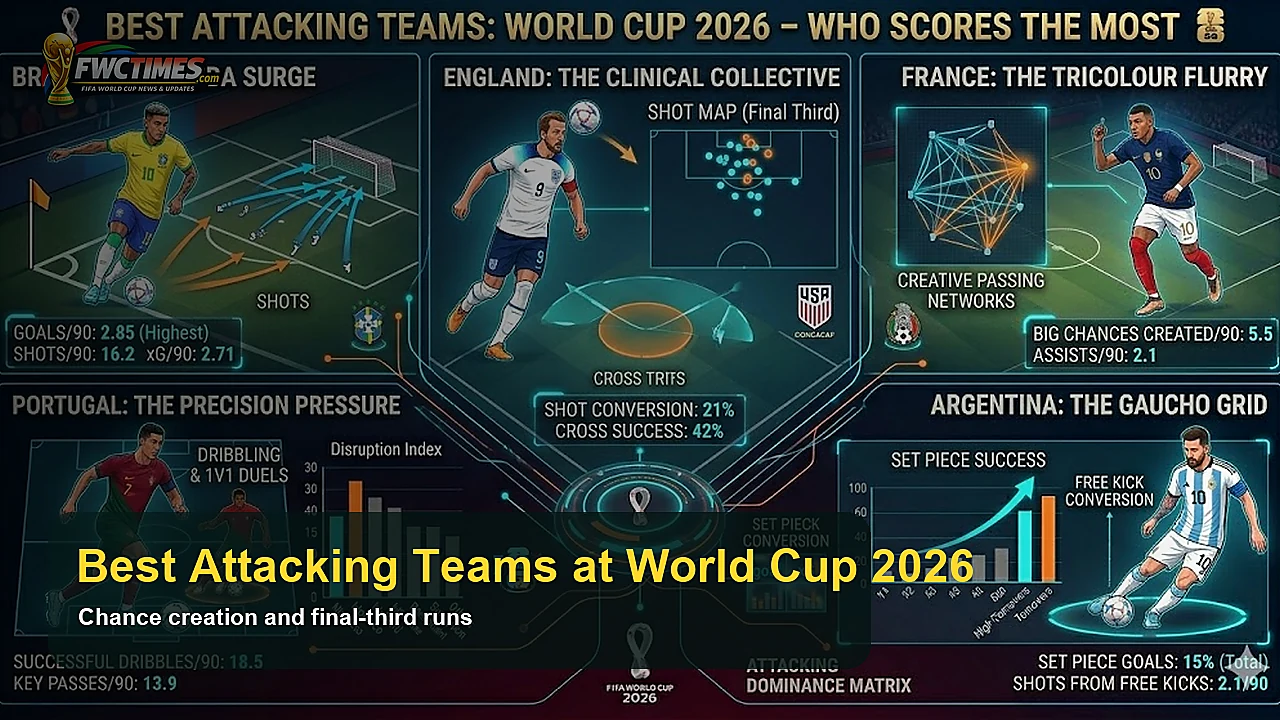
The best attacking teams World Cup 2026 favorites rely on vertical speed, positional rotations, and elite squad depth to dominate opponent defensive lines. In an expanded 48-team tournament, the offensive output of the top-seeded nations is expected to reach historic levels. In fact, the introduction of the Round of 32 means finalists must play up to eight matches over 39 days. This demanding schedule rewards teams with complex attacking structures and clinical finishing profiles.
The physical load of the expanded tournament format makes attacking rotation a central part of tactical success. Coaches must manage player fatigue across different climates and altitudes without losing offensive momentum. As a result, the top attacking sides use fluid positioning systems that distribute the goalscoring burden across multiple players. This positional interchange is what makes modern front lines so difficult to mark.
The history of the tournament shows that explosive attacking lines can overwhelm structured low blocks during the knockout rounds. Spain and France arrive at the 2026 tournament with some of the most prolific qualifying records in European football. The coaching staff of these elite nations has focused on maximizing wide overloads and central penetration. The tournament’s top attacking sides enter the group stage aiming to set new goalscoring records.
Spain’s Vertical 4-3-3 and Tactical Projections
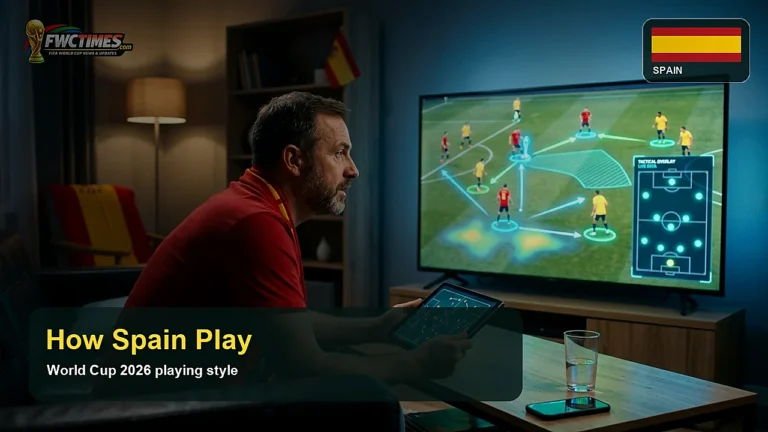
Spain is projected by analysts to be the highest-scoring team in the 2026 tournament due to their vertical attacking style. Under head coach Luis de la Fuente, the squad has replaced slow possession play with direct transition sequences. The wide threat of Lamine Yamal and Nico Williams stretches the opponent’s defensive block, opening spaces for central runners. The Spain playing style World Cup 2026 guide explores the details of this vertical system.
In possession, Spain regularly morphs into a 3-2-5 shape that floods the final third with five attacking players. This overload forces the opponent’s defenders to drop deep, creating space for late midfield runs into the box. The 4-3-3 formation World Cup guide shows how this shape compares to other attacking models. Spain’s high attacking quality makes them the benchmark for offensive efficiency at this tournament.
France and Brazil’s Star-Studded Front Lines
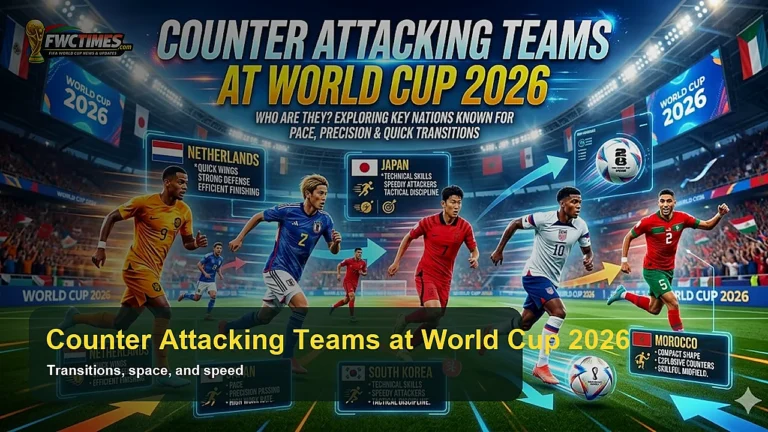
The France playing style World Cup 2026 model combines elite individual quality with rapid counter-attacking transitions. Kylian Mbappé leads a potent forward line that features Ousmane Dembélé and creative playmaker Michael Olise. France absorb pressure deep in their own half, then release their fast wingers into open space behind the opponent’s high line. This directness makes France one of the most feared attacking teams in the competition.
Brazil continues to possess significant individual star power and creative depth, despite missing Rodrygo due to a torn ACL. The team relies on Vinicius Junior in a free-roaming attacking role to break compact defensive lines. Brazil’s fluid front three rotates positions constantly, making it difficult for opponents to establish man-marking schemes. The Brazil playing style World Cup 2026 guide explains how their fluid frontline operates in possession.
Top Scorers and Standout Qualifying Statistics
The qualifying cycle featured historic individual performances from elite strikers across different confederations. Erling Haaland led the European qualifiers with 16 goals, demonstrating his clinical finishing inside the box. Qatar’s Almoez Ali dominated the Asian qualifying phase, scoring 12 goals to lead his nation to the tournament. Algeria’s Mohamed Amoura also stood out in the African qualifiers, netting ten goals across ten matches.
| Player | Qualifying Goals | Confederation | | :— | :—: | :— | | **Erling Haaland** | 16 | UEFA | | **Almoez Ali** | 12 | AFC | | **Mohamed Amoura** | 10 | CAF | | **Ayase Ueda** | 8 | AFC | | **Lionel Messi** | 8 | CONMEBOL |
This data shows that elite finishers enter the tournament in exceptional goalscoring form. The top attacking teams will look to feed these clinical forwards during transition moments. This individual quality is what decides tight knockout matches.
England’s Structured Attacking Efficiency
England’s attacking play runs on a highly structured system centered around captain Harry Kane. Kane drops deep into midfield to link play, releasing fast wingers like Bukayo Saka and Cole Palmer. This movement creates numerical advantages in the center of the pitch, allowing England to recycle possession safely. The coaching staff has designed a balanced shape that prioritizes shot quality over shot volume.
The wide forwards provide constant dribbling threat, challenging opponent fullbacks in 1v1 situations. This wide pace stretches the defense, opening lanes for late-running midfielders to arrive in the box. The 4-2-3-1 formation World Cup guide explains how playmakers operate behind a focal striker to create chances. This structured approach makes England one of the most consistent offensive teams.
Key Vulnerabilities of Elite Attacking Systems
The biggest tactical risk for top attacking teams is the exposure of their rest defense during possession phases. Because these teams commit up to five or six players forward, they are vulnerable to direct vertical counters. If the opponent wins the ball and bypasses the initial press, the centre-backs are left in 1v1 footraces. This risk requires perfect positioning and timing from the defensive line.
Attacking-heavy teams can also struggle when facing highly disciplined, low-block defensive units. If the opponent defends narrow and closes down central passing lanes, the attack can become horizontal and slow. The forwards must execute precise positional rotations to create opening opportunities inside a crowded box. This challenge makes set-piece execution and wide delivery critical alternatives for scoring.
Expert Verdict
The best attacking teams World Cup 2026 contenders will dominate the tournament through depth and vertical speed. Spain and France possess the most complete attacking systems, combining structure with individual elite talents. The expansion to eight matches for finalists will test the depth of every offensive roster. The key to winning the trophy will be maintaining goalscoring efficiency while securing the rest defense.
If the top attacking sides manage physical fatigue, they will produce high-scoring matches in the group stages. The altitude and heat in North American host venues will require structured squad rotation. Coaches who rotate their front lines effectively will keep their key finishers fresh for the knockout rounds. Spain’s vertical model looks the most sustainable for a long tournament run.