How Brazil Play at the 2026 World Cup

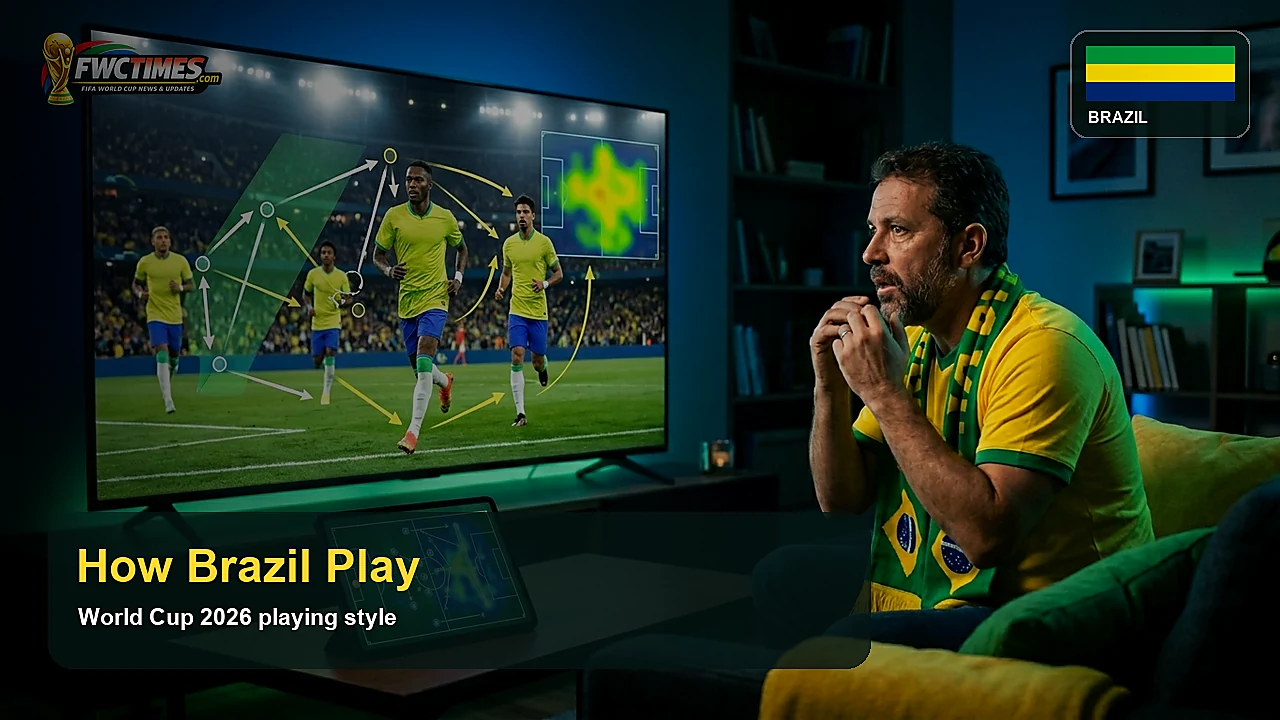
The Brazil playing style World Cup 2026 approach runs on a bold 4-2-4 system installed by head coach Carlo Ancelotti. Ancelotti has built the shape to exploit the vertical speed and dribbling talent of Vinicius Junior. In fact, Brazil finished fifth in CONMEBOL qualifying, scoring 24 goals across their 18 matches. This tactical setup prioritizes fast transitions and counterattacks to bypass the opponent’s midfield.
This tournament is Ancelotti’s first major international challenge with the Selecao. The Italian manager has brought a pragmatic, structured approach that balances individual flair with collective defensive work. The absence of Rodrygo, who suffered a torn ACL in March 2026, forces changes in the attacking line. As a result, Brazil relies on squad depth to maintain their vertical threat.
The physical load of the 104-match schedule dictates Brazil’s rotation strategy. Playing in the North American heat requires coaches to protect their key players from physical exhaustion. Ancelotti uses a flexible system that allows forwards to rotate roles during matches. This adaptability is what keeps Brazil among the primary contenders.
Ancelotti’s Bold 4-2-4 Formation
Carlo Ancelotti has prioritized a 4-2-4 shape to get his best attackers on the pitch together. The system uses four forwards to press the opponent’s back line and create constant overloads. This setup places a massive defensive burden on the two central midfielders, who must shield the back four. As a result, the midfielders must cover huge distances to protect the center of the pitch.
In possession, the shape allows Brazil to transition from defense to attack with extreme vertical speed. The wingers push high and wide to stretch the opponent, while the two central forwards challenge the centre-backs. This direct style of play minimizes horizontal passing in the middle third. The 4-2-3-1 formation World Cup guide shows how other contenders organize their midfields against such setups.
Vinicius Junior in the Free Attacking Role
Vinicius Junior serves as the focal point of the Brazilian attacking phase. Ancelotti uses a free attacking role for Vinicius, letting him drift inside from the left wing to find shooting angles. This role matches his Real Madrid-style tactical positioning, where he thrives in 1v1 situations. His speed in transition is Brazil’s most effective weapon for breaking down compact blocks.
Opponents must commit multiple defenders to contain Vinicius, which opens up space for the other forwards. The right winger and central forwards run into these open channels to finish crosses. This movement is what makes the 4-2-4 system so difficult to defend. In fact, Vinicius’ threat is the tactical engine of the entire Brazilian attack.
Handling Key Absences and Injuries
The squad has faced significant challenges due to pre-tournament injury updates. Rodrygo is unavailable for the entire tournament after suffering a right knee ACL tear in March 2026. This injury removed a key link player who connected the midfield to the front four. On top of that, captain Neymar is managing a calf injury that limits his minutes.
Ancelotti has adjusted by integrating younger attacking options to maintain the team’s transition speed. Raphinha has taken on a larger creative role, having scored five goals during the qualifying campaign. The coaching staff must manage Neymar’s recovery carefully to ensure he is fit for the knockout rounds. The possession football World Cup guide explains how squads rotate players to handle physical decline.
The Midfield Shield and Transitions
The two-man central midfield carries the defensive weight of the entire system. These players must remain disciplined, sitting deep to protect the central channels when the forwards press. They focus on winning second balls and releasing the wingers with quick vertical passes. This direct transition style avoids the risk of losing the ball in the middle third.
If the midfield pair is bypassed, the back four must step up aggressively to delay the attacker. The fullbacks tuck inside to support the centre-backs, creating a compact defensive shape. The high press World Cup guide explores how pressing teams organize their rest defense during transitions. Brazil’s defensive success depends on this midfield-to-defense coordination.
CONMEBOL Qualifying Standings and Statistics
Brazil qualified in fifth place after a challenging CONMEBOL campaign. The team recorded eight wins, four draws, and six losses across their 18 qualifying matches. They scored 24 goals while conceding 17, reflecting the open nature of their tactical system. Raphinha led the squad with five goals, followed by Rodrygo with three.
| Statistic | Value | | :— | :— | | Qualifying Position | 5th (CONMEBOL) | | Matches Played | 18 | | Wins | 8 | | Draws | 4 | | Losses | 6 | | Goals Scored | 24 | | Goals Conceded | 17 |
This qualifying record shows that Brazil’s system can be vulnerable when the transition press fails. Ancelotti has used the post-qualifying period to tighten the defensive block. The squad enters the group stage focused on improving their defensive consistency.
Key Vulnerabilities of the Brazilian System
The biggest tactical risk is the space left behind the four forwards. If the opponent plays through the initial press, the two midfielders are easily overloaded. Counter-attacking teams can exploit this space to attack the back four directly. This vulnerability is why defensive discipline is essential for the midfield pair.
The physical toll of the 4-2-4 is another concern for Ancelotti. The two central midfielders must run constantly to cover the width of the pitch. In the heat of the summer, this physical load can cause defensive gaps late in matches. Brazil must rotate their midfield options to sustain their pressing intensity.
Expert Verdict
Brazil possesses the individual talent to win any match, but Ancelotti’s system faces a tough physical test. The 4-2-4 formation offers unmatched attacking speed, but its defensive stability remains a concern. If the central midfielders can protect the back four, Brazil will challenge for the trophy. The key will be managing player fatigue across the long schedule.
The team must avoid getting caught in high-possession matches where transitions are denied. If opponents sit deep, Brazil must use set pieces and individual dribbles to score. Ancelotti’s experience will be critical in guiding this talented squad through the knockout rounds. Brazil is built to attack, but they must defend to win.