Colombia playing style World Cup 2026: Team Tactics

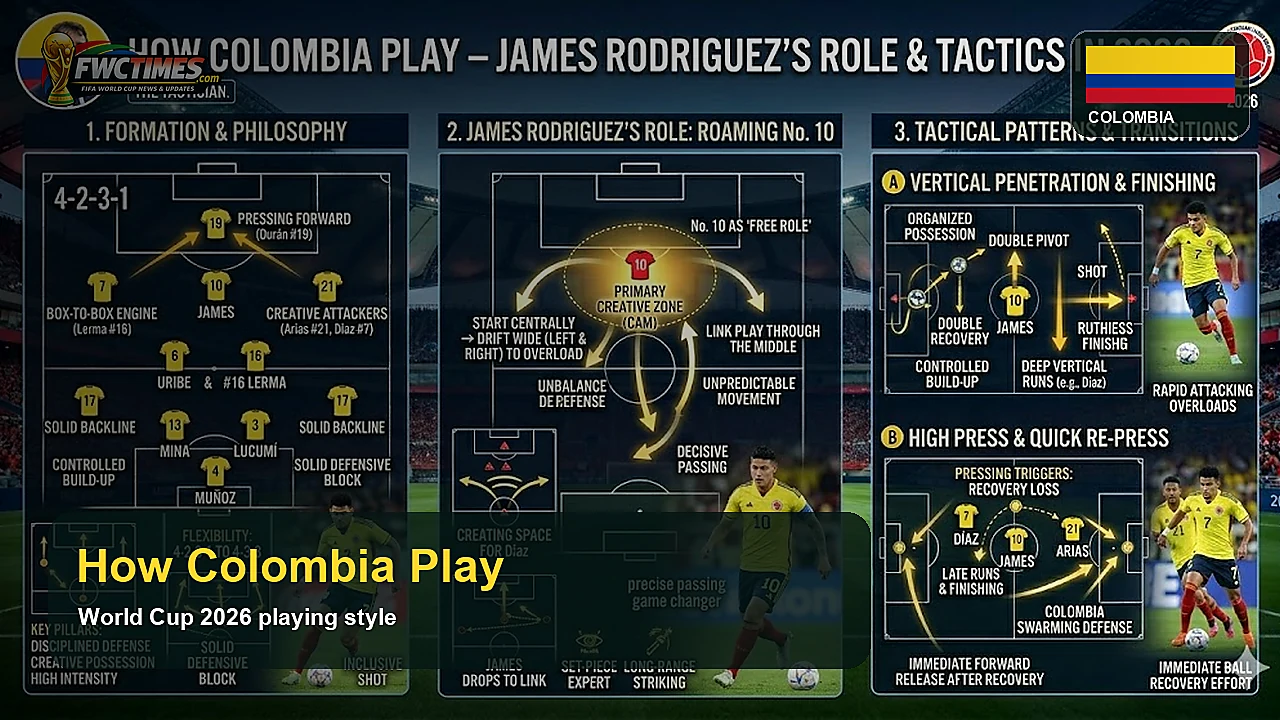
The Colombia playing style World Cup 2026 approach runs on a balanced, transition-heavy system established by head coach Néstor Lorenzo. Lorenzo has successfully blended a disciplined defensive structure with rapid, vertical attacking play. In fact, Colombia qualified third in the CONMEBOL standings with 28 points, recording 28 goals to finish as the second-highest scoring team in South American qualifying. This tactical model relies on the creative orchestration of James Rodríguez and the explosive pace of Luis Díaz.
The physical load of the expanded 48-team schedule plays a central role in Colombia’s tournament preparation. Lorenzo has cultivated a tight-knit, family-first squad culture to maintain high morale and physical durability across travel demands. As a result, the team uses structured rotations in midfield to preserve energy for their high-intensity pressing cycles. This physical capacity helps the squad maintain their shape during demanding group stage matches.
The history of the tournament shows that Colombia is capable of producing deep runs, highlighted by their historic quarter-final appearance in 2014. Lorenzo has returned stability to the national team, building an undefeated streak during the initial ten rounds of qualifying. The coaching staff has designed a system that balances tactical freedom for playmakers with rigid defensive coverage. Tricolor enters Group K hoping to challenge the tournament’s elite.
The Flexible 4-2-3-1 Structure
Néstor Lorenzo has modernized Colombia’s play by installing a flexible 4-2-3-1 formation as their tactical baseline. The system frequently transitions into a 4-3-3 shape to establish additional midfield control against possession-heavy opponents. This structure focuses on quick transitions from defense to attack, releasing wide forwards before the opponent can organize. The 4-2-3-1 formation World Cup guide compares these shapes to show how dual pivots manage transitions.
In possession, the fullbacks push high to provide attacking width, creating numerical superiority in wide areas. This movement allows the wide midfielders to cut inside into the half-spaces, creating passing triangles with the strikers. The central double pivot provides defensive screen, protecting the back four against quick opponent counters. The 4-3-3 formation World Cup guide explores how attacking shapes morph to dominate wide spaces.
James Rodríguez as the Midfield Orchestrator
Captain James Rodríguez serves as the primary creative playmaker and heartbeat of Colombia’s attacking system. Operating with tactical freedom in the number ten role, James dictates match tempo and links midfield with attack. His vision and passing range are critical for unlocking compact low blocks. James recorded six assists and led CONMEBOL qualifying with 61 key passes.
Richard Ríos and Manuel Ugarte-style defensive pivots provide the physical coverage needed to support James’ creative role. They screen the space in front of the centre-backs, intercepting passes and winning central duels. This central stability allows James to stay higher up the pitch, conserving energy for transition moments. The possession football World Cup guide explains how defensive midfielders support playmakers.
Vertical Speed with Luis Díaz
The attacking system relies on Luis Díaz to provide direct threat and pace on the left flank. Díaz challenge defenders in 1v1 situations constantly, using his speed to stretch the opponent’s defensive line. He led Colombia’s qualifying campaign with seven goals, demonstrating his clinical finishing in transition. Díaz’s wide runs open spaces in the center for supporting midfielders to exploit.
Jhon Arias supports the attack from the right wing, cutting inside to link up with James and the striker. This narrow positioning creates overloads in the half-spaces, making it difficult for opponents to defend central channels. The Portugal playing style World Cup guide shows how group opponents structure their defensive systems to counter wide pace.
CONMEBOL Qualifying Standings and Statistics
Colombia secured direct qualification by finishing third in the South American standings, just behind Argentina. The squad recorded seven wins, seven draws, and four losses across their 18 qualifying matches. They scored 28 goals while conceding 18, demonstrating a strong offensive output. Colombia enters Group K alongside Portuguese national team, Uzbekistan, and Republic of the Congo.
| Statistic | Value | | :— | :— | | Group Position | 3rd (CONMEBOL) | | Matches Played | 18 | | Wins | 7 | | Goals Scored | 28 | | Goals Conceded | 18 | | Top Scorer | Luis Díaz (7 Goals) |
This record shows that Lorenzo’s transition model has delivered consistent results against top South American nations. The squad enters the tournament with a clear understanding of their tactical roles. This balance of playmaking and speed makes them a major threat in Group K.
Key Vulnerabilities of the Colombian System
The biggest tactical risk is the space left behind when fullbacks push forward to support the attack. Because Lorenzo demands overlapping runs, the wide defensive zones can be exposed during quick transitions. If the opponent wins the ball and releases runners quickly, the centre-backs must cover wide spaces. This vulnerability requires disciplined defensive tracking from the double pivot.
The system also faces a defensive coordination challenge when James Rodríguez is caught high up the pitch. If the opponent plays through the initial press, the midfield pivot can be overloaded. The backup midfielders must step up to maintain the defensive structure when key stars are bypassed. This challenge makes defensive synchronization a critical factor for Colombia’s success.
Expert Verdict
Colombia enters the 2026 World Cup with a mature system that balances defensive discipline with vertical speed. Lorenzo has created a cohesive unit that relies on James’ playmaking and Díaz’s individual pace. The flexible 4-2-3-1 shape and Ríos’ midfield energy give Colombia a solid tactical platform. The key to their tournament will be defending wide spaces during transition moments.
If they can maintain their defensive structure, Colombia will challenge Portugal in Group K. The match against the Portuguese will be a significant test of their tactical discipline. Lorenzo’s family-first culture has built the chemistry needed for a demanding tournament campaign. Colombia has the tools to progress deep, but they must avoid defensive errors in wide areas.