Best Managers World Cup 2026: Head Coach Tactical Rankings

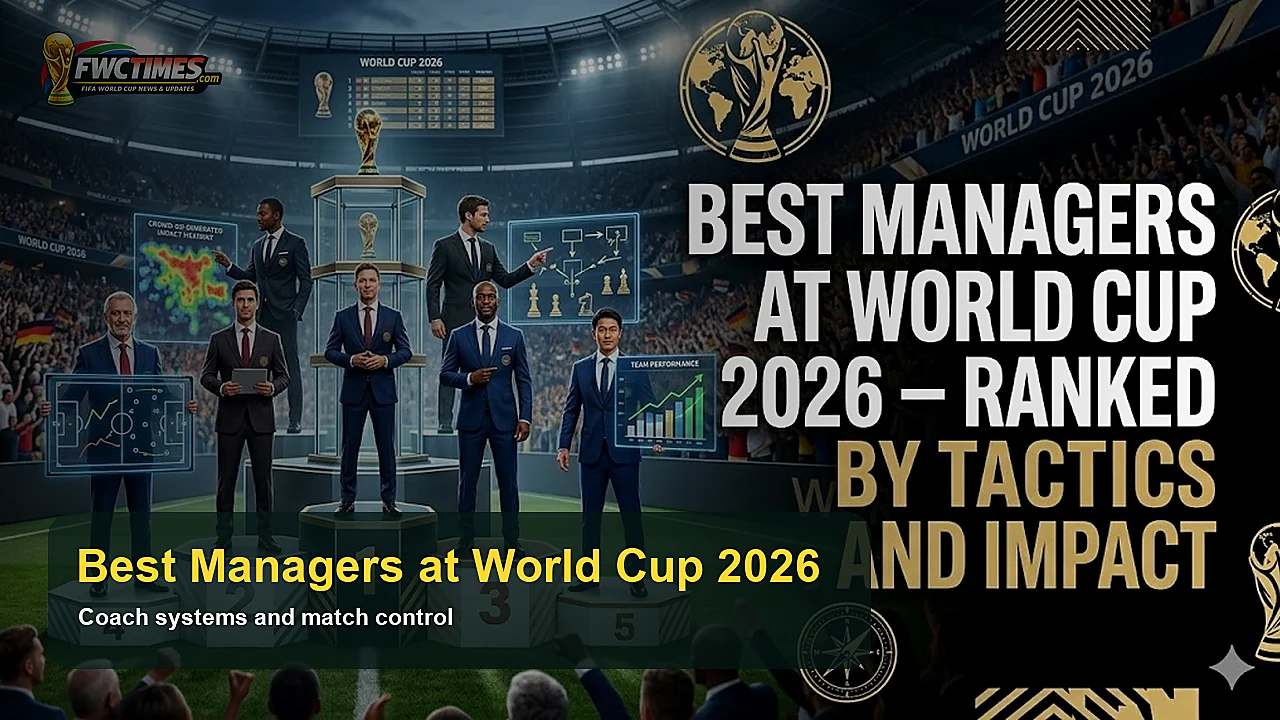
The best managers World Cup 2026 rankings highlight tactical innovation, squad rotation, and in-game adjustments as keys to success. In a 48-team bracket featuring 104 matches, head coaches face unprecedented scheduling and logistical challenges. In fact, managing player fatigue across multiple host countries requires elite squad rotation and load management. This tactical ranking evaluates the head coaches with the greatest strategic impact on the tournament.
The physical load of the expanded tournament format makes the manager’s role more critical than ever. Finalists must play up to eight matches over 39 days, meaning starting lineups must be rotated systematically. As a result, managers who utilize de facto four-quarter strategies during hydration breaks possess a significant tactical advantage. Using laptops to communicate live data adjustments during these 3-minute breaks has become a standard requirement.
The history of the tournament shows that native managers with simple, pragmatically organized structures dominate the trophy room. Every single World Cup-winning head coach has managed their own home nation. The coaching staff of the top-seeded teams has spent the qualifying period refining flexible systems to exploit defensive transition gaps. These tactical leaders enter the group stage aiming to out-think their opponents on the bench.
Scaloni and Ancelotti Leading the Elite Tier
Lionel Scaloni of Argentina occupies the top spot in our tactical rankings for the 2026 tournament. As the defending World Cup and Copa América champion, Scaloni has built a highly flexible, liquid system around Lionel Messi. He drops Messi into playmaking zones while his workhorse midfielders cover the defensive space. The Argentina playing style World Cup 2026 guide details how Scaloni manages these fluid structures.
Carlo Ancelotti of Brazil represents the most high-profile managerial appointment in recent international history. Taking charge of the Seleção in May 2025, Ancelotti has brought his Champions League-winning pedigree to South America. He utilizes a fluid attacking shape that encourages Vinicius Junior to exploit wide channels in 1v1 situations. The Brazil playing style World Cup 2026 guide explores how Ancelotti’s system adapts to defensive blocks.
Deschamps, Tuchel, and the Pragmatic Masterminds
Didier Deschamps of France remains one of the most successful and consistent tournament managers in international football. Deschamps prioritizing defensive organization, absorbing pressure, and releasing Kylian Mbappé on rapid vertical transitions. His pragmatic style has guided France to consecutive World Cup finals, proving the value of structural stability. The France playing style World Cup 2026 guide explores his tactical choices.
Thomas Tuchel of England brings elite tactical flexibility and knockout tournament expertise to the English bench. Tuchel’s defensive-first model delivered an unbeaten qualifying run, conceding zero goals across their eight matches. He runs a compact 4-2-3-1 dual-pivot block that screens the defense and releases wide forwards quickly. The England playing style World Cup 2026 guide explains how Tuchel’s structure maximizes Harry Kane’s hold-up play.
Bielsa, Nagelsmann, and Austria’s Range
Marcelo Bielsa of Uruguay continues to influence the tournament with his signature man-oriented high-pressing system. Bielsa demands relentless running and physical intensity, forcing opponents to make errors in their own half. Julian Nagelsmann of Germany utilizes an inverted box midfield to control central spaces and create wide overloads. The Spain playing style World Cup 2026 guide compares these vertical systems to de la Fuente’s vertical 4-3-3 shape.
Ralf Rangnick of Austria has built the most tactically intense pressing side in Europe using his Gegenpressing model. Rangnick demands immediate recovery within three seconds of possession loss, closing central channels. Wataru Endo-anchored Japan under Hajime Moriyasu also operates as a chameleon press, shifting shapes fluidly. The high press World Cup guide explores the mechanics of Rangnick’s pressing waves.
Manager Rankings and Qualifying Records
Manager rankings are calculated using qualifying performance, squad depth utilization, and tactical complexity. These metrics show which coaches have built the most balanced systems. Analysts use this structured data to project potential tournament paths for each national team.
| Manager | Team | Key Tactical Style | Roster Depth Rating | | :— | :— | :— | :—: | | **Lionel Scaloni** | Argentina | Liquid 4-3-3 / Central Diamond | Elite | | **Carlo Ancelotti** | Brazil | Fluid Attacking Shape | Elite | | **Didier Deschamps** | France | Pragmatic Counter-Attack | Elite | | **Thomas Tuchel** | England | Dual-Pivot 4-2-3-1 | High | | **Marcelo Bielsa** | Uruguay | Man-Oriented High Press | High |
This data shows that the elite managers enter the tournament with established tactical foundations. The coaches have spent the qualification period preparing their squads for the physical load of the tournament. This tactical preparation makes them the favorites to navigate the expanded bracket.
Key Vulnerabilities of Elite Managerial Systems
The biggest tactical risk for managers running high-intensity pressing styles is the fatigue of their starting eleven. If a coach like Bielsa fails to rotate his midfield engine, the team can suffer from late-game breakdowns. Opponents look to exploit these moments when pressing intensity drops and spaces open behind the midfield. This risk requires perfect timing of tactical substitutions to maintain structure.
Managers also face a selection dilemma when adapting their systems to high-altitude or hot host venues. Committing too many players forward in high-altitude stadiums can leave the defense exposed during quick transitions. The coach must adapt their starting shape, occasionally dropping into a low block to preserve player energy. This challenge makes tactical pragmatism and in-game flexibility critical factors for success.
Expert Verdict
Managerial decisions will decide the matches in the knockout rounds of the 2026 World Cup. Scaloni and Ancelotti possess the most flexible squads, allowing them to shift shapes without losing structural balance. The expansion to eight matches for finalists will test the tactical depth of every coaching staff. The key to winning the trophy will be managing physical recovery while adjusting tactics during hydration breaks.
If the top managers execute their rotation plans cleanly, they will avoid physical decline in the late stages. The matches in the high altitudes of Mexico will be a significant test of managerial adaptation. Coaches who utilize their benches effectively will keep their key finishers fresh for the final rounds. Scaloni’s liquid model looks the most sustainable system to lift the trophy.