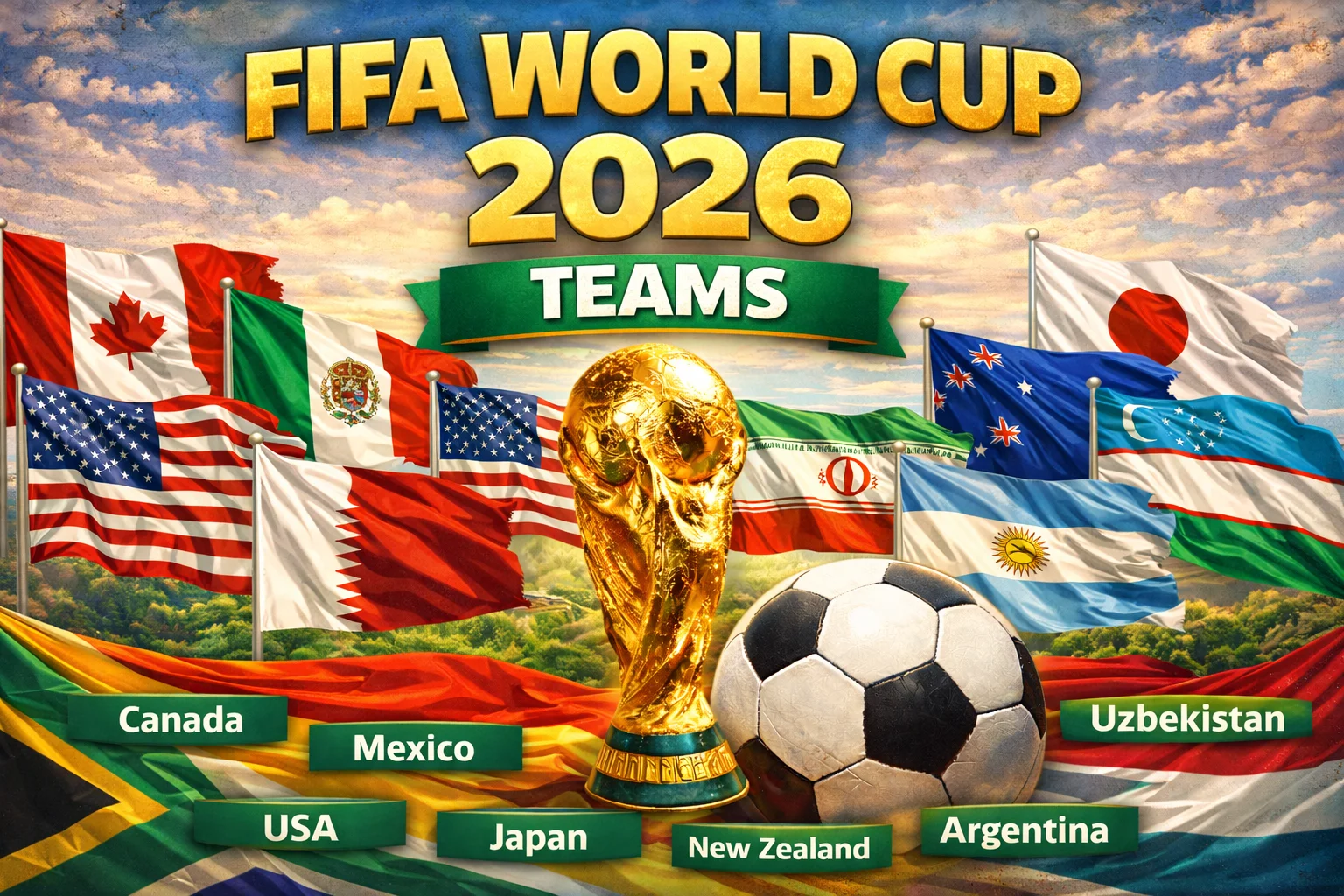
FIFA World Cup 2026 Teams, Qualified Nations, Playoffs, and Full 48-Team Breakdown
The FIFA World Cup 2026 teams list is taking shape, and the scale already feels different from any recent tournament. This guide explains which nations are listed as qualified, how the remaining places are decided, and why the word qualified can mean different things depending on the confederation.
World Cup 2026 is hosted by Canada, Mexico, and the United States, so those three teams are automatically in. After that, the rest of the field comes through confederation qualifying and the inter-confederation playoff event that awards the final two World Cup places.
2026 World Cup qualified nations, tournament entrants, and 2026 World Cup squads. Those phrases all point to the same thing keeping track of who is in, who is close, and which routes still remain.
World Cup 2026 format that shapes the teams list
World Cup 2026 expands to 48 teams, moving away from the traditional 32-team setup. The structure described here uses 12 groups of four teams each. The top two teams from each group advance, along with eight best third-placed teams.
That change affects everything. More teams qualify directly from each region, and the tournament includes more games overall. The expanded field also shifts the pressure. There is more room for new flags and first-time stories, yet the final spots still require playoff wins under intense spotlight.
How “48 teams” changes the pressure
A bigger tournament does not remove tension. It spreads it. Direct slots increase for many confederations, so more teams can realistically target qualification. At the same time, the last few places often come down to knockout-style matches, where one mistake can end an entire cycle.
For fans, the simplest way to understand the format is to separate the World Cup build-up into three parts:
- Automatic qualification for the three hosts
- Direct qualifiers coming through each confederation’s path
- Playoff routes that decide the last places, including the inter-confederation playoff event
Confederation slot allocation for the 48-team tournament
The confederation allocation below explains why the qualified teams list grows quickly, but still ends with late playoff drama. It also helps readers understand why different regions talk about qualification differently.
Confederation slots and playoff pathway
| Confederation | Direct slots | Playoff slots |
|---|---|---|
| AFC (Asia) | 8 | 1 |
| CAF (Africa) | 9 | 1 |
| CONCACAF (North/Central America & Caribbean) | 3 (+ 3 hosts) | 2 |
| CONMEBOL (South America) | 6 | 1 |
| OFC (Oceania) | 1 | 1 |
| UEFA (Europe) | 16 | 0 |
| Inter-confederation playoffs | 2 spots decided | 6 teams total |
FIFA World Cup 2026 teams already qualified
A widely shared qualification snapshot lists 42 teams as qualified (updated through November 18, 2025). In that same snapshot, Europe still has four remaining places to be decided through UEFA playoffs ending in March 2026. Two final World Cup tickets are decided in the inter-confederation playoffs at the end of March 2026.
It helps to read the list by confederation. This keeps the total clearer and reduces confusion when fans see “playoff teams” discussed alongside “qualified teams.”
Qualified teams by confederation
| Confederation | Teams qualified |
|---|---|
| Hosts | Canada, Mexico, United States |
| AFC | Japan, Iran, Uzbekistan, South Korea, Jordan, Australia, Qatar, Saudi Arabia |
| CAF | Morocco, Tunisia, Egypt, Algeria, Ghana, Cape Verde, South Africa, Ivory Coast, Senegal |
| CONMEBOL | Argentina, Ecuador, Colombia, Uruguay, Brazil, Paraguay |
| OFC | New Zealand |
| CONCACAF | Panama, Haiti, Curaçao |
| UEFA (group winners so far) | Germany, Switzerland, Scotland, England, France, Spain, Portugal, Netherlands, Belgium, Austria, Croatia, Norway |
Notable first-time qualifiers and debut stories
Several debut stories stand out because they reshape the usual World Cup narrative. The qualification summary highlights Cape Verde, Curaçao, Jordan, and Uzbekistan as first-time qualifiers in the snapshot.
These teams bring something valuable to a 48-team era: fresh matchups and new fan bases. For neutral supporters, debutants often become easy teams to follow because every moment feels like history.
Why debutants matter in a 48-team World Cup
A tournament with more teams creates more variety. It also changes how fans talk about “underdogs.” Some first-timers arrive with organized play, strong motivation, and a clear identity built in qualifying. That makes early group games more unpredictable, even when the opponent is a traditional powerhouse.
UEFA’s remaining four spots and why March 2026 matters
Europe has 16 total World Cup places. In the snapshot list, 12 are shown as confirmed group winners so far. The remaining four UEFA spots are decided through a playoff stage scheduled to conclude by March 31, 2026.
Playoffs can change the tone of the final lineup. A team can look strong over months of qualifying, then face a single high-pressure match that decides everything. That is why fans often see sudden swings in the “final list” once March arrives.
What to watch in UEFA playoffs
UEFA playoffs bring a unique type of pressure:
- Seeded advantages that shape the path
- One-off match tension where one goal can decide a cycle
- Tactical caution, because coaches often prioritize not losing over playing open football
Even neutral fans tend to watch these matches closely. They feel like mini-finals, played before the actual World Cup begins.
Inter-confederation playoffs: the final two World Cup tickets
The final step is the inter-confederation playoff event that awards the last two World Cup places. Six teams enter, and only two qualify, which creates a mini World Cup atmosphere in just days.
Because most confederations gained extra direct spots, the remaining playoff teams are often strong and fully motivated. That makes the last two tickets difficult, even for nations with bigger reputations.
Teams listed for the inter-confederation playoffs
Based on the qualification pathway summary, these teams are listed as playoff participants:
- Iraq (AFC)
- Bolivia (CONMEBOL)
- DR Congo (CAF)
- Jamaica (CONCACAF)
- Suriname (CONCACAF)
- New Caledonia (OFC)
Two will earn World Cup places. Four will miss out at the final hurdle.
Why these playoffs feel different in a 48-team era
These games are short, sharp, and unforgiving. There is no long group stage to recover from a slow start. That urgency usually produces intense football, emotional finishes, and moments fans remember long after the tournament begins.
A fan-friendly way to track team updates without confusion
It is easy to mix up qualified, in playoffs, and still alive, especially because confederation formats vary. A simple tracking method keeps the situation clear for readers and helps your site stay consistent during update spikes.
Step-by-step tracking checklist
- Start with confirmed qualified teams, including the three hosts, and keep a running total toward 48.
- Separate UEFA playoff contenders from inter-confederation playoff contenders, because they award different slots.
- Track the playoff end dates, because timing drives headlines and search trends, especially in March 2026.
This approach also helps when fans see different lists online. Some lists mix “qualified” and “playoff participants.” Others only show confirmed entrants. Keeping categories separate prevents confusion.
Big-name contenders already listed as qualified
Even before the final 48 are complete, the confirmed teams include major names that shape expectations and spark global debate. Argentina and Brazil headline South America. France, England, Germany, Spain, Portugal, and the Netherlands lead the European list shown in the snapshot.
The co-host trio also changes the feel of the tournament. Canada, Mexico, and the United States will have home crowds, familiar travel conditions, and heavy media attention from day one.
Traditional powerhouses and what fans expect
When the biggest football nations are on the list early, the conversation shifts from “will they qualify” to “how far can they go.” That brings more focus on matchups, group difficulty, and potential knockout paths, even before the full field is set.
Rising and returning programs to watch
The qualified list also includes teams that create strong storylines without being traditional favorites. Morocco’s momentum remains a major talking point. Several African qualifiers look competitive and carry strong international talent pools.
Norway adds a different kind of buzz. A star-driven team often pulls neutral fans into matches they might not otherwise watch, and that attention tends to grow as the World Cup approaches. You can check also Top 10 Players to Watch at World Cup 2026.
Why these storylines matter for fans
A World Cup is not only about the trophy. It is also about identities, journeys, and moments. New qualifiers, returning programs, and rising teams often deliver the most emotional scenes of the tournament, especially in group-stage matches where every point matters.
Groups, venues, and tournament timeframe
The tournament is set for summer 2026 and will be staged across 16 cities. Venue mentions include iconic stadiums such as Estadio Azteca and MetLife Stadium. The final is set at MetLife Stadium on July 19, 2026. The tournament dates described here run from June 11 to July 19.
Time zones will shape the viewing experience for fans worldwide. Broadcasters adjust, and supporters often plan around kickoff windows, especially for matches played in North America.
Group stage structure
The group stage uses 12 groups of four teams. After group play, the top two teams advance, plus eight best third-placed teams. This format increases the number of teams that can realistically reach the knockout rounds, which adds intensity to third-place battles across the final group matchdays.
FAQs
The final tournament will include 48 teams, including the three host nations.
Canada, Mexico, and the United States qualify automatically as hosts.
The qualification snapshot lists 42 qualified teams as of November 18, 2025, with more to be decided afterward.
Four places come from UEFA playoffs ending in March 2026, and two places come from the inter-confederation playoff event.
The listed playoff teams are Iraq, Bolivia, DR Congo, Jamaica, Suriname, and New Caledonia, fighting for two spots.