Why FIFA World Cup Has 48 Teams: Explained

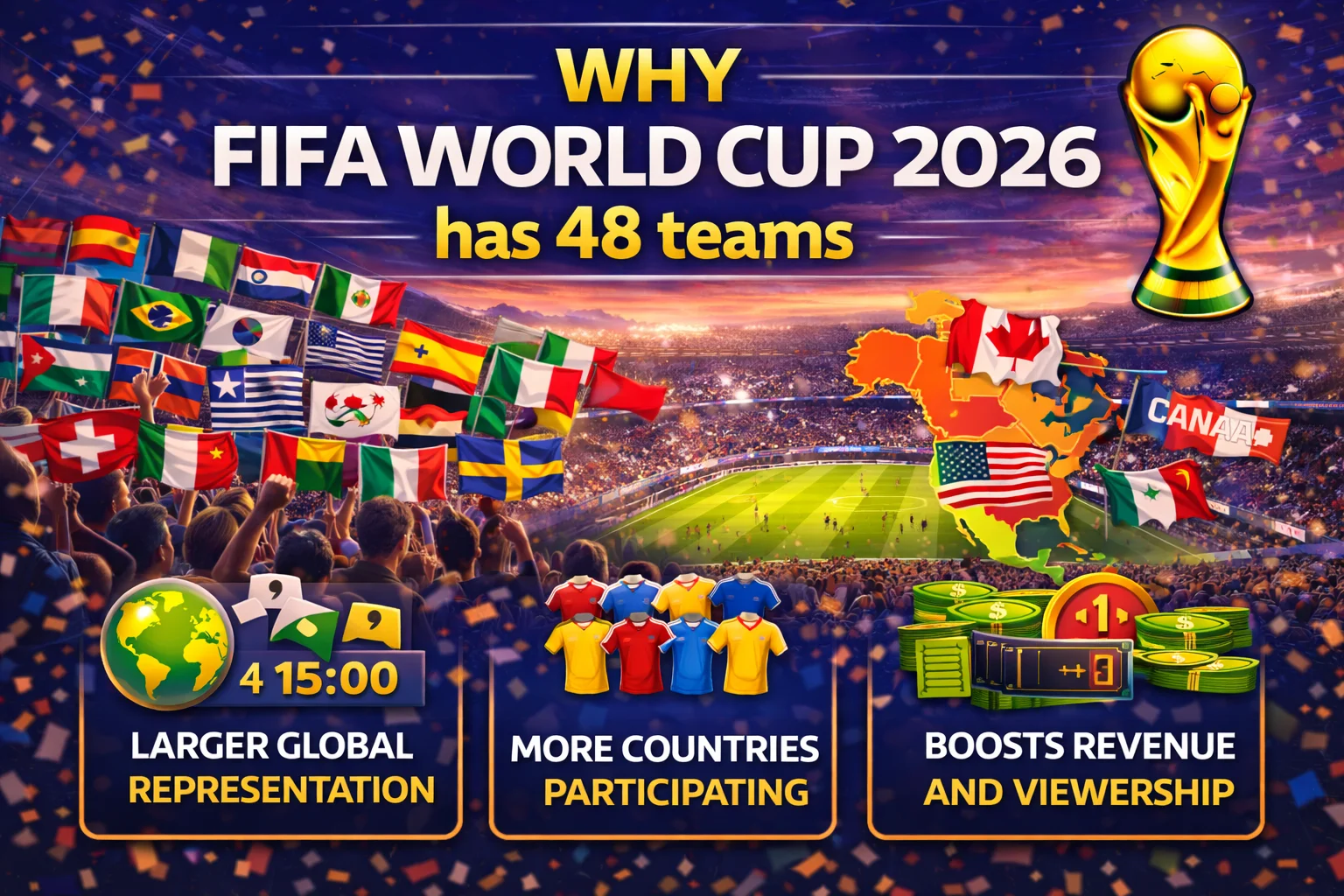
Understanding why FIFA World Cup has 48 teams in 2026 helps fans follow the expanded tournament structure. FIFA approved the change to give more nations a chance to compete on the biggest stage in global football. The decision reshaped qualification structures, the match count, and the entire bracket format.
The expanded field adds 16 more teams compared to the 32-team era. More confederations received additional qualification spots, particularly across Africa and Asia. Fans from more continents will see their national teams compete in the summer of 2026 as a direct result.
The three-host setup across the United States, Canada, and Mexico makes the larger format workable. More stadiums and cities are available to absorb the higher number of matches. That hosting model fits this edition far better than a single-host structure would allow.
This guide covers the main reasons behind FIFA’s decision and how the new format changes the group stage. It also covers the new knockout bracket structure and what the expansion means for fans and participating nations.
Why does FIFA World Cup 2026 have 48 teams?
FIFA expanded the World Cup from 32 to 48 teams to increase global representation. The format features 12 groups of four teams, with 32 sides advancing to a new Round of 32. More games, more nations, and more drama make 2026 the biggest World Cup ever staged.
| Feature | 32-Team World Cup (Old Format) | 48-Team World Cup (2026) |
|---|---|---|
| Teams | 32 | 48 |
| Group structure | 8 groups of 4 | 12 groups of 4 |
| Group matches per team | 3 | 3 |
| First knockout round | Round of 16 | Round of 32 |
| Total matches | 64 | 104 |
Why FIFA World Cup has 48 teams: the main reasons
FIFA’s decision was backed by financial and sporting arguments. The three-host model across the US, Canada, and Mexico made the larger field operationally workable. Venue quality and fan experience were maintained throughout the planning process.
A larger tournament also creates more broadcast inventory and ticket revenue. That funding flows back into development programs across smaller footballing nations. The financial case backed the sporting one, and FIFA moved forward with the expansion.
Group stage changes showing why FIFA World Cup has 48 teams
The 48-team format uses 12 groups of four teams in the group stage. Each team still plays exactly three group games, preserving the familiar rhythm fans know. The top two from each group advance, plus the eight best third-place finishers, to form a 32-team knockout field.
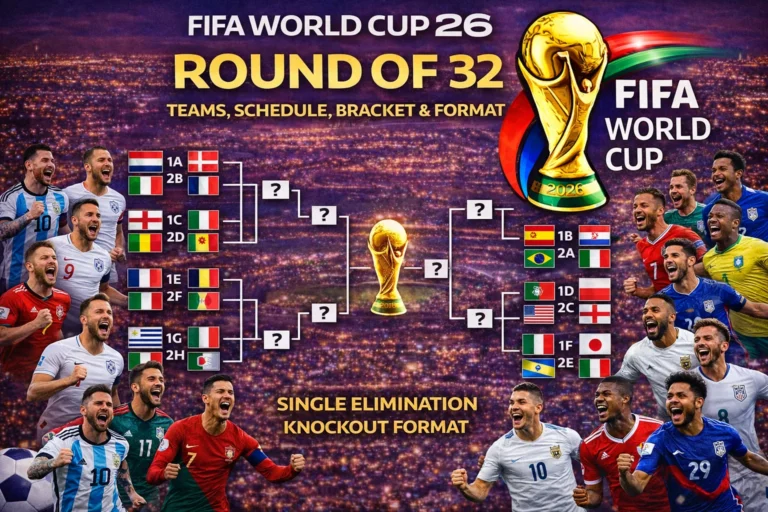
The old knockout bracket began at the Round of 16. The 2026 bracket adds a new Round of 32 before that stage. More do-or-die games define the opening knockout weekend, raising the chance of early upsets.
The three-host setup and how it supports 48 teams
The United States hosts 60 of the 104 total matches, including the Final. Canada and Mexico host the remaining games across their respective venue cities. A wider geographic spread across three nations makes hosting the larger format realistic.
The total match count rises from 64 to 104 games. More games means more content for broadcasters, streaming platforms, and global audiences. Fans can watch more of their national teams compete across more tournament days than ever before.
Qualification changes: where the extra spots came from
The qualification allocation changed across every confederation for 2026. AFC received 8 direct spots, CAF received 9, CONMEBOL received 6, and UEFA received 16. CONCACAF received 6 spots including the host-nation automatic places.
Confederation-specific breakdowns are available in the AFC World Cup qualification guide and the CAF World Cup qualification guide. Both pages cover the additional spots and what the expansion meant for each region’s qualifying campaign.
Playoff paths also provide additional routes into the tournament. Cross-confederation playoffs give borderline qualifiers from different regions a final chance. That structure adds late drama before the full 48-team field is confirmed.
Benefits and criticism of a 48-team World Cup
Supporters who follow emerging nations will see their teams on the main stage for the first time. Fans in the US, Canada, and Mexico have easier access to a huge range of international clashes. The three-host model makes it simpler to attend multiple games without crossing an ocean.
Critics argue that adding weaker teams may lower average match quality in group games. Player workload increases with the extra knockout round added to the bracket. FIFA has countered that the group format stays the same and qualification standards remain strong throughout.
Fixture congestion for club football is another concern raised around the expanded tournament window. The extra knockout round adds up to two more games for teams that reach the Final. FIFA acknowledges these concerns but maintains the format delivers greater value for the sport globally.
Frequently Asked Questions
Why FIFA World Cup has 48 teams instead of 32?
FIFA expanded the tournament to include more nations and increase global representation. The three-host model made the larger field operationally workable. Venue quality and fan experience were maintained throughout planning.
How does the 48-team format change the group stage?
The group stage now uses 12 groups of four teams instead of eight. Each team still plays three group matches. The top two from each group and the eight best third-place finishers advance to the Round of 32.
What is the new Round of 32 at the 2026 World Cup?
The Round of 32 is an additional knockout round before the Round of 16. Thirty-two teams compete in single-elimination games earlier in the tournament. This raises the chance of early upsets from strong qualifying nations across all confederations.
How many total matches are in the 2026 World Cup?
The 2026 World Cup features 104 total matches, up from 64 in the old 32-team format. The United States hosts 60 of those games, including the Final. Canada and Mexico share the remaining fixtures across their respective host cities.
Conclusion
FIFA World Cup 2026 has 48 teams because the sport has outgrown a 32-nation format. More representation, more revenue reinvestment, and a workable three-host model made expansion possible. The result is the most inclusive and expansive World Cup ever planned.
Read Also: Extra Time Rules for World Cup 2026