Brazil Coach Change World Cup 2026: Ancelotti’s Impact

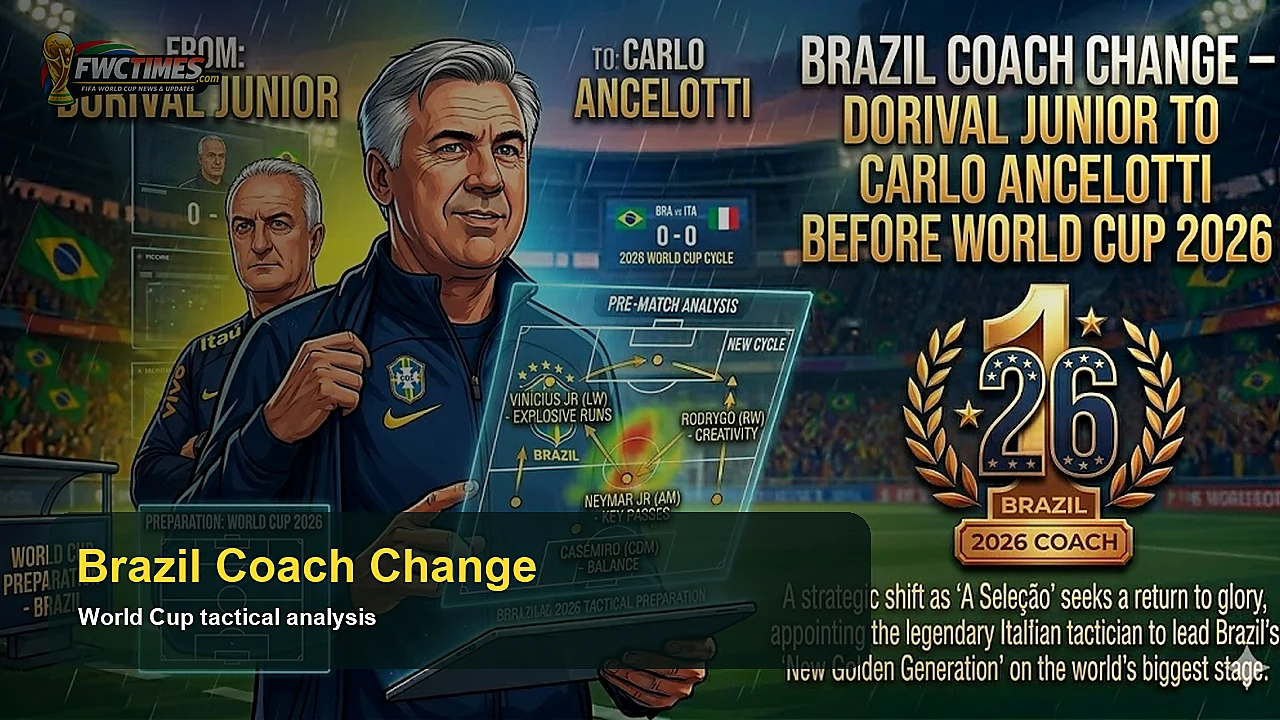
The Brazil coach change World Cup 2026 transition is a major shift, replacing Dorival Júnior with Carlo Ancelotti. The Brazilian Football Confederation (CBF) executed this high-profile appointment to restore tactical stability and European winning pedigree to the squad. In fact, Brazil struggled throughout the early stages of CONMEBOL qualifying, prompting the federation to make a change. This coaching transition has reshaped Brazil’s tactical identity ahead of the tournament.
The physical load of the expanded 48-team schedule plays a central role in Ancelotti’s tournament preparation. Taking charge in May 2025, Ancelotti immediately focused on building roster depth to handle the demanding eight-match bracket. As a result, Brazil uses a fluid attacking shape that distributes running workloads across their fast forwards. This physical management is essential for sustaining performance levels during summer heat in North America.
The history of the tournament shows that Brazil’s success is built on combining individual brilliance with structural balance. Ancelotti has extended his contract to lead the Seleção through the 2030 World Cup, demonstrating the federation’s long-term trust. The coaching staff has designed a system that mimics Ancelotti’s Real Madrid setups to exploit wide channels. Brazil enters the group stage hoping to lift their sixth title.
Replacing Dorival Júnior with Carlo Ancelotti
Dorival Júnior managed the Brazilian national team from January 2024 until March 2025, prioritizing a balanced, cautious playing style. While Dorival stabilized the defense, the team struggled to score consistently and create clear opportunities in tight qualifying matches. Following his departure, Dorival went on to coach Corinthians and São Paulo, while Brazil finalized the appointment of Ancelotti. This transition marked the end of a transitional phase for the Seleção.
Carlo Ancelotti took formal charge of the squad in May 2025, immediately introducing his signature fluid attacking shape. He shifted Brazil away from a rigid positional structure to allow creative players more freedom in the final third. The Brazil playing style World Cup 2026 guide explores the details of Ancelotti’s tactical setup. Ancelotti’s arrival has returned confidence to a squad that had struggled against top South American rivals.
Restructuring around Vinícius Júnior and Attacking Freedom
Carlo Ancelotti has built his attacking system around Vinícius Júnior, utilizing his explosive pace and dribbling on the left flank. He gives Vinícius a free-roaming role similar to his positioning at Real Madrid, allowing him to cut inside and shoot. This freedom stretches opponent defensive lines, opening pockets of space for central midfielders. The best managers World Cup 2026 rankings show how Ancelotti’s player management compares to other elite coaches.
The midfield double pivot provides defensive security behind this fluid attacking line. Bruno Guimarães screens the back four, winning central duels and distributing the ball quickly to wide outlets. This defensive cover is critical because fullbacks must overlap to provide attacking width on the flanks. The possession football World Cup guide explains how dual pivots secure the midfield during transition phases.
Pre-Tournament Statistics and Rebuilding Standings
Brazil qualified for the 2026 World Cup after finishing fifth in the highly competitive CONMEBOL standings. The federation made the coaching change to address these inconsistent qualifying results and prepare the squad for tournament play. This decision reflected a need for deeper tactical innovation.
| Head Coach | Tenure Period | Core Formation | Qualifying Standings | | :— | :— | :— | :—: | | **Dorival Júnior** | Jan 2024 – Mar 2025 | Rigid 4-3-3 | 5th (CONMEBOL) | | **Carlo Ancelotti** | May 2025 – Present | Fluid 4-2-4 / 4-3-3 | Qualified (5th) |
This data shows that the coaching change was executed to address Brazil’s offensive struggles during the qualifying period. Under Ancelotti, the squad has rebuilt their confidence, entering the tournament with a clear tactical plan. This structural stability makes them a major threat in the knockout rounds.
Key Vulnerabilities of Ancelotti’s Brazil System
The biggest tactical risk is the space left behind when the team transitions from attack to defense. Because Ancelotti encourages fullbacks to push forward, the wide defensive channels are vulnerable to quick counterattacks. If the opponent wins the ball and plays early vertical passes, the centre-backs are forced into 1v1 footraces. This vulnerability requires perfect positioning and timing from the defensive line.
The system also faces a roster depth challenge up front due to injuries to key forwards. With Rodrygo unavailable after a torn ACL and Neymar managing a calf recovery, rotation options are limited. The backup forwards must execute the fluid movement patterns to prevent the attack from becoming predictable. This challenge makes player physical conditioning a critical factor for Brazil’s success.
Expert Verdict
The Brazil coach change World Cup 2026 transition has transformed the Seleção into a highly dynamic, fluid attacking team. Carlo Ancelotti has brought the tactical maturity and knockout experience needed to navigate the expanded bracket. The fluid attacking shape and Vinícius Júnior’s individual quality give Brazil a very high ceiling. The key to their tournament will be defending the wide channels during transition moments.
If they can maintain defensive balance, Brazil will challenge for the trophy in the late stages. The opening group matches will be a significant test of Ancelotti’s defensive transition speed. The contract extension through 2030 has removed any media distractions from the dressing room. Brazil has the tools to progress deep, but they must protect the space behind their fullbacks.