How France Play at the 2026 World Cup

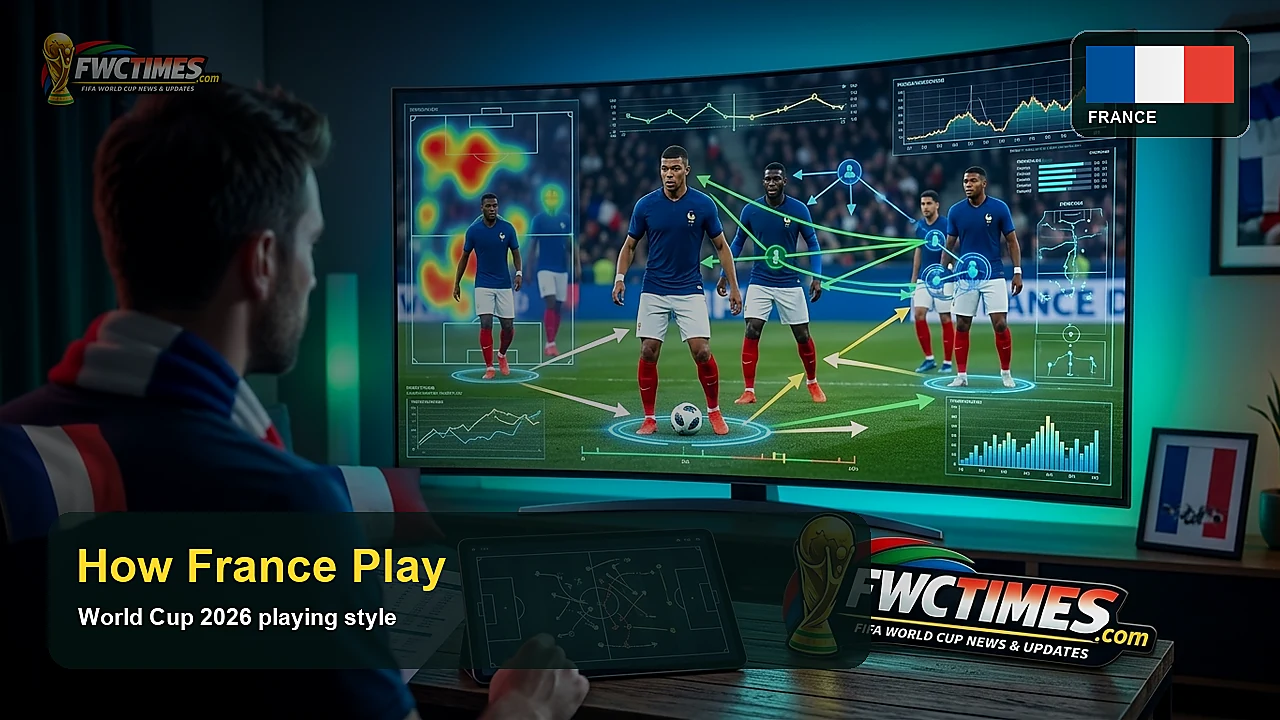
The France playing style World Cup 2026 approach runs on a pragmatic 4-2-3-1 structure built by Didier Deschamps. Deschamps has redesigned the team around vertical speed, defensive resilience, and a refreshed midfield engine. In fact, France conceded just four goals in their six qualifying matches to finish top of Group D. This tactical shape aims to absorb opponent pressure and release Mbappe into open space immediately.
This campaign represents a significant shift for the French national team. Deschamps has excluded several long-time veterans, presenting a younger and more physical squad. The absence of Antoine Griezmann removes the hybrid playmaker role that defined previous campaigns. As a result, France relies on a direct midfield pairing to dictate tempo and secure the pitch.
The physical constraints of the 104-match tournament influence France’s strategic planning. The travel distances between host cities make sustained high-intensity pressing risky for the players. Deschamps prioritizes a mid-block trap that conserves player energy across the schedule. This defensive discipline is what keeps France among the primary title contenders.
The Pragmatic 4-2-3-1 System
Didier Deschamps has installed a rigid 4-2-3-1 shape as France’s primary tactical baseline. The system focuses on defensive stability, keeping the central lanes congested to deny space. The double pivot shields the back four, while the wide attackers track back to help defend. This structure allows France to remain compact and difficult to play through.
The offensive phase relies on exploiting transition moments rather than sustained possession. When the team recovers the ball, the midfield plays direct passes to the wingers. This quick transition bypasses the opponent’s counter-press, releasing the forwards into space. The 4-2-3-1 formation World Cup guide shows how this shape balances defense and attack.
Mbappe’s Role as Focal Point and Captain
Kylian Mbappe leads the French attack as both the primary goalscorer and the squad captain. Deschamps uses a rest-attack strategy for Mbappe, exempting him from deep defensive duties. When France defends in their mid-block, Mbappe remains high to provide an immediate transition outlet. This positioning forces the opponent’s centre-backs to stay deep, stretching their shape.
Mbappe can operate as a lone center-forward or drift to his preferred left flank. When he cuts inside, he creates shooting angles and opens overlapping lanes for the left-back. His speed in transition remains France’s most dangerous weapon, pulling defenses apart. In fact, Mbappe’s vertical threat is the focal point of the entire French system.
The Refreshed Midfield Engine
The midfield has undergone a significant refresh due to the absence of Griezmann and Camavinga. Deschamps has built a powerful central pairing that emphasizes defensive shield work. This pairing intercepts passes and wins physical duels to control the middle third. On top of that, it provides a stable platform that protects the back four.
The midfielders focus on simple distribution rather than complex playmaking. They win the ball and release the wide forwards with direct passes. This functional approach keeps the team from losing possession in dangerous areas. The possession football World Cup guide explains how midfield pivots balance possession-heavy teams.
The Mid-Block Trap and Defensive Structure
France defends in a compact mid-block, sitting narrow to protect the central channels. The team does not use a constant high press, preferring to wait for specific triggers. When the opponent enters the middle third, France closes down passing lanes to force errors. The high press World Cup guide explores how top teams coordinate these pressing traps.
If the opponent plays through the first line, France drops into a low block. The shape becomes a tight 4-4-2, with the wide midfielders lining up with the double pivot. They push the play wide, isolating the ball-carrier against the touchline. This defensive organization is why France is so difficult to score against.
UEFA Qualifying Campaign and Statistics
France secured their World Cup place by winning UEFA Group D with an unbeaten record. The squad won five matches and drew once across their six qualifiers. They scored 16 goals while conceding just four, showing their balanced approach. The campaign ended with a dominant 4-0 win over Ukraine in November 2025.
| Statistic | Value | | :— | :— | | Group Position | 1st (Group D) | | Matches Played | 6 | | Wins | 5 | | Draws | 1 | | Losses | 0 | | Goals Scored | 16 | | Goals Conceded | 4 |
This record reflects a team that prioritizes defensive security over high-volume attacking. Deschamps uses these stats to validate his pragmatic approach to tournament play. The squad enters the group stage with a clear understanding of their defensive duties.
Key Vulnerabilities of the French System
The biggest tactical risk is the creative void left by Griezmann’s absence. Without Griezmann to link the play, France can struggle to break down deep low blocks. The midfield can look flat and predictable when asked to dominate possession. This limitation forces the team to rely heavily on Mbappe’s individual brilliance.
The space behind the fullbacks is another target for opposing coaches. Because the wide forwards must push high in transition, the fullbacks can be left isolated. Fast wingers can exploit these wide channels before the double pivot can cover. Against counter-attacking sides, this transition moment is where France is most exposed.
Expert Verdict
France enters the 2026 World Cup as a formidable block that is built to win tournaments. Deschamps has created a system that does not depend on aesthetic appeal to secure results. The pragmatic 4-2-3-1 shape and Mbappe’s vertical speed give France a championship floor. The key to their campaign will be finding creative solutions when transitions are denied.
If opponents sit deep and refuse to press, France must find alternative ways to score. Set pieces and individual dribbles will become critical in those matches. The squad has the physical tools to go deep, but their adaptability will decide their ceiling. France is built to survive, but they must evolve to dominate.