What is a Poacher in Football?

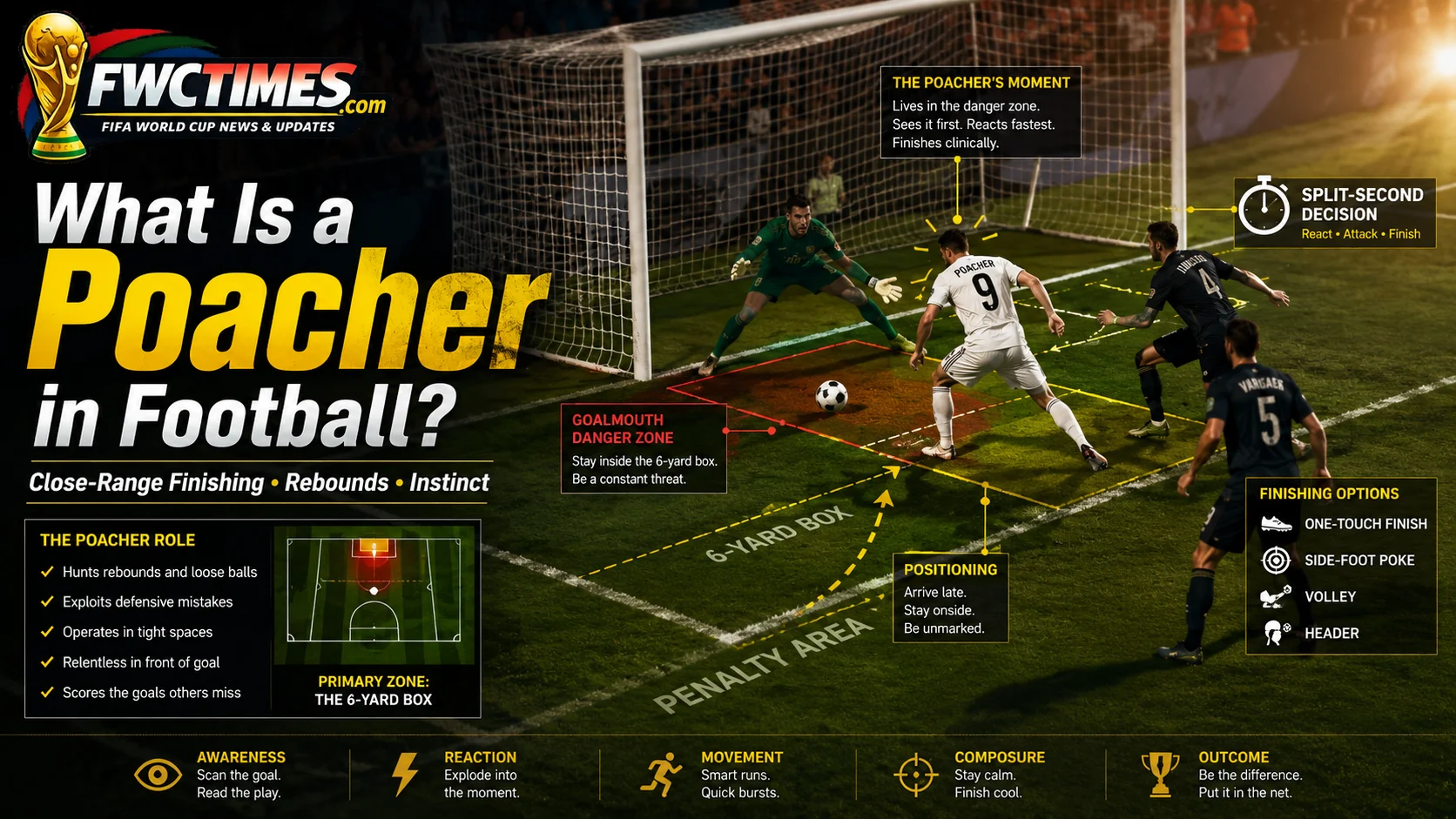
A poacher in football is a striker who specializes in scoring from close-range chances. This article explains the specific role, positioning rules, and history of these clinical goalscorers. These players live inside the penalty area and wait for loose balls to convert. We will analyze the tactical setup required to maximize their scoring potential.
The position requires high anticipation, excellent timing, and composed finishing under pressure. These strikers touch the ball less than their attacking teammates during build-up play. Their primary value comes from their positioning right before the final shot is taken. A single movement can turn a messy deflection into a match-winning goal.
Poacher in Football Role Explained
The forward positions themselves near the opponent’s defensive line during attacks. They constantly look for small gaps that open for only a fraction of a second. Unlike deep-lying forwards, they do not participate heavily in possession play. Instead, they focus on finding space between the opposing central defenders.
A successful scorer reads rebounds before the goalkeeper spills the ball. They follow every shot and anticipate mistakes from the defending team. This sharp anticipation turns routine saves into golden scoring opportunities. They must remain alert even when the play seems far away.
Key Poacher in Football Skills
Anticipation is the most critical asset for any penalty area finisher. The striker must guess where the ball will fall after a deflection. They also time their runs across defenders to meet wide crosses first. These movements allow them to score with simple first-time finishes.
Coaches design team tactics to feed these players inside the box. The midfielders must deliver quick passes before defenders can close the space. Having creative wingers on the flanks increases the productivity of the striker. Without good service, the forward can struggle to influence the match.
Key Poacher in Football Traits
The best scorers think and move before the defender reacts. They study the goalkeeper’s positioning and the speed of oncoming passes. They stay calm when the penalty area becomes crowded and messy. Most of their goals come from quick tap-ins and close-range headers.
These forwards prefer short explosive movements to long runs into space. They step away from markers to create yard-long spaces for shots. Coaches integrate these movements into various tactical formations to stretch teams. This positioning forces defenders to stay deep to prevent easy runs.
Poacher vs Striker and Centre Forward
A poacher represents a specific type of striker rather than a separate position. Standard strikers often run into channels and press defenders across the pitch. The box finisher concentrates almost exclusively on central scoring chances. This focus makes them highly efficient in the final third of the field.
A traditional centre forward in football holds the ball and connects midfield runs. The box scorer instead waits for the final pass near the goal line. This difference shapes how teams build their attacking plays during matches. Both roles offer unique advantages depending on the opponent’s defensive style.
Poacher Role Compared With Other Forwards
We compare the different attacking roles and their primary duties below. The breakdown illustrates how each forward type influences the team structure. Coaches select their starting forwards based on the defensive setup of the opponent. These tactical choices decide how the team will create scoring chances.
| Forward Type | Main Area | Key Action | Main Risk |
|---|---|---|---|
| Poacher | Penalty area | Finishes close chances | Limited build-up role |
| Centre forward | Central attack | Holds and links play | Needs support runners |
| False 9 | Between lines | Drops to create | Less box presence |
| Target forward | Against defenders | Wins aerial duels | Can slow attacks |
| Wide forward | Half-space or wing | Runs inside | May leave width |
Teams must provide consistent service to keep these finishers active. Without crosses or cutbacks, the forward can remain isolated for long spells. Coaches often pair them with a creative second striker to link play. This partnership helps create space and opens up the opposing defense.
Relevance to the FIFA World Cup 2026
Teams at the FIFA World Cup 2026 will value clinical penalty-box finishers. Tight knockout games often reward players who can convert half-chances. The expanded tournament format will bring more defensive blocks to the matches. Attackers must use their intelligence to find space in crowded boxes.
Portugal will rely on their experienced forwards to lead the attack. Manager selections and player tactics are yet to be confirmed for the event. The tournament matches will test the efficiency of these box scorers. We expect to see several tactical setups designed around close-range finishing.
Frequently Asked Questions
What is a poacher in football?
This term describes a striker who scores goals from close range. They specialize in finding space inside the opponent’s penalty box. The player relies on quick reactions to convert loose balls.
How does a poacher differ from a centre forward?
A centre forward holds the ball and connects midfield plays. A poacher stays near the goal and focuses on finishing chances. Both roles require different tactical instructions from the manager.
Are poachers still useful in modern football?
Yes, teams still value players who can finish chances efficiently. Modern coaches may ask these players to press the defenders. Their primary value remains their scoring ability inside the box.
What service does a poacher need to score?
The player relies on accurate crosses and quick cutbacks from wingers. They need midfielders to play creative passes behind the defensive line. Without regular service, they can become isolated during matches.
Will poachers be important at World Cup 2026?
Yes, clinical finishers will decide many close tournament matches in North America. Teams will face tight defenses that require quick penalty-box reactions. Composed forwards will play key roles for their nations.
Conclusion
The box finisher remains a critical weapon for any attacking team. Their role combines high tactical intelligence, quick movement, and simple finishing. While modern tactics evolve, scoring goals remains the ultimate objective of play. A clinical scorer can turn a difficult match into a victory.
The upcoming tournament will showcase the best penalty area talent globally. To read more about forward strategies, check our detailed tactical guides. Read Also: What Is a False 9 in Football? Our writers update the site with comprehensive football analyses each week.