Marcelo Bielsa: Age, Tactics, Career & Uruguay’s World Cup 2026 Plan

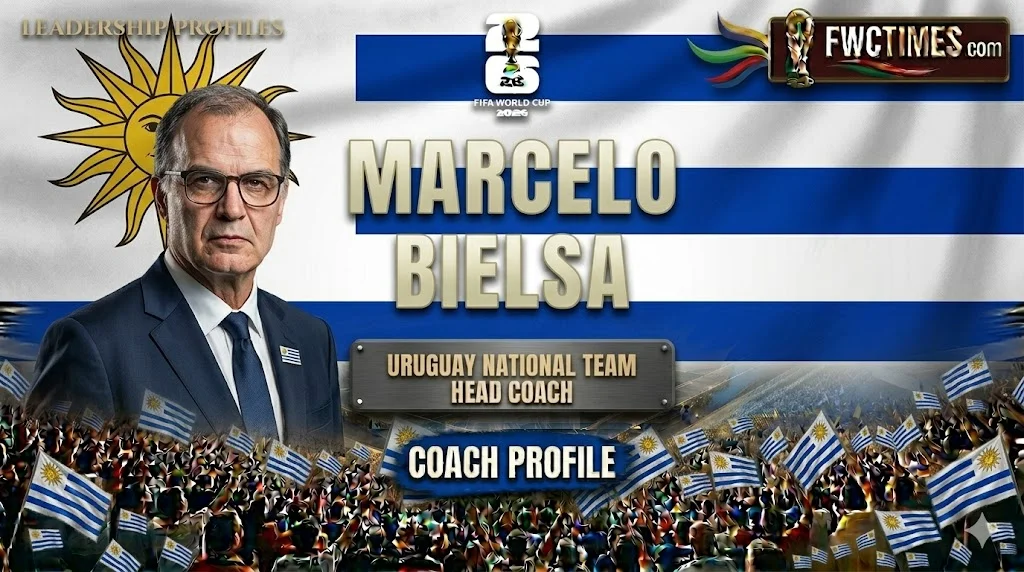
Marcelo Bielsa is the head coach of the Uruguay national football team. He leads the historic squad into the upcoming tournament. His main goal is to prepare Uruguay for the FIFA World Cup 2026. The team has shown impressive form under his guidance. Since he took charge, they have won key matches. Uruguay are in Group H alongside Spain, Cape Verde, and Saudi Arabia. Bielsa enters the competition as one of the most successful active tacticians. So he enters the tournament with high expectations.
The manager achieved significant success at club and international level before this role. At 70 years old, he has built a highly intense squad. His contract with the Uruguayan Football Association runs through the 2026 World Cup. He won the Olympic gold medal and English Championship during his career. In fact, he is one of the most influential tacticians in history. His coaching philosophy centres on flexibility, player management, and rapid transitions. On top of that, he is famous for tactical adaptability. So he is a strong fit for Uruguay.
He wants to build on the tournament success they experienced recently. The squad has trained intensively under his leadership. Because of this dedication, they feel prepared for the challenge. Still, playing in a World Cup represents a major leap. The fans hope he can guide them to historic matches in North America. So the pressure remains high for the team.
Who is Marcelo Bielsa?
Marcelo Bielsa is the current manager of the Uruguay national football team. The Argentine coach was appointed to this position in May 2023. He prefers a flexible, attacking style using a 4-3-3 formation. His primary goal is to guide Uruguay through the group stage at the FIFA World Cup 2026. Even so, the team faces challenging matches in Group H.
The coach believes in building a highly balanced and structured squad. He wants to leverage the physical qualities of his midfield players. As a result, the team has adopted a high-energy pressing system. They want to dominate matches through midfield control. Yet, they must remain defensively disciplined to succeed. Since the competition is tough, tactical preparation is crucial.
Early Life and Coaching Career
The coaching journey of Marcelo Bielsa is built on decades of football experience. He began his path in Rosario before playing at the highest level. Later, he transitioned into a successful manager in international football. In fact, his early years as an assistant shaped his tactical understanding. Since he started coaching, he has managed high-pressure club and international projects.
He studied coaching methodologies in detail during his early transition years. He wanted to understand the psychological needs of modern young players. Because of this study, he was able to build strong relationships quickly. Still, he had to prove himself in competitive domestic leagues in Argentina. This experience helped him develop a patient and detailed style. So he became highly respected by his colleagues.
Background and playing career of Marcelo Bielsa
Marcelo Alberto Bielsa Caldera was born on July 21, 1955. He grew up in Rosario, Argentina. He developed his game as a defender through youth and local teams. He joined the Newell’s Old Boys academy to continue his progression. He made his senior professional debut for Newell’s in 1976. Four years later, he was a regular starting defender. His longest club spell came at Newell’s Old Boys in Argentina. He spent several years there making over 50 appearances. So he was well-prepared for elite football demands.
He spent his playing career entirely in the Argentine domestic leagues. He retired early as a professional player in 1980. His playing career included zero caps for the national team. In fact, he was a reliable youth midfielder. Since his retirement, he has focused entirely on tactical coaching.
His playing experience helped him understand midfield positioning. He was a disciplined defender with strong work rate. As a result, he was well-suited for coaching roles. He joined the Newell’s Old Boys coaching staff in 1980. So he began his progression with a solid foundation.
He learned the importance of tactical discipline under experienced club managers. He saw how small adjustments could change a game completely. Because of this learning, he values defensive cover in his systems. He expects his players to maintain spatial awareness at all times. So he translates his playing experience into simple instructions.
Coaching career start and progression of Marcelo Bielsa
He began his senior coaching career with Newell’s Old Boys in 1990. He managed several Argentine clubs over the next few years. He won the Argentine League Championship twice with Newell’s. In 1998, the federation appointed him as Argentina’s head coach. He succeeded in qualifying the team for the 2002 World Cup. The club Athletic Bilbao in Spain appointed him one year later. He reached the Europa League final with the club in 2012. Since he accepted international roles, he has studied the game. In fact, he built a winning identity everywhere. So the teams responded with high commitment.
He took charge of the Chile national team in 2007. He succeeded Nelson Acosta after they missed the World Cup. He guided Chile to the round of 16 at the 2010 World Cup. Later, he managed Leeds United in England. He won the Championship title with Leeds in 2020. Still, he wanted to achieve more on the world stage. So he focused on World Cup qualification with Uruguay.
His progress has been highly consistent across South America and Europe. He has lost only a few matches since taking charge of Uruguay. As a result, he has established himself as an elite manager. This success has brought long-term stability to the national setup. So the federation chose him to lead the team in 2026.
He earned the respect of the entire continent through his tournament success. The fans praised his calm demeanor under intense pressure. Because of this success, he became a national hero in Uruguay. Yet, he remained focused on developing local coaching standards. He hopes to inspire other young South American managers. So he continues to study modern tactical trends.
Marcelo Bielsa at Uruguay
His tenure with the senior national team represents a major milestone. He has guided the team through multiple successful campaigns. Under his leadership, the team has established a modern playing style. His main goal is to win matches in Group H. That said, he must work under high pressure.
He works closely with the local federation to improve training facilities. He believes that infrastructure is key for long-term football growth. Because of this view, he supports youth academy initiatives across the nation. Still, his main focus remains the senior squad’s preparation. The public expects nothing less than tournament progress. So he balances development with immediate results.
How he was appointed
The Uruguayan Football Association appointed Marcelo Bielsa in May 2023. He took charge before the World Cup qualifying matches. The federation wanted a manager who could bring tactical energy. They valued Bielsa’s previous success with Chile’s national team. Since he accepted the role, he has transformed the team’s play. In fact, he created a positive squad environment. So the players responded with complete trust.
He held individual meetings with key players to explain his system. He wanted to build a strong team spirit quickly. Since then, he has focused on physical conditioning. His staff includes trusted former players who support his vision. On top of that, he integrated advanced data analytics. So the preparation has been highly systematic.
The recruitment of his coaching staff brought stability to the setup. He wanted assistants who understood his pressing demands. As a result, the training sessions are highly organized. So the transition was smooth for the Uruguayan players.
The players welcomed his permanent appointment with great enthusiasm. They felt that he had earned the job through his actions. Because of this support, he was able to implement changes easily. He adjusted the team’s recovery protocols between matches. So the physical performance of the squad improved rapidly.
Results, achievements, and current standing of Marcelo Bielsa
Uruguay prepared well under his guidance. They secured their qualification for the FIFA World Cup 2026. As a result, the federation praised his tactical organization. In fact, they recorded crucial wins during the qualification campaign. The team finished second in the CONMEBOL standings. So the current standing of the team is confident.
Uruguay are currently preparing for their opening matches in Group H. They face Spain, Cape Verde, and Saudi Arabia. The training camps have focused on tactical flexibility. Even so, the coach wants better defensive communication. The squad has worked on defensive recovery in training. So they hope to avoid costly errors in the tournament.
The fans have shown great enthusiasm for his tactical approach. They believe his tournament record gives the team a significant advantage. As a result, the atmosphere around the squad is positive. Still, the players must perform on the pitch. So they enter the matches with focus.
The squad has achieved highly impressive defensive statistics under his control. They kept multiple clean sheets during the qualifying matches. Because of this solidity, they are tough to beat. The federation believes this defensive strength will be key in Group H. So they support his emphasis on defensive discipline.
Tactical Style and Formation
Bielsa is known for his flexible and possession-based tactical style. His teams prioritize positional play, fluid movement, and control. He expects his players to be comfortable in possession, building attacks patiently. In fact, technical control is the cornerstone of his philosophy. The players must sustain high focus for ninety minutes.
He studied several European tactical models to build his system. He values the balance between midfield possession and direct attacking play. Because of this balance, his teams can adapt to different match scenarios. Yet, they always try to dictate the tempo of the game. So his style is both attractive and effective.
Preferred system and how the team plays under Marcelo Bielsa
He prefers a structured 4-3-3 formation. This system focuses on midfield control and quick transitions with the Uruguay squad. It utilizes ball-playing defenders to initiate play from the back. The full-backs push high to provide attacking width. The midfield pivot controls the center and protects the defense. Since he has athletic players, the system functions well.
Uruguay’s play under Bielsa emphasizes pressing and direct attacking. Darwin Nunez operates as the central forward as a primary threat. The midfielders must recover possession immediately when the ball is lost. Even so, the team can defend in a compact mid-block. That said, counter-pressing remains their primary tool. Because of this structure, they are difficult to play through.
The tactical setup requires the winger to track back defensively. They must support the full-backs to prevent wide overloads. As a result, the wide players run high distances. Still, this effort is necessary to maintain defensive balance. So the coach demands total discipline from his wingers.
The midfield pivot plays a crucial role in transitions. They must distribute the ball quickly to the attacking players. Because of this speed, Uruguay can catch opponents disorganized. So they create high-value scoring chances in transition.
The wingers are instructed to attack the space behind full-backs. They want to create direct scoring opportunities quickly. As a result, the team plays with high vertical speed. Still, they must avoid losing possession in dangerous areas. So the coach works on decision-making in training sessions.
The defensive line plays a high block to squeeze the play. They want to restrict the opponent’s space in midfield. Because of this pressure, opponents often make passing errors. So the defenders can recover the ball in advanced positions.
World Cup 2026 Plan
Uruguay enters the tournament with a clear plan to compete. The coaching staff has focused on tactical details and recovery protocols. They want to ensure the players are ready for intense matches. On top of that, they must handle host-nation pressure. So they are building a resilient mindset.
The plan involves detailed analysis of every opponent in Group H. The staff wants to identify specific tactical weaknesses to exploit. Because of this preparation, they feel confident about their chances. Still, they must execute the plan on the pitch. So they remain focused on daily training.
Squad approach, key selections, and tournament goals of Marcelo Bielsa
His squad has youth and experience. Key selections include versatile midfielders to control matches. The attack relies on dynamic wingers to execute the pressing plan. Uruguay is placed in Group H alongside Spain, Cape Verde, and Saudi Arabia. The main goal is to reach the knockout rounds. They want to make a historic tournament run. So they prepare for every opponent with care.
They open their campaign against Saudi Arabia on June 15 in Miami. They face Cape Verde in Miami on June 21. Their final group match is against Spain on June 27 in Guadalajara. Each match presents a unique tactical challenge. Still, Bielsa believes the squad has the quality to progress. Because of their hard work, they enter the matches with confidence. So they aim to make the Uruguayan fans proud.
The manager has emphasized the threat posed by Spain’s technical quality. The defenders have received specific instructions on how to contain them. Still, the primary focus is on team performance rather than individual opponents. So the squad is preparing for a collective effort.
The selections include several players who perform in elite European leagues. He wants to leverage their experience in high-stakes matches. As a result, the training sessions have been highly competitive. Still, he emphasizes the importance of squad harmony. So the players support each other on and off the pitch.
The goal of reaching the knockout rounds is highly realistic for this squad. They believe they have the tactical tools to compete with anyone. Because of this belief, they approach the tournament with ambition. So the manager pushes them to maintain high standards.
Marcelo Bielsa Personal Info and Profile
| Full Name | Marcelo Alberto Bielsa Caldera |
| Date of Birth | July 21, 1955 |
| Age | 70 (as of June 2026) |
| Birthplace | Rosario, Argentina |
| Nationality | Argentine |
| Height | 1.83 m (6 ft 0 in) |
| Playing Position | Defender |
| Uruguay Caps | 0 (as player) |
| Current Role | Uruguay Head Coach |
| Appointed | May 15, 2023 |
| Contract Until | Through FIFA World Cup 2026 |
| Annual Salary | Approx. $4 million gross |
| Estimated Net Worth | Will be updated soon |
| Preferred Formation | 4-3-3 |
Marcelo Bielsa Salary and Net Worth
Bielsa earns approximately $4 million per year as Uruguay head coach. This contract includes performance-based bonuses. He also holds endorsement deals with major brands. His overall net worth will be updated soon. Still, his successful European coaching career has secured him financial comfort. His focus remains entirely on preparing the team for the tournament. He wants to deliver a successful World Cup. On top of that, he hopes to raise his profile further.
His net worth is estimated to be substantial after managing top clubs. He has coached in Argentina, France, England, and Spain. Yet, he has always prioritized sporting projects over financial gains. Because of his success, he remains in high demand. So his financial security is well-established regardless of contract details.
The coaching contract includes performance-based bonuses for World Cup progress. These clauses provide additional incentives for the staff. Still, the primary motivation remains tournament success. So they concentrate on winning matches on the pitch.
He does not discuss his financial terms with the media. He believes that football details should remain the priority during press conferences. Because of this focus, he avoids distractions before the matches. The players appreciate this professional attitude from their coach. So they maintain total focus on their training sessions.
Frequently Asked Questions
Who is the head coach of Uruguay for the 2026 World Cup?
Marcelo Bielsa is the head coach of Uruguay. The Uruguayan Football Association appointed him in May 2023. He succeeded Diego Alonso to lead the national team.
What tactics and formation does Marcelo Bielsa use with Uruguay?
He prefers a structured 4-3-3 formation. His tactics focus on midfield control, fluid possession, and quick transitions. Darwin Nunez is a key attacking player in this system.
When does Marcelo Bielsa’s contract with Uruguay expire?
His current contract runs through the end of the 2026 FIFA World Cup.
What are Uruguay’s tournament goals at the 2026 World Cup?
The primary goal is to qualify for the knockout stage from Group H. Uruguay faces Spain, Cape Verde, and Saudi Arabia in their group. They want to make a deep tournament run.
Conclusion
Marcelo Bielsa faces a major challenge as he leads Uruguay. His technical style will be key in Group H. While Spain and Saudi Arabia are tough opponents, Uruguay can succeed. In fact, this tournament represents a historic opportunity. The players are ready to give their best under his guidance. So the nation eagerly awaits their opening match in Miami.
Read Also: World Cup 2026 Manager Profiles — All 48 Head Coaches