Left Winger vs Right Winger Football Roles Compared

Wide players help stretching opposing defenses during matches. The choice between FIFA World Cup 2026 wing profiles depends on several tactical factors. Coaches must assess foot dominance, crossing capabilities, and defensive responsibilities. This article explains how left winger vs right winger football configurations affect team strategy.
Attacking from the flanks allows teams to bypass compact central areas. Managers design specific patterns to isolate defenders in 1v1 situations. Speed and technical control are essential traits for successful wide players. Understanding these positions improves your reading of modern match tactics.
Tactical Comparisons in Left Winger vs Right Winger Football
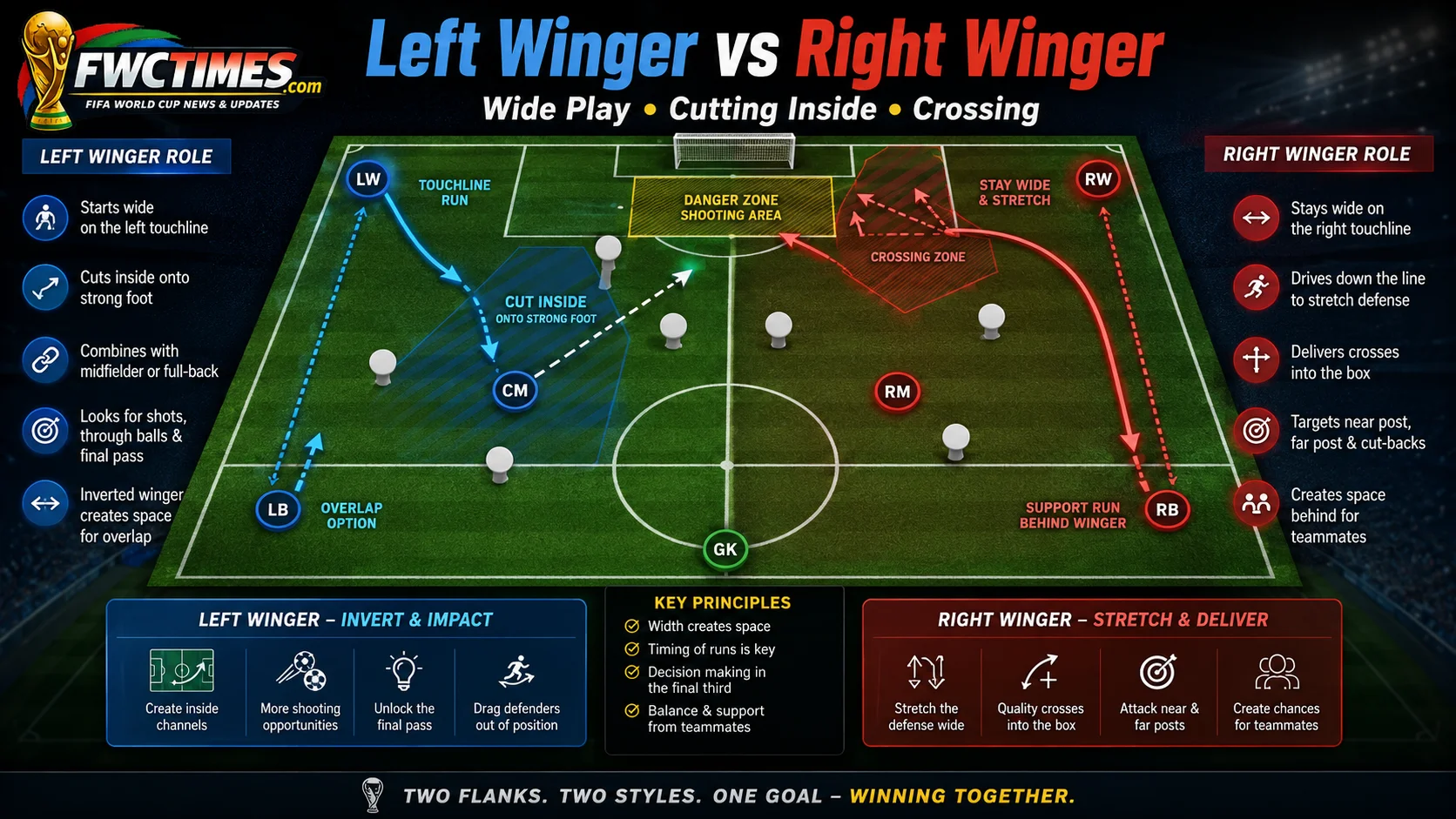
A left winger operates primarily on the left flank of the attacking third. This position requires the player to face the opponent’s right-back during duels. In contrast, a right winger attacks from the opposite side against the left-back. These defensive matchups shape the dribbling options available to each wide attacker.
The side of the pitch determines the angles for passing and shooting. A winger must adjust their body shape to maintain control of the ball. This positioning helps protect possession from recovery runs by opposing midfielders. Supporters will see these specific wide battles develop throughout the ninety minutes.
Foot Dominance in Left Winger vs Right Winger Football
A winger’s dominant foot changes how they interact with their teammates. Traditional wingers play on the flank that matches their preferred foot. A left-footed player on the left side can deliver rapid crosses without slowing down. This simple approach keeps the attack moving quickly down the touchline.
Inverted wingers play on the opposite side of their strongest foot. A right-footed player on the left wing cuts inside to shoot or pass. This movement creates dangerous shooting angles across the face of the goal. Coaches select these profiles depending on their overall attacking philosophy.
Attacking Responsibilities of Wide Attacking Players
Both wide positions must create space for central attackers to exploit. Wingers draw defenders away from the center of the penalty area. This spacing allows attacking midfielders and strikers to make runs into the box. You can check the winger in football guide to learn more details.
Crossing remains a vital duty for players on both flanks. High crosses target tall strikers who can dominate aerial duels near the goal. Low cutbacks find late runners arriving near the penalty spot. A player’s position on the wing determines which cross is most effective.
Left Winger and Right Winger Comparison Details
Specific player attributes determine how wingers perform their assigned duties. The comparison details highlight the typical differences between the two positions. Coaches use these characteristics to build balanced attacking lines.
| Feature | Left Winger | Right Winger |
|---|---|---|
| Dominant flank | Left side of pitch | Right side of pitch |
| Main defender | Opposing right-back | Opposing left-back |
| Crossing foot | Left foot for traditional | Right foot for traditional |
| Inverted action | Right foot cuts inside | Left foot cuts inside |
| Overlap helper | Left-back | Right-back |
Defensive Duties on the Flanks
Modern wingers cannot focus solely on their attacking actions. Players must track back to support their full-backs during defensive transitions. Failing to help can expose the defense to dangerous wide overloads. Good fitness is required to cover these long distances consistently.
Pressing systems require wide players to block passing lanes. Wingers must press opposing full-backs to disrupt their build-up play. This pressure forces the opponent to play long passes under stress. You can check the tactical formations guide for system examples.
Integration at the FIFA World Cup 2026
Wide matchups will play a major role in deciding matches at the next tournament. Having different profiles on each wing makes the team more unpredictable. These selections will affect how countries break down defensive blocks. Coaches will select wide players based on tactical needs.
Teams will rely heavily on their winger selections to create goal scoring chances. Inverted wingers can provide direct shot attempts from the half-spaces. Traditional options offer high-quality service into the penalty box. Balancing these threats remains crucial for success during the tournament.
Conclusion
The difference between wide positions goes far beyond the side they occupy. Foot dominance and crossing angles change the tactical options for each player. Teams need a balance of crossing and cutting inside to remain dangerous. Understanding these roles helps fans appreciate the flow of the match.
Supporters can explore other attacking variations on our soccer platform. Read the inside forward in football guide to compare wide roles. This knowledge will help you analyze the matches during the tournament. Stay tuned for more tactical updates as they become available.
Frequently Asked Questions
What is left winger vs right winger football?
Left winger vs right winger football compares wide roles on each side. The main differences involve crossing angles, dominant feet, and defensive opponents. Coaches choose players depending on their tactical system. The starting side changes the angles of play.
What does a left winger do tactically?
A left winger attacks from the left side of the pitch. This position faces the right-back of the opposing team. The player can cross, shoot, or pass to teammates. Their main job is to create attacking width.
What is the difference between traditional and inverted wingers?
Traditional wingers play on the side of their dominant foot. This setup allows them to cross the ball without turning. Inverted wingers play on the side opposite their strong foot. They cut inside to create shooting angles for themselves.
Is a right winger different from an inside forward?
A right winger describes the starting side of the attacker. An inside forward describes a movement pattern during attacks. Inside forwards focus on attacking central scoring zones directly. Right wingers can stay wide to provide natural width.
Will left and right wingers matter at World Cup 2026?
Wide players will be vital for stretching compact defenses. Their 1v1 matchups can create direct goalscoring chances. Wingers must also help full-backs defend their flanks. These tactical roles will decide close group matches.