Defensive Midfielder Football: Role, Tactics and Examples

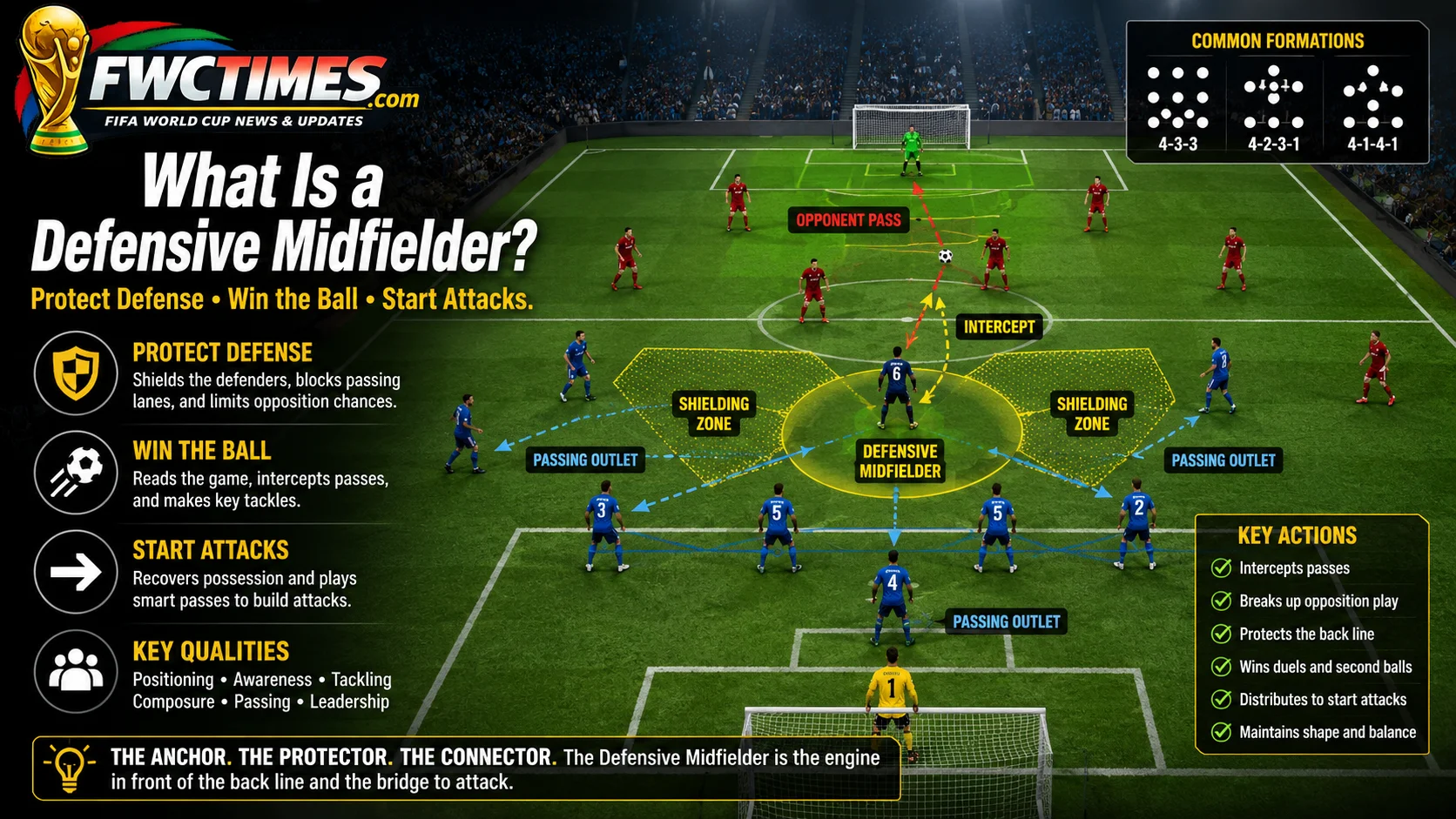
Defensive midfielder football refers to one of the most strategically critical roles in the modern game. This player provides a protective shield in front of the back four by intercepting passes, winning duels. And Blocking central attacking lanes and the position evolved significantly from a simple destructive role into. A multidimensional one that combines defensive grit with technical ball-playing ability and at the FIFA World Cup 2026.
The defensive midfielder sits as the team’s tactical anchor and allowing creative players in front of them. And advance without fear of leaving the back line exposed. Their positioning decisions, not just their tackles, are what make or break a team’s defensive stability. Claude Makélélé redefined the position in the early 2000s by proving that a disciplined.
Tactical Responsibilities in Defensive Midfielder Football
Screening means reading the opponent’s passing intentions and blocking those lanes before the ball can reach dangerous areas. A defensive midfielder scans the pitch, tracking the runs of opposition strikers and midfielders to anticipate their next movement. Positional awareness in this role is often more important than the ability to win physical tackles. Since a well-positioned player makes tackles unnecessary.
The defensive midfielder must also support the build-up phase by offering. Centre-backs a safe passing option under pressure from the opposition’s press. Their calm first touch and ability to control the ball in tight spaces. Under pressure allow the team to escape pressing traps without resorting to long and hopeful clearances.
Defensive Midfielder Types Compared
| Type | Main Duty | Key Skill | Best Fit |
|---|---|---|---|
| Holding midfielder | Stays in front of defence | Positioning and screening | 4-3-3 single pivot |
| Ball-winner | Wins tackles and duels | Physicality and aggression | High-energy pressing teams |
| Deep playmaker | Starts attacks from deep | Vision and passing range | Possession-based systems |
| Double-pivot midfielder | Shares defensive cover with a partner | Balance and communication | 4-2-3-1 formation |
Possession-heavy teams like Manchester City under Pep Guardiola prefer the Rodri archetype. A single pivot who dictates tempo and maintains high pass completion rates under pressure. Rodri’s game revolves around tactical intelligence, positioning accuracy. And Efficient ball circulation rather than purely physical dominance in defensive duels and counter-attacking teams.
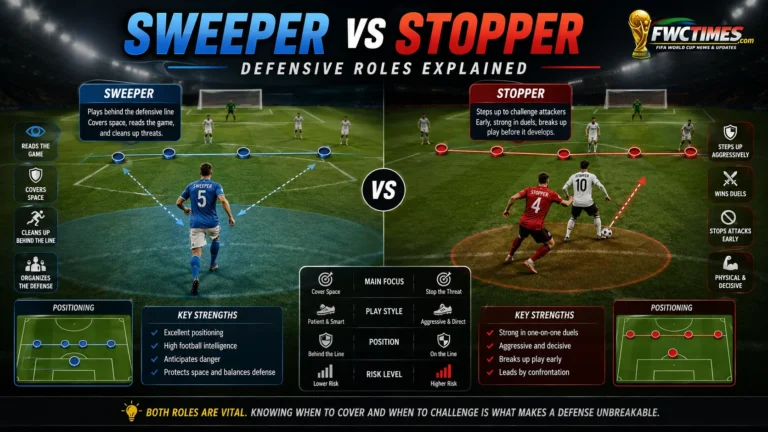
The double pivot setup and most seen in the 4-2-3-1 formation. Distributes the defensive workload across two midfielders rather than placing it entirely on one player. One midfielder in this pairing plays a more defensive. Positional role while the other carries more license to press forward and support the attack.
Screening and Ball Recovery in Practice
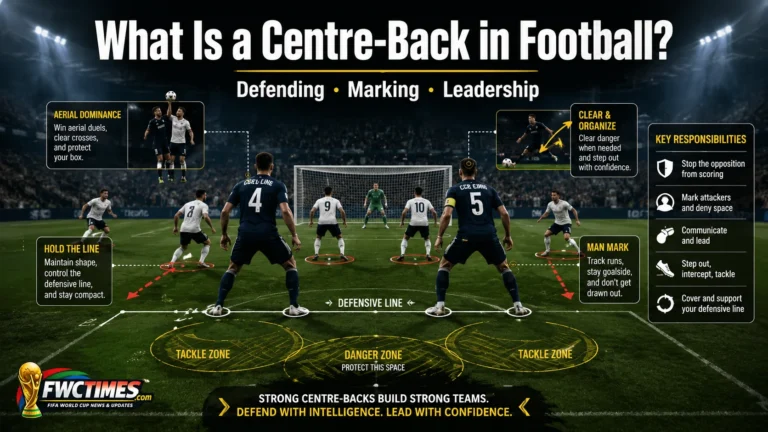
Screening central passing lanes is the most critical defensive function this player performs across a 90-minute match. By positioning between the opposition’s midfielders and strikers. The defensive midfielder forces opponents to attempt slower, wider routes toward goal. This redirection of attacking play gives the defensive line more time.
When a defensive midfielder wins possession through an interception or a well-timed challenge. They immediately have a chance to launch a counter-attack before the opposition can reorganize. A quick release to a wide winger or an advanced forward in that. Transition moment can generate a clear scoring chance from a seemingly defensive action.
Tactical Role of Defensive Midfielder Football
Claude Makélélé redefined the defensive midfield position during his time at. Real Madrid and then Chelsea under José Mourinho in the early 2000s. His tactical value came not from spectacular tackles or goals and yet. From his elite positioning and his ability to read the game and cut out danger before it developed.
Rodri has since elevated the role further with exceptional passing accuracy and tactical composure. That helped Spain win Euro 2024 and Manchester City dominate the Premier League. Casemiro built his reputation at Real Madrid as one of the most physically dominant ball-winners of his generation. Using his aerial ability and physical strength to neutralize opposition midfielders in high-stakes Champions League knockout matches.
Tournament Impact at World Cup 2026
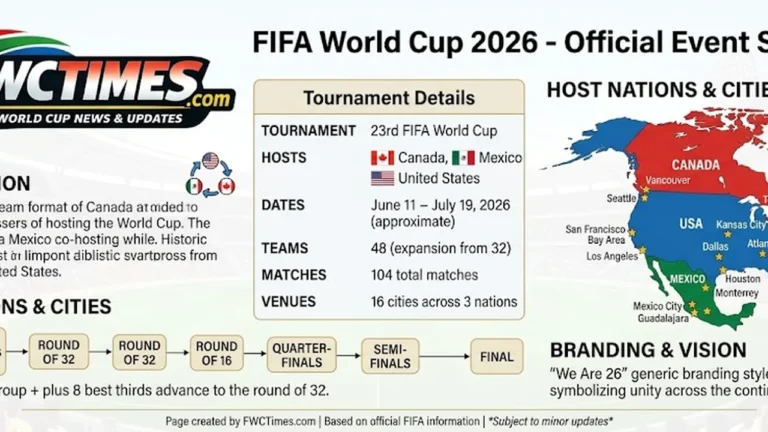
Midfield stability will be one of the defining factors separating. Successful nations from early exits at the 2026 World Cup. Teams with a trusted defensive midfielder can manage game tempo, protect narrow leads in tight knockout matches. And Absorb opposition pressure without conceding cheap goals from central areas.
Coaches across the competing nations are evaluating their midfield balance carefully as the tournament approaches. England and Germany both face questions about their ideal midfield shape. And which player best fills the anchor role in their tactical plans. Nations with a clear solution to the defensive midfield question and one trusted player or a reliable double pivot.
Frequently Asked Questions
What is a defensive midfielder in football?
A defensive midfielder is a central midfield player who prioritizes protecting the back line over contributing to attacks. They screen passing lanes, win tackles and interceptions. And Break up opposition play in the central areas of the pitch. The role also requires basic ball-playing ability to help the team transition from defence into attack safely.
What is the Makelele Role in football?
The Makelele Role is a tactical term that emerged to describe the disciplined defensive. Pivot made famous by Claude Makélélé at Real Madrid and Chelsea in the early 2000s. It refers to a player who shields the back four by screening central passing lanes, winning second balls. And Limiting space for opposition midfielders.
What is the difference between Rodri and Casemiro as defensive midfielders?
Rodri represents the modern single pivot who controls possession tempo, dictates the rhythm of play. And Maintains high pass completion rates as the team’s primary ball distributor from depth. Casemiro represents the more physically dominant, aggressive ball-winner who excels in physical duels, aerial challenges. And Stopping counter-attacks through presence and grit.
What formations use a double pivot in defensive midfield?
The 4-2-3-1 is the most common formation built around a double pivot. Pairing two central midfielders in front of the back four to distribute the defensive workload. The 3-4-3 and 3-5-2 formations also use double pivots. Often giving one player more license to press forward while the other holds a more disciplined defensive position.
Will defensive midfielders be crucial at the 2026 World Cup?
Yes and the defensive midfielder will be one of the most decisive positions at the. 2026 World Cup given the extended 48-team format and increased number of knockout matches. Teams with a reliable anchor in this position can protect leads, manage fatigue across long tournament runs. And Resist opposition attacks in tight matches and nations that struggle to fill this role consistently tend.