Deep Lying Playmaker Football: Midfield Role and Examples

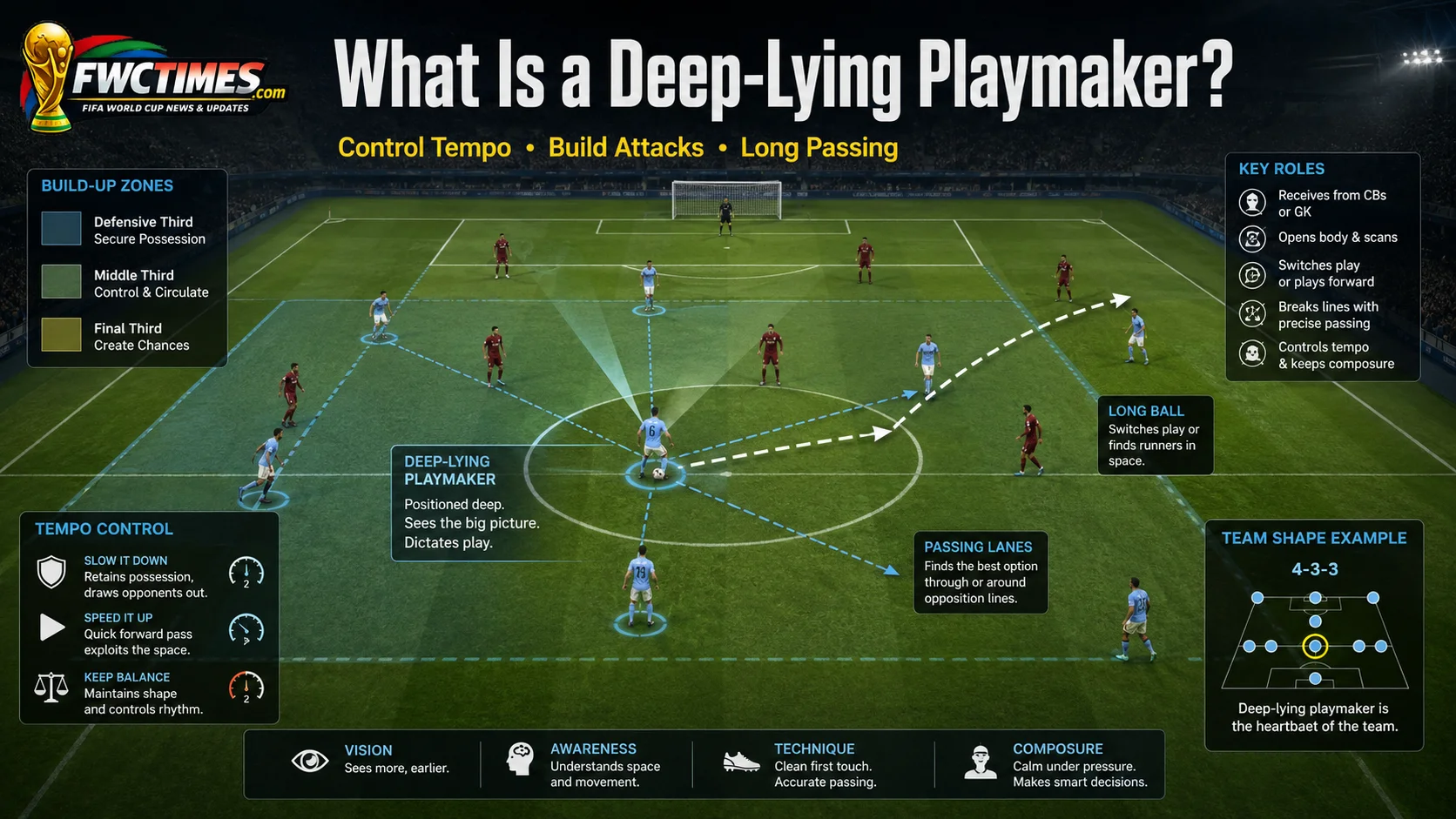
The deep lying playmaker football role is one of the most tactically sophisticated positions in the modern game. This midfielder sits in front of the defensive line and directs the team’s build-up play from a deep. Central starting zone and italian football coined the term regista. This means Director, to describe a player who conducts the game rather than reacting to it.
The role demands exceptional vision, composure under pressure, and elite passing accuracy across a range of distances. A deep lying playmaker must read the game several seconds ahead of the actual moment of play. Positioning themselves to receive the ball cleanly and release it. Players in this role function as the primary link between the defensive line and the forwards.
Tactical Duties in Deep Lying Playmaker Football
The deep lying playmaker must provide a reliable passing outlet. In case of centre-backs who are under pressure from the opposition’s press. By dropping into pockets of space between the opposition’s midfield and forward lines. They create a safe passing lane that allows their team to escape high pressure and their scanning habit.
Playing range passes that switch the ball across the pitch. Is one of the most valuable weapons this player can deploy. When an opponent’s press traps the ball on one side. A quick switch to the opposite flank instantly resets the attack with a player in space.
Midfield Roles Comparison
| Role | Starting Area | Main Skill | Key Difference |
|---|---|---|---|
| Deep lying playmaker | Deep midfield | Tempo and passing range | Builds attacks from in front of the defence |
| Defensive midfielder | In front of defence | Recovery and protection | Prioritises defensive balance over creativity |
| Box-to-box midfielder | Central lane | Running and transitions | Covers the full pitch in both directions |
| Number 10 | Between the lines | Final-third creativity | Creates closer to goal rather than from depth |
The deep playmaker differs from a defensive midfielder in terms. Of how they use the ball after winning or receiving possession. A defensive midfielder focuses on physical duels, interceptions, and providing a protective shield in front of the centre-backs. The deep lying playmaker combines basic defensive screening duties with elite creative distribution.
The difference between this role and a Number 10 is primarily about operating depth on the pitch. A Number 10 creates chances in and around the opposition’s final third, working in tight spaces between defensive lines. The deep playmaker does their best work from 30 to 40 metres further back. Using long passes and positional intelligence rather than dribbling or close control in traffic.
Building Attacks Against Heavy Pressing Teams
Opponents who employ high pressing tactics specifically target the deep playmaker to disrupt the team’s build-up at its source. A player in this position needs an excellent first touch and the composure. To shield the ball while scanning for a passing option under intense pressure and press resistance. The ability to receive the ball and retain it when opponents close.
Teams protect their deep playmaker by surrounding them with high-energy ball-winners who handle the defensive work nearby. Carlo Ancelotti famously paired Pirlo with Gennaro Gattuso at AC Milan in a 4-4-2 diamond. Giving Pirlo a defensive partner who shielded him from being physically dominated in midfield duels and as a manager. Xabi Alonso used a 3-2-5 in-possession shape at Bayer Leverkusen that placed deep players.
Tactical Role of Deep Lying Playmaker Football
Andrea Pirlo remains the single most celebrated example of the regista role in modern football history. His partnership with Gattuso at AC Milan created a perfect balance between defensive aggression and creative direction. With Pirlo conducting play entirely on his own terms from deep positions. His ability to receive the ball under pressure and play a.
Xabi Alonso brought a more pragmatic version of the role to Liverpool, Real Madrid. And Bayern Munich across his club career and his long-range passing ability drew frequent comparisons to Pirlo. Yet Alonso applied a more physically disciplined approach that suited high-intensity pressing systems. Toni Kroos operated similarly for Real Madrid and Germany for over a decade.
Tournament Relevance at World Cup 2026
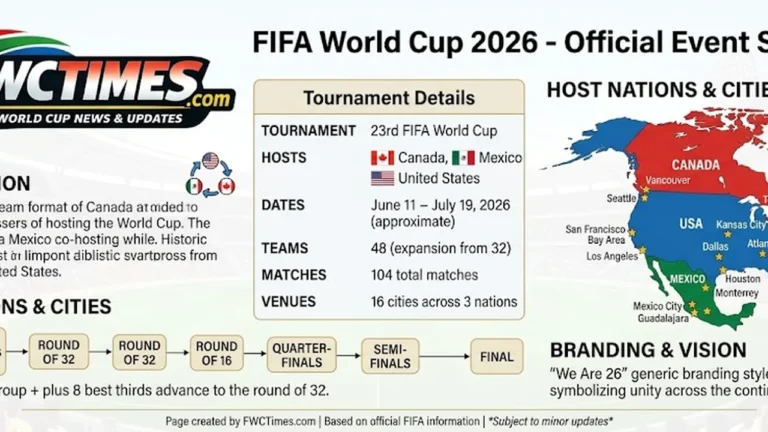
Midfield control will be one of the defining factors at the 2026 World Cup. As 48 teams compete across a longer and more demanding format than previous editions. Teams with a reliable deep lying playmaker can manage game tempo during the heat of North American summer matches. Preserving energy in tight group-stage games.
Several contenders heading into the tournament have genuine world-class players capable of filling this role at the highest level. Spain in particular has a tradition of producing technically elite deep midfielders. Who control possession and manage game tempo across 90 or more minutes. Teams without a natural deep playmaker must compensate with collective pressing systems and intense midfield rotations.
Frequently Asked Questions
What is a deep lying playmaker in football?
A deep lying playmaker is a central midfielder who controls the team’s. Tempo and build-up play from a deep position in front of the defence. The player acts as the primary link between the defensive line and the attacking players. Using short and long passes to start and maintain attacks.
How does this role differ from a defensive midfielder?
A defensive midfielder prioritizes ball recovery, physical duels, and protecting the defensive shape ahead of any creative output. The deep lying playmaker combines basic defensive screening with elite passing and game-reading ability. Making it a more technically demanding profile. Both positions often start in similar areas of the pitch, yet their primary jobs are quite different in nature.
Who are the best examples of deep lying playmakers in football history?
Andrea Pirlo is universally regarded as the purest example of the role. Conducting play at AC Milan and Juventus with composure and elite passing range. Xabi Alonso brought a more physically disciplined version of the role to Liverpool, Real Madrid. And Bayern Munich across his career.
What formations suit the deep lying playmaker role?
The 4-3-3 formation gives the playmaker excellent passing angles to both wide forwards and the two midfield runners ahead. A 4-2-3-1 setup pairs the playmaker with a defensive midfielder. Providing extra protection and allowing the creative player more freedom to find passes. Some coaches use a 4-4-2 diamond with the playmaker at the base.
Will deep lying playmakers be important at the 2026 World Cup?
Yes and this role will be one of the most decisive positions in a. Tournament played across a more demanding and extended format than previous editions. Teams with a trusted deep playmaker can control game tempo. And preserve energy across the group stage and knockout rounds and nations like Spain.