Best Pressing Teams World Cup 2026: Pressing Systems

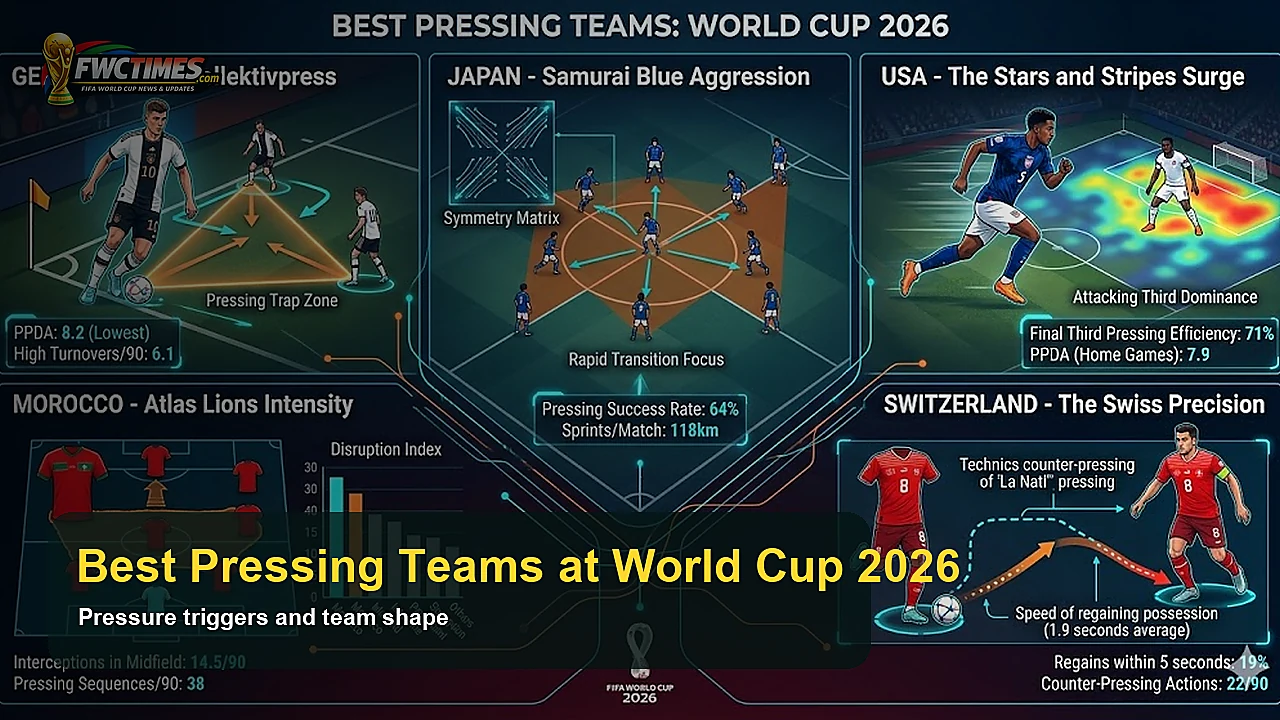
The best pressing teams World Cup 2026 contenders utilize Passes Per Defensive Action (PPDA) metrics to track and refine their defensive intensity. In modern international tournaments, high-pressing systems are designed to disrupt the opponent’s build-up and force turnovers in the attacking third. In fact, advanced data tracking from qualifying shows a downward trend in PPDA values among top sides, confirming a collective shift toward aggressive defensive structures. This vertical model allows teams to dominate matches without relying on sustained possession.
The physical load of the expanded 48-team schedule places active tactical constraints on high-pressing systems. Running a continuous 90-minute press is physically impossible across North American host cities due to summer heat and travel distances. As a result, coaches use calculated bursts of pressing intensity, focusing on specific triggers to win the ball back quickly. This physical management is essential for sustaining a high-intensity system across a long tournament campaign.
The history of the tournament shows that coordinated pressing structures can carry organized squads deep into the knockout rounds. Ralf Rangnick’s Austria enters the 2026 tournament as the most tactically distinct pressing nation in international football. The coaching staff has structured their system around Rangnick’s signature Gegenpressing philosophy. The Samurai Blue and other high-pressing sides enter the group stage hoping to disrupt possession-heavy favorites.
Austria’s Gegenpressing under Ralf Rangnick
Austria is widely considered the most intense pressing team in the tournament due to Ralf Rangnick’s system. Operating in a high-press 4-2-3-1 that shifts to a 4-3-3, Austria focuses on immediate ball recovery within three seconds of possession loss. This Gegenpressing model aims to catch the opponent before they can transition into their attacking shape. Austria’s low PPDA values in qualifying reflect this extreme commitment to defensive intensity.
In possession, Austria plays with direct verticality, using quick combinations to exploit spaces opened by their press. The double pivot screens the central defenders, allowing the fullbacks to push high and support wide counter-pressing situations. This central organization prevents the opponent from launching counterattacks through the center of the pitch. The 3-5-2 formation World Cup guide compares central defensive shapes to show how back-three lines offer cover.
Spain and Germany’s Coordinated Pressing Triggers
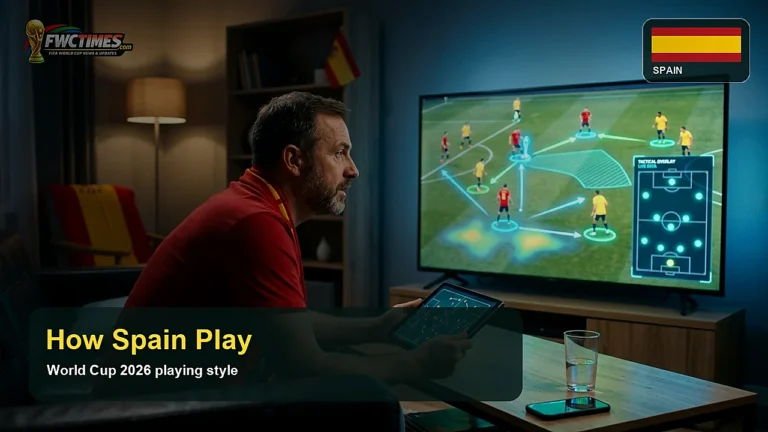
The Spain playing style World Cup 2026 model runs on aVertical 4-3-3 shape that triggers collective pressing waves deep in the opponent’s half. Luis de la Fuente has designed a system where the front three coordinates their angles to force opponents into wide traps. When Spain triggers the press, Rodri steps forward to close central passing lanes while the wingers attack the ball-carrier. This structured pressure makes Spain one of the most efficient defensive teams in the competition.
Germany’s system under Julian Nagelsmann utilizes inverted wide forwards to press the opponent’s centre-backs. Germany focuses on overloading the half-spaces out of possession, creating pressing triangles that isolate the opponent’s playmakers. This narrow defensive shape forces the opponent to play long clearances, which the German defenders can easily recover. The high press World Cup guide explores the mechanics of these coordinated pressing waves.
Japan’s Organized Chameleon Press
Japan runs a highly organized chameleon pressing system that shifts based on the opponent’s tactical structure. Under Hajime Moriyasu, the Samurai Blue defend in a compact mid-block before triggering explosive pressing bursts in wide areas. Japan uses these calculated bursts to force turnovers and launch quick transitions down the flanks. Wataru Endo anchors this pressing structure, screening the back line and winning central duels.
The Japan playing style World Cup 2026 guide explains how their flexible 3-4-3 shape adapts to different tournament opponents. Japan’s ability to transition between low-block defending and high-intensity pressing makes them highly difficult to break down. This defensive flexibility is what allowed them to upset major football powers in recent tournament history.
Pre-Tournament Pressing Statistics and PPDA Concepts
Advanced performance insights track pressing intensity by calculating the opponent’s passes allowed per defensive action in the attacking two-thirds. A lower PPDA value indicates a more intense and aggressive pressing system.
| Team | Pressing Style | Midfield Anchor | | :— | :— | :— | | **Austria** | Gegenpressing | Nicolas Seiwald | | **Spain** | Vertical Press | Rodri | | **Germany** | Inverted Press | Robert Andrich | | **Japan** | Chameleon Press | Wataru Endo |
This context shows that the top pressing teams enter the tournament with distinct defensive identities. The squads enter their group matches with a clear understanding of their pressing triggers. This tactical discipline makes them formidable opponents in knockout situations.
Key Vulnerabilities of High-Pressing Systems
The biggest tactical risk for high-pressing teams is the space left behind their high defensive line. Because the team must remain compact to sustain the press, the central defenders push up toward the halfway line. If the opponent plays a quick long ball over the top, the defenders are forced into footraces with fast strikers. This vulnerability requires perfect communication and timing from the central defensive line.
The system also depends heavily on the physical fitness of the midfield double pivot. If the pivots are fatigued or injured, the pressing structure loses its central anchor, leaving the defense exposed. The backup players must execute the pressing triggers with the same intensity to prevent structural breakdowns. This physical demand makes squad rotation and hydration break utilization critical factors for tournament success.
Expert Verdict
High-pressing systems will be a defining tactical factor at the 2026 World Cup. Austria and Spain possess the most structured pressing models, combining defensive intensity with vertical transition speed. The physical challenges of the expanded tournament schedule will test the depth of every pressing roster. The key to winning the trophy will be managing the intensity of the press across the long matches.
If pressing teams execute their triggers cleanly, they will dominate possession and secure crucial turnovers in the group stages. The mandatory hydration breaks will act as tactical quarters, allowing coaches to adjust pressing instructions. Rangnick’s Austria looks well-positioned to surprise opponents with their extreme counter-pressing system. The tournament’s top pressing sides have the tools to progress deep, but they must protect the space behind their line.