5-3-2 Formation at the 2026 World Cup

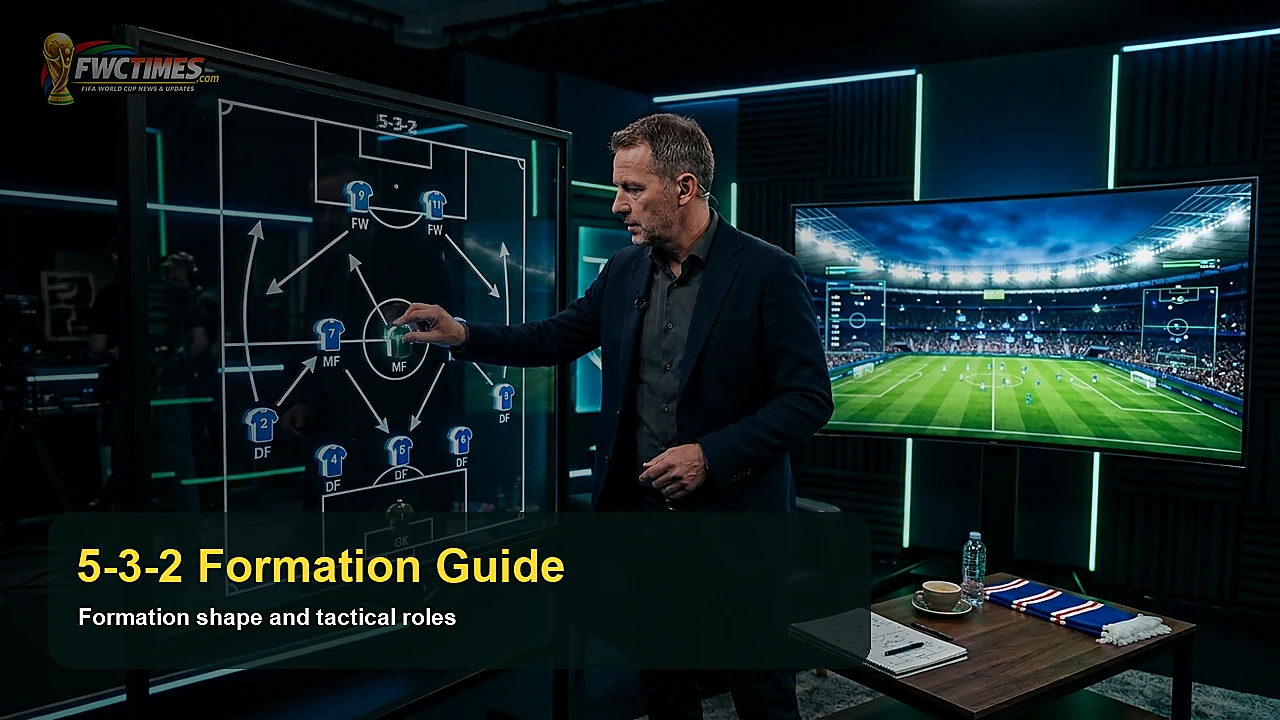
The 5-3-2 formation World Cup 2026 shape has emerged as the premier tactical setup for underdog nations. Coaches select this low-block structure because it crowds the central defensive zones and secures the penalty area. In fact, the formation relies on a disciplined back five to absorb pressure before launching vertical counterattacks. This strategic guide explains how defensive teams use this shape to force tournament upsets.
The physical demands of a 48-team tournament highlight the value of this pragmatic approach. With matches played across three host countries, managing player fatigue is a primary tactical concern. The 5-3-2 shape minimizes high-intensity pressing, allowing players to protect their zones and conserve energy. As a result, squads can remain competitive against opponents with superior individual quality.
The simplicity of the system makes it highly effective for national teams with limited training preparation. Zonal defending is easier to organize in short training camps than complex pressing systems. The clear roles within the back five help players build a cohesive defensive unit quickly. This structural clarity is why coaches prioritizing defensive integrity choose this shape.
The Low-Block Mechanics of the 5-3-2
The Five-Man Defensive Line
The five-man defensive line consists of three central defenders and two narrow wing-backs. This line provides constant coverage across the entire width of the penalty area, preventing the opponent from finding gaps. The three centre-backs handle central runs and crosses, while the wing-backs challenge wide attackers. This structure ensures the goalkeeper is protected by a numerical advantage at all times.
The wing-backs sit deeper than in a 3-5-2 system, prioritizing defensive positioning over attacking support. When the opponent switches play, the near-side wing-back steps out to challenge the ball-carrier. At the same time, the remaining four defenders slide across to maintain a compact defensive line. This movement prevents the defense from being pulled out of position.
The Isolated Striker Partnership
The two strikers in this system must work in isolation without constant support from midfield. Because the midfield three sits deep to protect the defense, the strikers must handle transition play on their own. Coaches typically pair a physical target man with a fast runner to execute counterattacks. The target man wins long clearances, while the fast striker runs onto the second ball.
This partnership is essential for keeping the opponent’s defensive line from pushing too high. By remaining positioned near the halfway line, the strikers force the opponent’s centre-backs to stay deep. This positioning prevents the opponent from overloading the midfield during sustained possession phases. The 3-5-2 formation World Cup guide explains how this striker partnership compares to other attacking shapes.
Why Underdogs Choose the 5-3-2 at World Cup 2026
The primary driver is the need to neutralize possession-heavy elite teams. Teams that attack in fluid systems, like a 4-3-3, struggle to break down a compact back five. The 5-3-2 structure denies space in the central channels, forcing the opponent to play wide. Once the ball goes wide, the wing-back and near-side midfielder combine to block crossing lanes.
The system also reduces the risk of 1v1 defensive overloads. If an attacker beats a wing-back, the nearest centre-back steps out immediately to provide cover. This backup system gives the defenders the confidence to challenge attackers aggressively. On top of that, it prevents playmakers from exploiting spaces in the half-spaces behind the midfield line.
The physical conservation offered by the system is another major benefit. The squad sits in a disciplined mid-block, waiting for the opponent to enter their defensive third. This approach avoids the high-energy demands of a constant high press, preserving player stamina. The high press World Cup guide breaks down the physical challenges of different defensive systems.
Launching the Vertical Counterattack
The defining feature of a successful 5-3-2 is the speed of its transition from defense to attack. The moment the ball is recovered, the wing-backs sprint forward to provide passing options in wide areas. This rapid movement temporarily transforms the shape into a 3-5-2, overloading the midfield. The team aims to play vertical passes quickly, targeting the space behind the opponent’s overextended defense.
The central midfielders also play a key role in launching the counterattack. At least one midfielder must make a forward run to support the strikers, while the other two protect the center. This support prevents the strikers from being isolated during the transition phase. The counter-attack World Cup guide details how teams coordinate these rapid attacking transitions.
Underdog teams drill these transition patterns extensively during preparation. The goal is to reach the opponent’s penalty area in three passes or less after winning the ball. This direct vertical style of play minimizes the risk of losing possession in the middle third. Against teams that play with a high defensive line, this transition is a highly effective scoring weapon.
Historic Resilience of the Back Five
The back five has a long history of frustrating favorites at major international tournaments. During the 2014 World Cup, Costa Rica used a highly successful back-five system to reach the quarterfinals. Costa Rica neutralized giants like Italy and Uruguay by keeping a compact defensive structure. This run proved that a disciplined defensive shape could overcome a gap in individual talent.
The Netherlands also utilized a back-five shape under Louis van Gaal in 2014 to secure third place. Van Gaal adapted the system to protect his defenders while releasing fast forwards on the counterattack. This tactical flexibility showed that a defensive shape could still create dangerous attacking output. The Argentina playing style World Cup guide shows how modern contenders adjust their systems to break down these historic blocks.
Expert Verdict
The 5-3-2 will be the ultimate equalizer at the 2026 World Cup. Its ability to deny central space will frustrate possession-dominant teams across the group stage. The success of the underdog tactics depends on the clinical finishing of the striker partnership. Since underdogs get very few chances per match, they must be extremely efficient in the final third.
The key to tournament survival with this shape is maintaining physical discipline. If the defensive line drops too deep, the team will invite constant pressure inside their penalty area. The most successful coaches will instruct their blocks to remain active, contesting the ball in the middle third. This active defense is what will create the transition moments that lead to upsets.