Box To Box Midfielder Football Explained for Fans

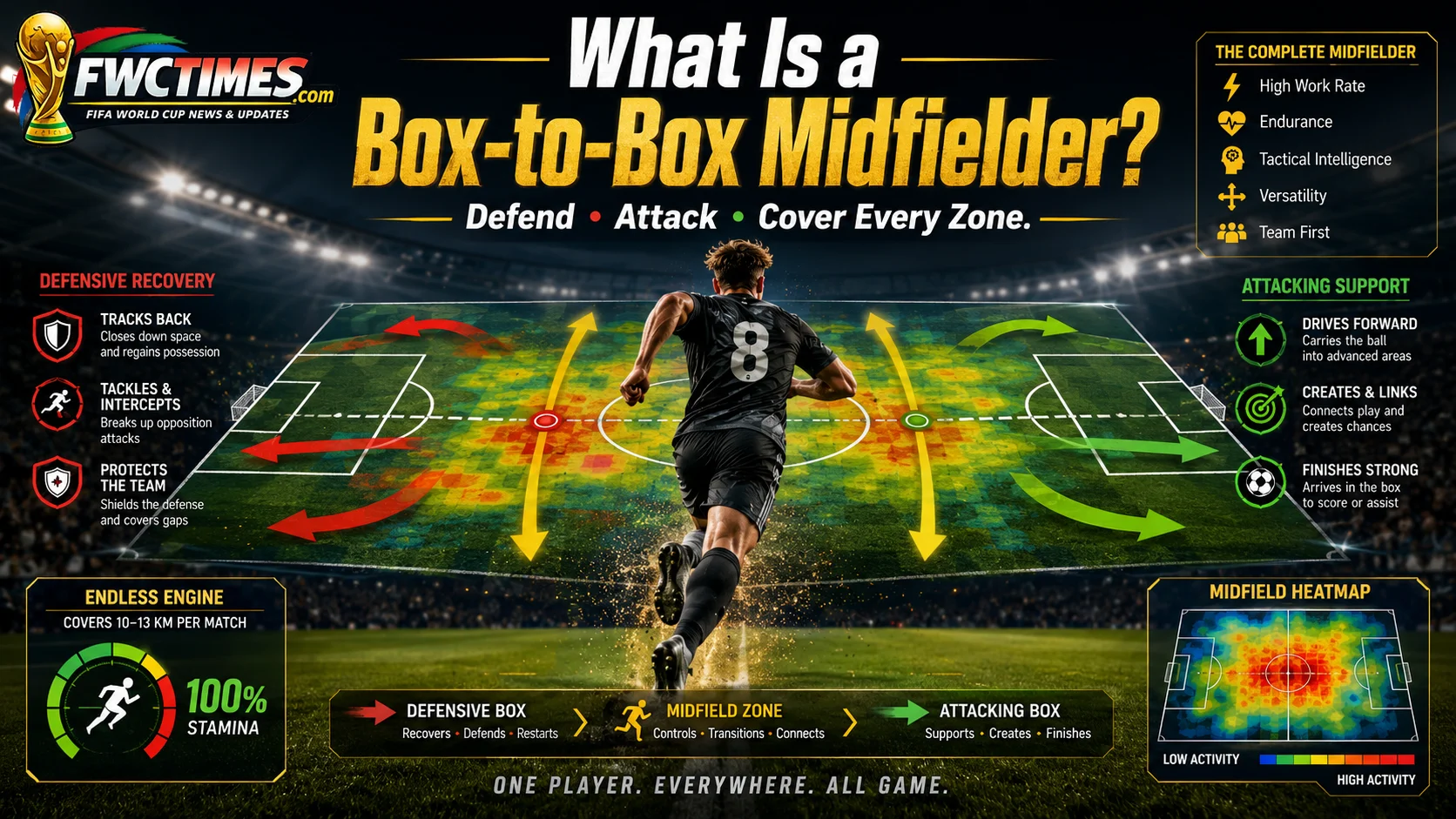
The box to box midfielder football role is one of. The most demanding and celebrated positions in the modern game. These players cover the entire pitch from one penalty area to the other. Contributing to both defensive recovery and attacking threat during the same match and often wearing the number 8 shirt.
Modern football demands that central midfielders do far more than simply distribute the ball. A box-to-box player must win tackles, intercept passes, carry the ball under pressure. And Then arrive late into the opposition box with a genuine goal threat. Since they cover vast distances in a single 90-minute performance, exceptional aerobic fitness is a non-negotiable physical requirement.
Box To Box Midfielder Football Guide
The box-to-box midfielder serves as the primary link between the defensive. Line and the attacking unit during both possession and transition phases. In possession, they receive the ball from centre-backs, drive into the opposition half. And Create numerical advantages in midfield by arriving in pockets of space ahead of the play.
Late runs into the opposition penalty area represent one of the most dangerous weapons in the box-to-box player’s armoury. A centre-back or defensive midfielder cannot always follow an advanced runner arriving late from deep positions. So Goals from midfield become a real threat. Players like Steven Gerrard and Frank Lampard built their reputations on this exact ability to.
Tactical Role of Box To Box Midfielder Football
Defensively, a box-to-box midfielder tracks back to their own penalty area to block shots, make tackles. And Intercept through-balls that bypass the defensive line. They watch for pressing triggers — moments when an opponent receives the ball on a poor touch. Or under physical pressure — and they react immediately to win possession back high up the pitch.
Modern pressing systems have made the defensive role of the box-to-box midfielder even more demanding and under high-press managers. These central runners are expected to lead the press from midfield. Closing down the opposition’s build-up players within seconds of losing the ball. N’Golo Kanté became widely celebrated for his exceptional ability to win the ball back at an extraordinary rate.
Attacking Contributions and Late Runs
Attacking contributions from box-to-box midfielders often come through a combination of ball progression, key passes, and penalty-area arrivals. Carrying the ball forward past the first line of the opposition’s. Press is a skill that separates good box-to-box players from elite ones. Ilkay Gündoğan represents a modern interpretation of the role.
Goal contributions from midfield are a tangible measure of how effectively a box-to-box player fulfills their attacking duties. Coaches in elite football expect their number eights to contribute at least eight to fifteen goal involvements per season. Covering both goals scored and key assists and since these players operate in the most congested area. They must also possess the technical ability to receive under pressure, turn.
| Role | Main Zone | Primary Strength | Key Difference |
|---|---|---|---|
| Box-to-box midfielder | Full pitch, box to box | Two-way running and transitions | Works in both defence and attack equally |
| Defensive midfielder (CDM) | In front of centre-backs | Protection and ball recovery | Stays deeper; less forward license |
| Attacking midfielder (CAM) | Between midfield and attack | Chance creation | Plays closer to forwards; less defensive |
| Deep-lying playmaker | Deep central midfield | Passing control and tempo | Dictates rhythm from deep; rarely enters the box |
Tactical Systems That Suit the Box to Box Midfielder
The 4-3-3 and 4-4-2 formations both provide natural homes for the box-to-box midfielder within a structured midfield unit. In a 4-3-3. The number 8 operates alongside a deep-lying playmaker and a more advanced creative midfielder, giving the team. And Dynamic running and the pairing of a box-to-box runner with a holding midfielder is particularly common because.
Under more possession-based systems influenced by coaches like Pep Guardiola. The box-to-box role has evolved into a more precise spatial concept and rather than simply covering every blade. Tactically advanced two-way players are trained to manipulate specific zones. Arriving in pre-determined areas of the pitch to create numerical advantages.
Why Box to Box Midfielders Are Vital at World Cup 2026
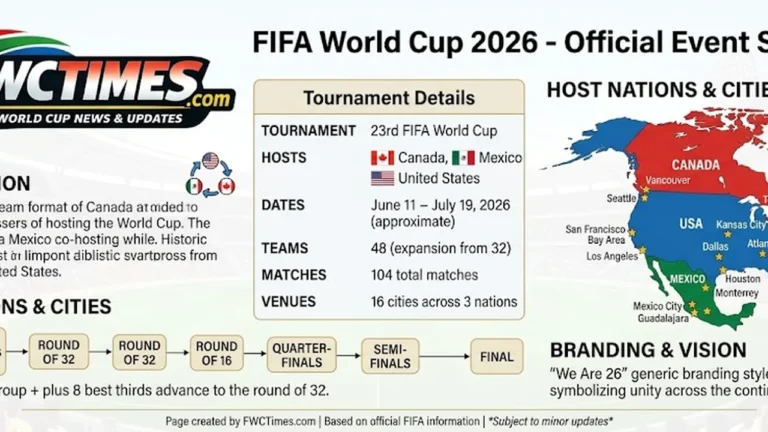
At the 2026 FIFA World Cup. The midfield battle will be one of the defining storylines across the group stage and knockout rounds. Nations like England, France and and Germany have all built their squad planning around the quality. And availability of two-way central midfielders capable of functioning across multiple systems.
The transition from group stage to knockout football amplifies the importance of the box-to-box midfielder even further. In elimination matches and the team that controls the centre of the pitch for. Longer periods creates more clear chances and concedes fewer dangerous attacks. Since box-to-box players are uniquely suited to both winning the ball and driving the team forward.
Frequently Asked Questions
What is a box to box midfielder in football?
A box to box midfielder is a central player who covers the full length of the pitch. Contributing to both defensive recovery and attacking threat during the same match. They wear the number 8 shirt and serve as the engine room of the team. Linking the backline to the forward line through physical running, ball carrying and and Late penalty-area arrivals.
What are the main duties of a box to box midfielder?
The main duties include pressing opponents high up the pitch. Winning tackles and interceptions, carrying the ball forward during transitions. And Making late runs into the opposition penalty area to score or create chances and defensively. Box-to-box players must track back to cover their own area.
Who are some famous box to box midfielders in football history?
Bryan Robson is widely regarded as the quintessential box-to-box midfielder. Setting the standard for the role in the 1980s through his physicality and relentless work rate. Steven Gerrard and Frank Lampard represent the modern English tradition of the role. Both combining consistent goal returns with high defensive contributions throughout their careers.
How does a box to box midfielder differ from a defensive midfielder?
A defensive midfielder and sometimes called a CDM. Primarily operates in front of the centre-backs to protect the backline and limit the opposition’s ability to play. In contrast and a box-to-box midfielder has a much broader license. Pushing forward into the opposition half and making late runs into the penalty area alongside the forwards.
Why is the box to box midfielder so important at World Cup 2026?
At the 2026 World Cup. The expanded 48-team format and potentially eight matches for finalists place enormous physical demands on all outfield players. Yet, Especially central midfielders who cover the most ground. Box-to-box players provide the tactical flexibility that coaches need to control games across a wide range of opponents.
Conclusion
The box to box midfielder football role remains one of. The most valuable and versatile positions in the modern game. From Bryan Robson’s physical dominance in the 1980s to Kanté’s precision pressing and Gündoğan’s intelligent spatial movement. The role has evolved without losing its core identity as the team’s engine and at World Cup 2026.