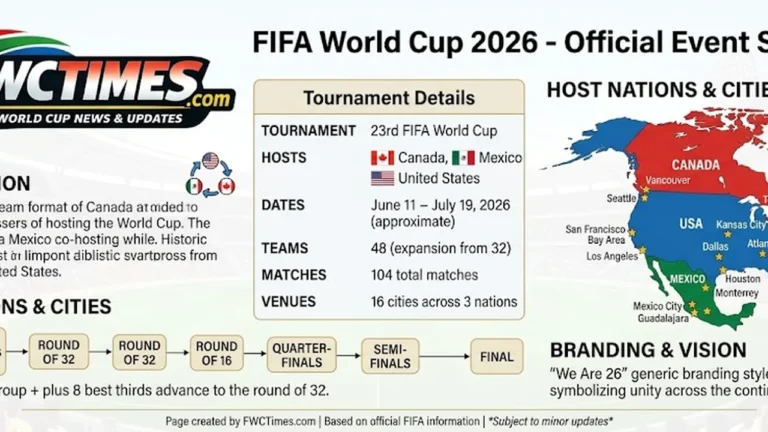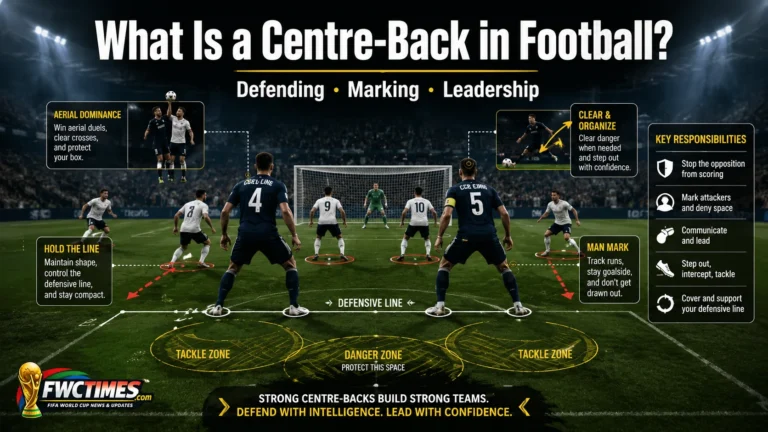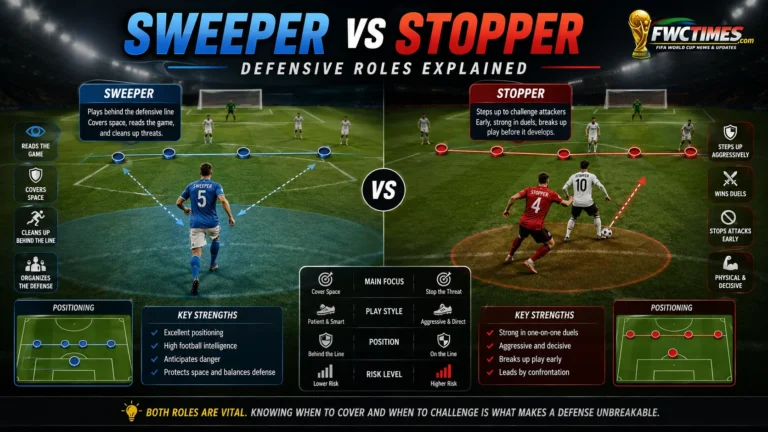
How to Score More Goals as a Striker Tips and Tricks

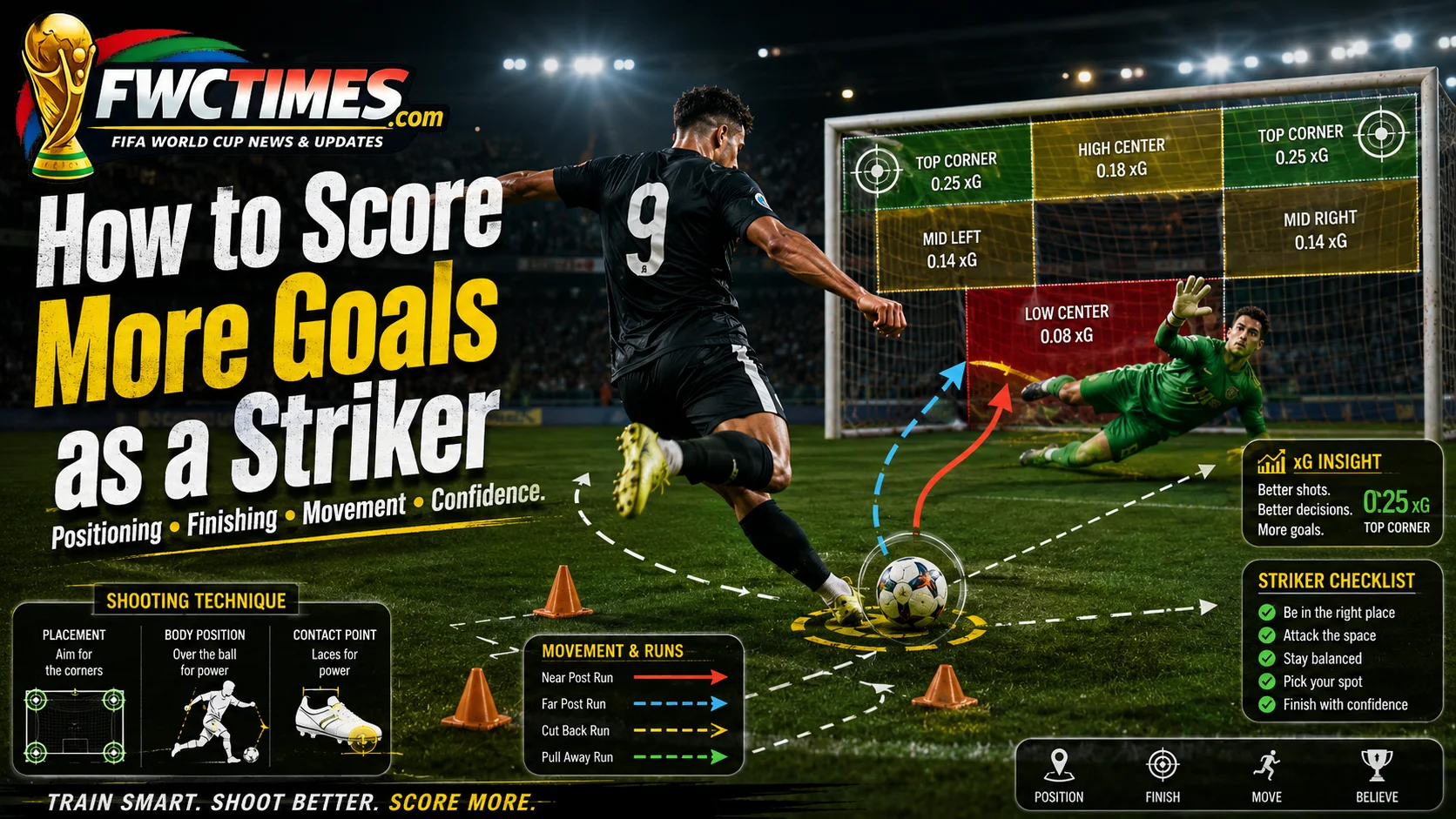
Strikers must master the art of box movement to increase their goal tallies. You can learn FIFA World Cup 2026 details to see how top players prepare. Elite attackers read the defender’s body shape to find small gaps. Understanding these movements explains how to score more goals as a striker in matches.
Finishing requires total concentration and rapid scanning of the goal area. You must adapt your positioning based on the delivery of the ball. A player who hesitates inside the box will lose the chance. Developing these skills will increase your scoring percentage significantly.
Off-Ball Movement on How to Score More Goals as a Striker
Smarter movement creates easier scoring opportunities during a match. You must scan the penalty area constantly before making your run. A straight run is very easy for modern defenders to intercept. Curved or diagonal runs help you stay onside and open cleaner lanes.
Near-post runs work well when wingers reach the opponent’s byline. Back-post movements exploit defenders who watch the ball too long. Strikers must remain patient while their teammates develop the attack. Good timing ensures you arrive in the box at the perfect second.
Tactical Roles in How to Score More Goals as a Striker
The system of play dictates the types of runs you should make. A lone forward in a 4-2-3-1 must link play before attacking. You can study the centre forward football role to understand these duties. The central attacker must occupy defenders to create space for others.
Coaches adjust their attacking patterns to exploit defensive weaknesses. Playing in a front two requires coordination with your partner. One striker drops deep while the other runs behind the defense. These coordinated movements keep the opposing backline under constant pressure.
Essential Habits of Elite Goal Scorers
Top forwards develop specific habits to maximize their efficiency in the box. You must practice finishing with both feet to open more angles. The structured details highlight the core habits of successful players.
| Habit | Why It Helps | Training Focus |
|---|---|---|
| Scan before crossing | Finds space early | Check shoulder before runs |
| Attack rebounds | Creates cheap goals | Follow every shot |
| Use one touch | Beats defensive blocks | First-time finishing |
| Vary runs | Confuses markers | Near-post and back-post work |
| Finish with both feet | Opens more angles | Weaker-foot repetitions |
Finishing Speed and Technique
Finishing speed is critical because defenders close spaces very quickly. A striker must master one-touch and two-touch finishes near the goal. Your first touch must set up the shot immediately. A heavy touch gives opponents time to block your attempt.
Opening your hips early allows you to direct the ball cleanly. You should practice low finishes across the goalkeeper to find success. A poacher in football knows how to remain calm under pressure. Repeating these finishing drills builds muscle memory for matches.
Coordination With Wingers
Strikers rely heavily on the service provided by wide midfielders. You must understand the passing preferences of your teammates. Matching your runs to their movements creates clean scoring chances. This coordination makes the attacking unit much more unpredictable.
Communication with your wide teammates helps establish clear attacking patterns. You can discuss where you want the ball during training. This understanding ensures the striker knows when to make deep runs. Strong partnerships will unlock even the tightest defensive blocks.
Scoring Expectations in the FIFA World Cup 2026
The best forwards will showcase their skills on the biggest stage. The tournament matches will feature elite defenses and tight spaces. Strikers must make the most of every single opportunity they get. A clinical finisher can lead their nation to tournament glory.
Fans can track the top scorers during the tournament matches. We provide detailed analysis of the leading forwards on our platform. The Golden Boot race will highlight the most efficient box players. You can follow these statistical updates as the tournament progresses.
Conclusion
Scoring goals consistently requires dedication, quick scanning, and sharp technique. You must focus on your off-ball movement to find space. Setting up the shot with a clean first touch is vital. Practice these habits regularly to dominate the penalty area.
Wide attackers also contribute to the team’s total goal tally. You can check the left winger vs right winger guide for comparison. Understanding these positions helps you appreciate the dynamics of modern football. Keep working on your movement to score more goals.
Frequently Asked Questions
How to score more goals as a striker?
You must improve your off-ball movement and finishing speed. Scan the penalty box constantly to find open spaces. Attack the near post, rebounds, and cutbacks to create chances. Composure is essential when facing the goalkeeper.
What are the best runs for a striker to make?
Diagonal and curved runs are the most effective for strikers. These movements help you stay onside while confusing the defenders. Near-post runs are excellent when crosses come from the byline. Back-post runs exploit distracted full-backs.
Why is the first touch important for strikers?
A clean first touch sets up your shot immediately. It prevents defenders from closing down the space and blocking. A heavy touch usually ruins the angle and wastes the opportunity. You must practice receiving under pressure.
What is the difference between a striker and a poacher?
Strikers link up play and press defenders across the pitch. Poachers focus almost entirely on close-range finishes inside the box. Both roles are vital for the team’s attacking output. Many modern forwards combine elements of both styles.
How does a striker prepare for compact defenses?
You must remain patient and wait for the right opening. Use quick one-touch finishes to beat the defensive block. Coordinate with your wingers to create crossing angles. Better movement is more effective than raw physical power.