World Cup Favorites Ranked: Who Will Win the Trophy?

The leading World Cup favorites ranked by betting odds and tactical readiness include Spain, France, and England. These elite national teams possess the squad depth and system flexibility to navigate the expanded tournament format. Yet success will require managing physical fatigue across a grueling eight-match knockout schedule. Studies of recent tournaments show that tactical stability is what separates champions from hyped contenders.
Many digital publishers focus on player reputation when evaluating the best teams. This focus ignores how tournament conditions, travel distances, and summer heat affect performance. So we must examine how these contenders structure their defensive blocks and transition play. The expanded field of forty-eight teams makes tactical adaptability more critical than in previous years.
Defining the Best World Cup Contenders
To win the trophy, a team needs more than a starting XI filled with star names. They must possess a highly organized rest defense to stop rapid opponent counter-attacks. On top of that, their coaching staff must implement effective rotation strategies to keep key players fresh. A balanced squad is what ultimately survives the high-pressure knockout rounds.
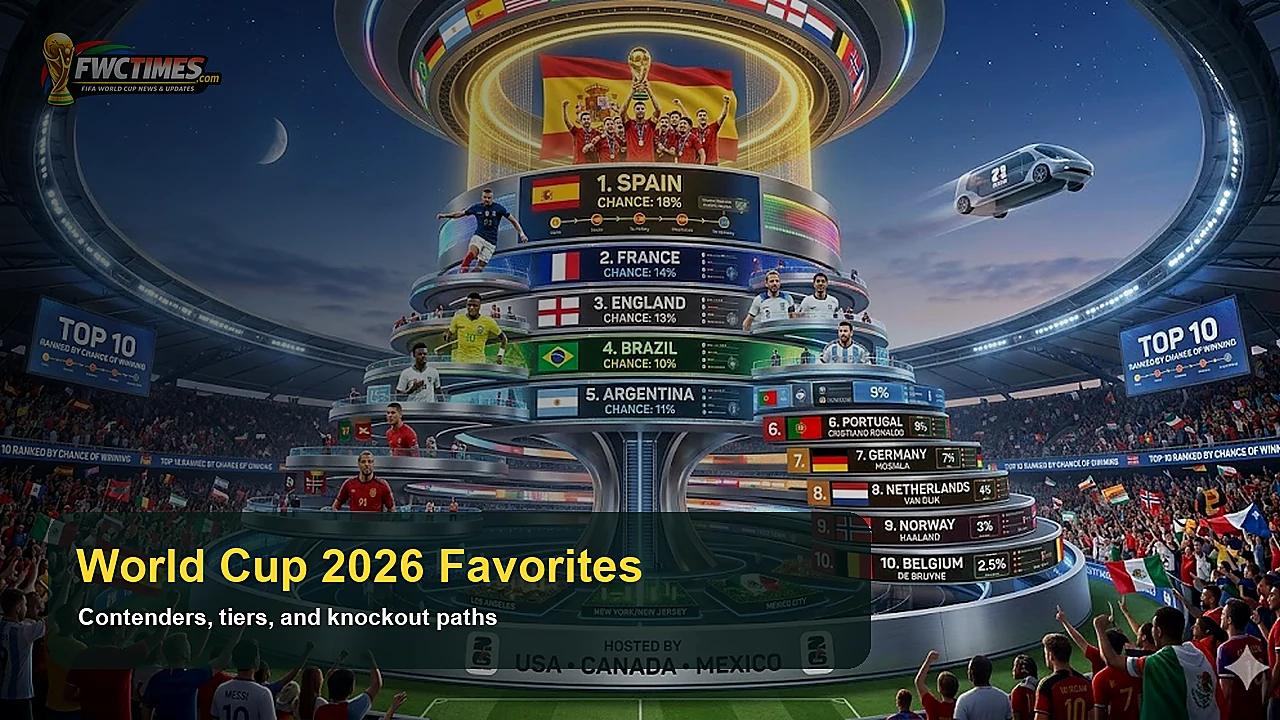
Top Contenders Ranked by Chance of Winning
We rank the top national teams based on tactical strength, squad depth, and recent qualifying records. These sides represent the elite tier of international football. Our analysis covers the most dominant systems in the world today.
1. Spain (+430)
Spain enters the tournament as joint favorites due to their structured possession and pressing systems. Under manager Luis de la Fuente, the squad combines technical midfield circulation with vertical winger speed. Lamine Yamal and Nico Williams provide direct attacking threat on the flanks, supported by Rodri’s pivot play. Their tactical cohesion makes them the most complete team in the competition.
2. France (+450)
France boasts the deepest pool of athletic talent, making them a highly resilient tournament side. Manager Didier Deschamps prioritizes a pragmatic mid-block that limits central spaces and launches fast counters. Kylian Mbappé leads the forward line, utilizing his speed to exploit high opponent defensive lines. Their experience in major finals provides a significant psychological edge.
3. England (+650)
England has shifted toward a highly functional defensive system under manager Thomas Tuchel. The coaching staff has prioritized structural security over individual improvisation, utilizing a double pivot to shield the back four. This disciplined setup is designed to survive low-scoring knockout matches where errors are punished. Still, they must prove they can break down deep low blocks.
4. Brazil (+800)
Brazil faces a crucial tactical transition as they attempt to balance attacking flair with defensive stability. Manager Carlo Ancelotti has experimented with fluid attacking lines that create numerical advantages wide. Yet this aggressive shape often leaves their central midfield exposed during fast defensive transitions. Their success depends on finding a reliable defensive screen to protect the box.
5. Argentina (+800)
Defending champions Argentina rely on their liquid tactical system and the legendary influence of Lionel Messi. Lionel Scaloni has built a hard-working midfield that covers space to allow Messi to conserve energy. While they possess elite tournament experience, their aging squad faces physical hurdles in the summer heat. They must manage their fatigue levels to defend their crown successfully.
6. Germany (+1200)
Germany combines high-intensity pressing with technical central combinations under Julian Nagelsmann. The team utilizes Florian Wirtz and Jamal Musiala in inverted roles to penetrate defensive lines. While their attacking output is high, their high defensive line is vulnerable to direct counter-attacks. They represent a highly dangerous side if they maintain transition discipline.
Statistical Comparison of the World Cup Favorites Ranked
We summarize the betting odds and tactical structures of the leading contenders. These profiles show the different tactical approaches to winning the tournament. Studying these setups provides a clear view of the championship race.
| Nation | Outright Odds | Tactical Shape | Key Strength |
|---|---|---|---|
| Spain | +430 | Structured 4-3-3 | Possession control |
| France | +450 | Pragmatic 4-3-3 | Transition speed |
| England | +650 | Rigid 4-2-3-1 | Defensive structure |
| Brazil | +800 | Fluid 4-2-4 | Attacking overload |
| Argentina | +800 | Liquid central block | Tactical experience |
| Germany | +1200 | High-press 4-2-3-1 | Inverted playmakers |
These profiles highlight the tactical variety present at the top of international football. Each contender relies on a distinct method to control matches and secure results. As a result, head-to-head matchups in the knockout rounds will be decided by system adjustments.
Tactical Challenges in the Expanded Format
The expansion to forty-eight teams increases the physical demands on every squad in the tournament. Finalists must navigate eight matches across three countries with varying climate conditions. So squad rotation is no longer a luxury but an absolute tactical necessity. Teams with weak bench options will struggle to maintain intensity in later rounds.
Managing travel distance and time zone shifts also affects recovery routines between matches. Teams must establish highly efficient recovery protocols to protect player fitness. Coaches who adapt their tactics to conserve energy during group matches will keep their key starters fresh. This physical economy of effort will decide the ultimate champion.
Expert Verdict
Spain represents the most structurally secure favorite to win the 2026 World Cup. Luis de la Fuente has created a system that balances possession control with vertical winger threats. If they avoid injuries to key midfielders, they will dominate the tournament matches. Still, they must maintain clinical finishing inside the box to reward their positional play.
France remains the biggest threat due to their unparalleled transition speed and knockout pedigree. Didier Deschamps knows how to win ugly matches, which is critical in tournament play. While Spain plays the most beautiful football, France possesses the most sustainable model for eight matches. Their physical resilience will likely carry them to the final once again.
Frequently Asked Questions
Who is the favorite to win World Cup 2026?
Spain and France are the joint favorites to win the tournament with odds around plus four hundred thirty. Spain enters following continental success under Luis de la Fuente. France boasts a highly experienced squad led by Kylian Mbappe. England, Brazil, and Argentina form the secondary group of favorites.
Why is Spain ranked so high?
Spain is ranked high because of their balanced tactical system that combines possession with vertical winger speed. The coaching staff utilizes Lamine Yamal and Nico Williams to stretch opponents, supported by Rodri’s control in midfield. Their counter-pressing structure quickly recovers the ball to maintain territorial dominance. They enter the tournament with the most cohesive system in football.
How does the expanded format affect the favorites?
The expanded format requires finalist teams to play eight matches instead of seven to win the trophy. This longer schedule increases physical fatigue and travel demand across three host nations. So favorites must possess excellent squad depth and utilize rotation to keep key players fresh. Roster strength will decide the winner in later rounds.
Can Argentina defend their World Cup title?
Yes, Argentina remains a strong contender due to their liquid tactical system and tournament experience. Lionel Scaloni builds a compact midfield block that shields the defense and allows Lionel Messi to roam freely. Yet their veteran roster faces severe physical challenges in the humid summer conditions. Success depends on their physical recovery between matches.