What Is the Regista Football Position?

In regista football, the player directs attacks from a deep central midfield position. A regista sits near the defence, receives the ball often, and controls the team’s passing rhythm. The role requires vision, calm technique, constant scanning, and protection from nearby teammates. This article explains the duties, history, and modern importance of this specialized position.
What is the regista football position?
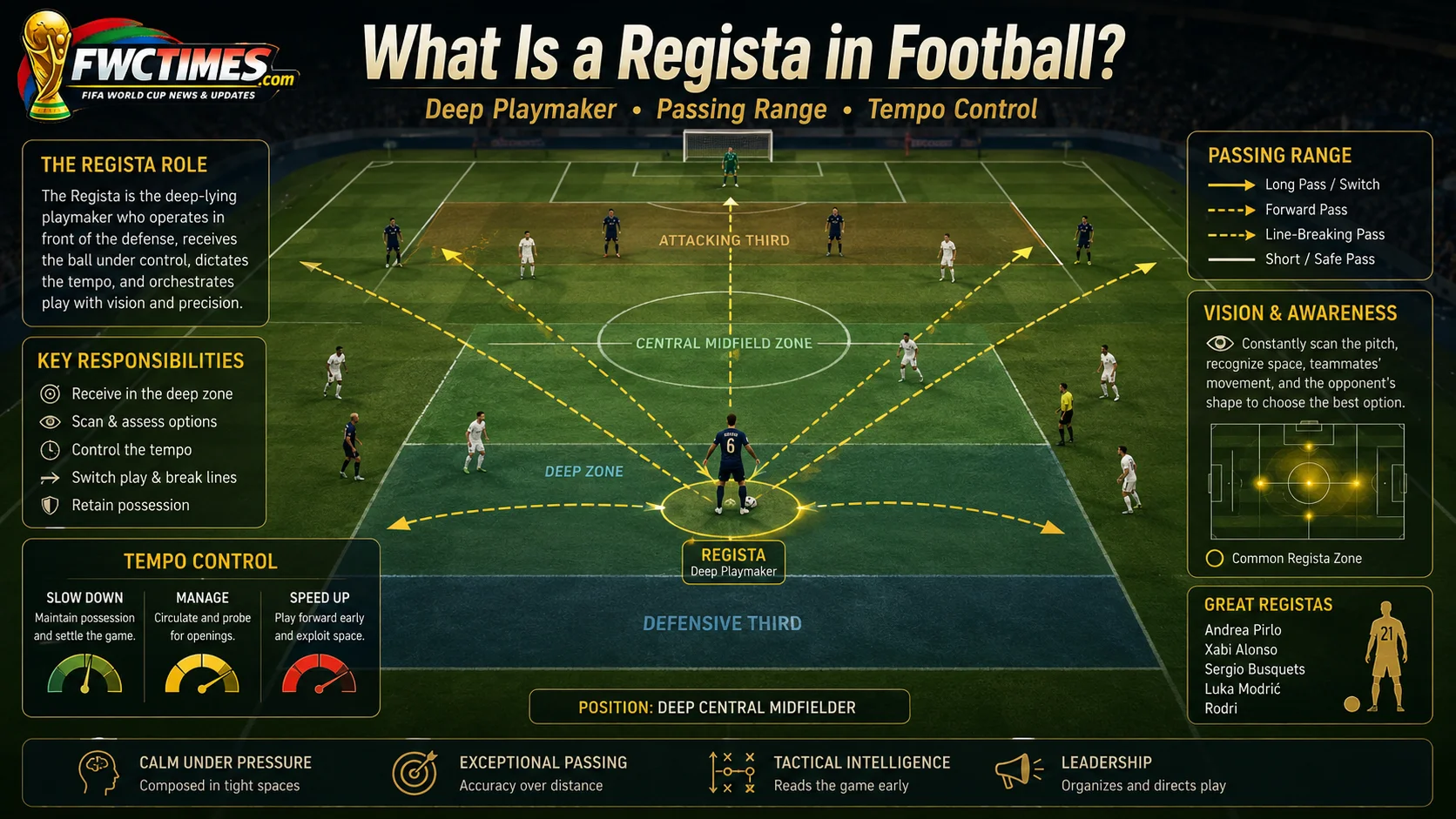
A regista is a deep playmaker who controls attacks from in front of the defence. The player sets the tempo, finds passing lanes, and starts forward moves from deeper areas. They act as the primary director of possession during transition phases. This positioning allows them to influence play without sprinting into the final third.
Regista Football Role Explained
The regista starts in the central lane, usually behind other midfielders. The player drops close to the centre-backs when the team builds from the back. From there, the regista invites the ball and chooses the next pass. As a result, the team can progress through pressure instead of clearing long.
A regista handles the passing and tempo parts first. The player must receive under pressure, connect units, and move opponents with simple touches. Still, modern teams cannot carry a deep passer who ignores defensive shape. The player must work with teammates to maintain defensive stability.
Key Regista Football Duties
The main duties include scanning the pitch, receiving passes, and switching play. The player must know where pressure sits before the ball arrives. A regista also creates angles for the centre-backs and wide defenders. Since the role sits deep, one loose pass can expose the whole team.
Tacticians emphasize the importance of press resistance for this role. The player must remain calm when opponents try to close down the space. Passing range is another essential quality for these creative deep midfielders. They must distribute short passes and long diagonals with equal accuracy.
How a Deep Playmaker Dictates Build-Up
A deep playmaker controls build-up by becoming the safest passing option. Centre-backs use the playmaker when opponents block the wide routes. The player can turn out of pressure or play first-time passes into midfield. This keeps the team calm when the press becomes aggressive.
The role overlaps with a deep-lying playmaker in football. Both roles work from deeper midfield and value passing range. The regista often carries a more specialist identity because teammates look to him as the director. That expectation changes how the team builds attacks.
Short passing matters as much as long passing. A simple return pass can pull an opponent out of position. A diagonal switch can release a winger into space. In fact, a regista often creates an advantage before the final assist appears.
Defensive Risks and Midfield Balance
The playmaker role gives a team control, yet it can create defensive risks. The player usually operates ahead of the centre-backs, so opponents may press that zone. If the playmaker loses the ball, the defence can face a direct counter-attack. That is why having support around him is vital.
A traditional defensive midfielder in football focuses first on protection and recovery. A deep playmaker focuses first on passing and direction. Some players can do both jobs, but many need a runner beside them. The partner covers spaces when the playmaker steps toward the ball.
Coaches protect their playmaker by shaping the midfield around him. One midfielder may press higher while another stays closer to protect the centre. Full-backs can also hold narrower positions during build-up play. Because of that support, the director can receive more often without leaving the midfield open.
Regista vs Other Midfield Roles
| Role | Main Area | Main Job | Key Difference |
|---|---|---|---|
| Regista | Deep central midfield | Direct build-up and tempo | Acts as the team’s deep director |
| Defensive midfielder | In front of defence | Protect centre-backs | Prioritises defensive security |
| Deep-lying playmaker | Deep midfield | Pass through lines | Broader label for deeper creators |
| Number 10 | Between midfield and attack | Create near the box | Works higher up the pitch |
The deep director differs from a number 10 because the starting zone sits much deeper. A number 10 creates close to the forwards in the final third. A deep playmaker creates before the attack reaches the attacking zone. That deeper position gives the player more time but more defensive responsibility.
Andrea Pirlo remains the cleanest historical reference for this style of play. Tactical coaches moved him into a deep-lying midfield position to maximize his vision. Pirlo’s calm passing shaped how fans understand the position. His style showed that a deep midfielder could control a match without constant running.
World Cup Midfield Strategies
At the tournament matches, regista-style midfielders can help teams beat pressing. Heavy tournament matches often become tense, so calm first passes matter. A deep director can slow chaos and move the ball away from pressure. Coaches rely on these players to maintain control during knockout games.
Vitinha gives Portugal at World Cup 2026 a relevant midfield reference. Squad coverage lists Vitinha among the midfield options for the national team. His exact role for the tournament is yet to be confirmed. His passing and tempo control fit the requirements of the deep role.
Coaches can use the role in several tactical formations. A standard 4-3-3 can place the playmaker as the single pivot. A 4-2-3-1 can protect him with another holding player. The selected shape decides how much freedom the director gets during matches.
Frequently Asked Questions
What is regista football?
Regista football describes a deep midfield playmaker who directs attacks from in front of the defence. The player controls tempo, receives the ball often, and starts moves through accurate passing. This role requires excellent vision and high technical ability under pressure.
What does a regista do tactically?
A regista gives centre-backs a passing outlet and moves the ball through pressure. The player also switches play, sets the rhythm, and helps organise build-up angles. This movement helps the team transition from defence to attack smoothly.
Who is the most famous regista?
Andrea Pirlo is the most famous modern regista reference in world football. Managers used him as the ideal deep-lying playmaker because of his calm passing and control. His success with Italy and Milan defined the role for a generation.
How is a regista different from a defensive midfielder?
A defensive midfielder focuses first on stopping attacks and protecting defenders. A regista may defend the same zone, but the main job is directing possession. They prioritize creativity and passing rather than tackling and physical duels.
Will registas matter at World Cup 2026?
Yes, registas can matter because teams need calm passing against tournament pressing. A deep director can control the tempo when knockout matches become tight. Their ability to handle pressure will be crucial for success in the matches.
Conclusion
A regista gives a team a director at the base of midfield. The role rewards vision, calmness, clean passing, and strong support around the player. The matches will test which teams can build through pressure with control. Fans can expect to see great tactical battles in these midfield areas.
To find more tactical guides, check our other explainers. Read Also: What Is the Number 10 Role in Football? Our writers update the site regularly with fresh tactical content.