Best World Cup Coaches: Tactical Geniuses Ranked

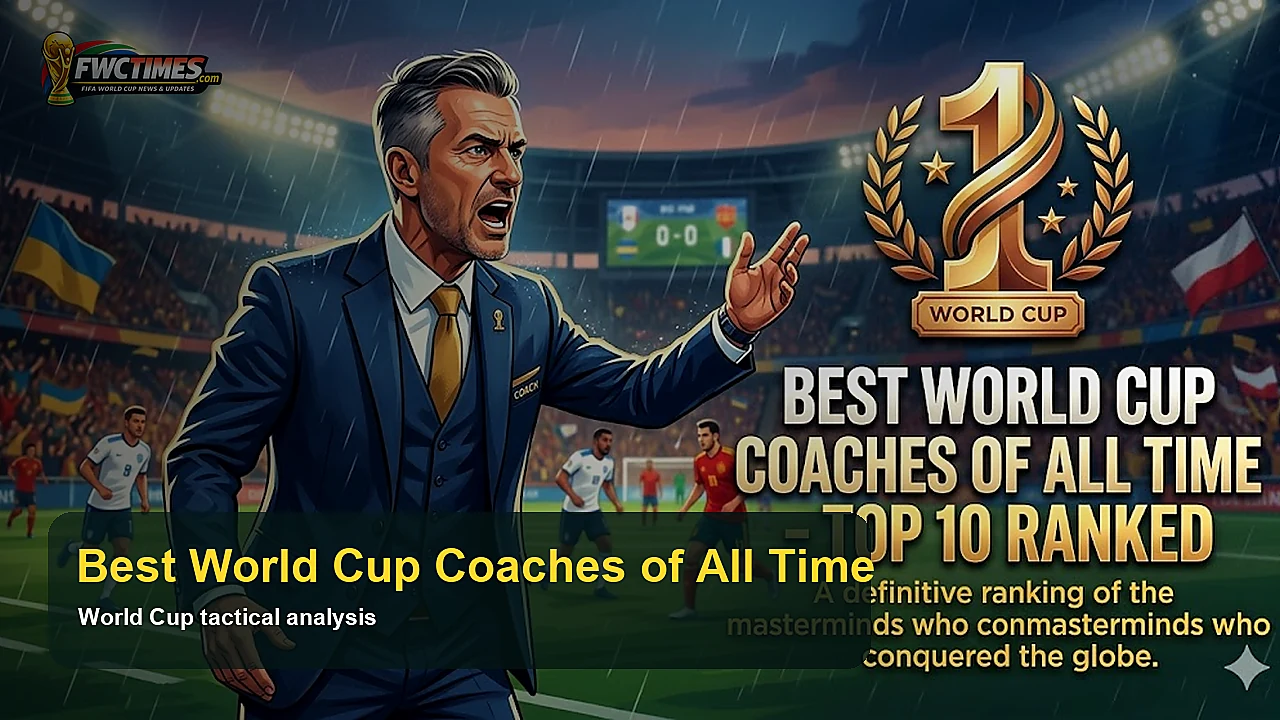
The best World Cup coaches combine tactical foresight and squad harmony to win the ultimate football tournament. These top tournament managers must make critical decisions under immense pressure where a single mistake can end a campaign. In fact, historical records show that tactical innovation is often what separates champions from regular contenders. As teams prepare for the FIFA World Cup 2026, studying these legendary figures reveals the blueprint for modern glory.
Managing a national team during a short tournament is completely different from coaching a club side. Managers have very little time to drill complex patterns into their squads before matches begin. So they must simplify their tactical ideas and build strong defensive foundations quickly. The physical demands of playing consecutive knockout matches also require excellent squad rotation strategies.
Most successful tournament managers prioritize defensive solidity and structural discipline over open attacking styles. They understand that defensive organization is what keeps a team stable when attackers struggle to score. As a result, the history of the competition is filled with pragmatic coaches who built hard-to-beat teams. This analysis ranks the greatest tactical minds to ever grace the tournament.
Defining the Best World Cup Coaches
The greatest national team managers are defined by their ability to deliver results under extreme pressure. They must manage diverse player personalities and unite them under a single tactical vision. On top of that, they need to read match momentum and make game-changing substitutions. A coach who wins the tournament must be both a master tactician and an elite man-manager.
Top 10 World Cup Coaches of All Time
This list ranks the managers who left the deepest mark on tournament history. We evaluate their titles, tactical innovations, and match records to determine the greatest. The ranked coaches span different eras, showing how tactical ideas evolved over the decades.
Vittorio Pozzo (Italy)
Vittorio Pozzo sits at the top of the historical ranking because he won the tournament twice. He guided Italy to back-to-back trophies in 1934 and 1938. His famous Metodo system introduced a narrow attacking shape that dominated opponents. He remains the only manager to achieve this repeat success in tournament history.
Helmut Schön (West Germany)
Helmut Schön holds the all-time record for the most matches managed in the competition. He led West Germany in 25 matches across four consecutive tournaments. Under his guidance, the team won the title in 1974 and finished runner-up in 1966. His tactical flexibility and squad management set a benchmark for future generations.
Mário Zagallo (Brazil)
Mário Zagallo is one of the most decorated figures in football history. He won the tournament twice as a player before coaching Brazil to glory in 1970. He balanced a squad of individual superstars into a fluid attacking unit. He later served as assistant coach when Brazil won the title in 1994.
Didier Deschamps (France)
Didier Deschamps built a modern dynasty by focusing on defensive stability and fast transitions. He led France to victory in 2018 and reached the final in 2022. He managed 19 tournament matches, putting him close to the all-time record. His pragmatic approach has kept France competitive across multiple tournament periods.
Franz Beckenbauer (West Germany)
Franz Beckenbauer achieved legendary status by winning the tournament as both player and manager. He captained West Germany to victory in 1974 and coached them to the trophy in 1990. His teams used a sweeper system that provided excellent defensive cover. He remains one of the most respected tactical minds in football.
Vicente del Bosque (Spain)
Vicente del Bosque brought Spain their first title in 2010 using a possession-heavy style. He adapted the famous tiki-taka club system for the international stage. His midfield-centric approach choked opponent attacks and controlled match tempo. He followed this success by winning the European Championship in 2012.
Joachim Löw (Germany)
Joachim Löw managed Germany through a period of consistent excellence, culminating in the 2014 title. He built a high-intensity attacking team that scored seven goals against Brazil. His tenure spanned 17 matches in the tournament, making him one of the longest-serving modern coaches. He prioritized high pressing and rapid combinations in the final third.
Lionel Scaloni (Argentina)
Lionel Scaloni revitalized Argentina by building a flexible team around Lionel Messi. He won the tournament in 2022, losing only one match during the campaign. His liquid tactical system shifted shapes between attacking and defensive phases. He successfully blended youth energy with experienced stars to dominate CONMEBOL qualifying.
Carlos Bilardo (Argentina)
Carlos Bilardo designed a revolutionary 3-5-2 system to win the title in 1986. He deployed three central defenders to protect the box and unleash Diego Maradona. His tactical pragmatism helped Argentina reach another final in 1990. He proved that unconventional shapes can succeed when tailored to key players.
Rinus Michels (Netherlands)
Rinus Michels revolutionized global football with his Total Football philosophy in 1974. Although the Netherlands finished as runners-up, his tactical influence remains unmatched. His players swapped positions fluidly, confusing opponent marking systems. He established principles of space manipulation that modern coaches still use today.
Historical World Cup Coaching Achievements
The numbers show the sustained success of the greatest tournament managers. These statistics highlight their efficiency in matches played and trophies won. Studying these historical records reveals what it takes to succeed on the big stage.
| Coach | Nation | Titles Won | Matches Managed | World Cup Wins |
|---|---|---|---|---|
| Vittorio Pozzo | Italy | 2 | 9 | 8 |
| Helmut Schon | West Germany | 1 | 25 | 16 |
| Didier Deschamps | France | 1 | 19 | 14 |
| Mario Zagallo | Brazil | 1 | 12 | 9 |
| Joachim Low | Germany | 1 | 17 | 12 |
These numbers highlight the longevity required to leave a lasting tournament legacy. Winning matches consistently is extremely difficult due to the high-pressure knockout format. As a result, coaches who manage more than fifteen games represent the elite tier.
Modern Tactical Challenges for National Team Managers
The expansion to 48 teams at the 2026 tournament creates new tactical hurdles for coaches. Teams must navigate up to eight matches to lift the trophy. This demanding schedule requires managers to rotate their squads without losing tactical cohesion. As a result, squad depth will be just as important as the starting XI.
Climate variations across the three host nations also affect how teams defend. High pressing requires immense energy, which is hard to sustain in high humidity. So coaches must organize compact defensive shapes that conserve player stamina. The managers who adapt their systems to the local conditions will have a massive advantage.
Expert Verdict
Vittorio Pozzo remains the greatest World Cup manager due to his back-to-back titles. His tactical innovations established Italy as a dominant football power. Yet modern managers face much higher physical and media demands. Didier Deschamps has the best chance to match Pozzo’s record if France excels in 2026.
The key tactical risk for modern coaches is tactical rigidity under pressure. A successful tournament campaign requires the ability to adjust shapes during matches. Managers who rely on a single system often struggle when opponents exploit their weaknesses. So flexibility will decide the winner of the next tournament.
Frequently Asked Questions
Who is the most successful World Cup coach?
Vittorio Pozzo is the most successful coach, winning two consecutive titles with Italy in 1934 and 1938. Helmut Schon holds the record for the most matches managed, leading West Germany in twenty-five games. Mario Zagallo and Franz Beckenbauer also achieved legendary status by winning as players and managers.
How many matches has Didier Deschamps managed at the World Cup?
Didier Deschamps has managed nineteen matches in the tournament as of the 2026 tournament. He led France to the title in 2018 and the final in 2022. He is close to breaking the all-time matches managed record. His pragmatic system makes France one of the hardest teams to beat.
Which coach popularized Total Football at the World Cup?
Rinus Michels popularized Total Football while managing the Netherlands national team in 1974. His innovative system allowed players to swap positions fluidly during matches. This approach revolutionized tactical thinking and influenced modern positional play. His legacy remains highly respected despite losing the final.
How does the 48-team format affect World Cup coaching?
The expanded format requires the finalist teams to play eight matches instead of seven. This longer schedule places greater physical demands on players. So coaches must utilize their entire squad and rotate players effectively to prevent fatigue. Excellent squad depth is now a critical tactical requirement.