USA Coaching Change World Cup 2026: Pochettino vs Berhalter

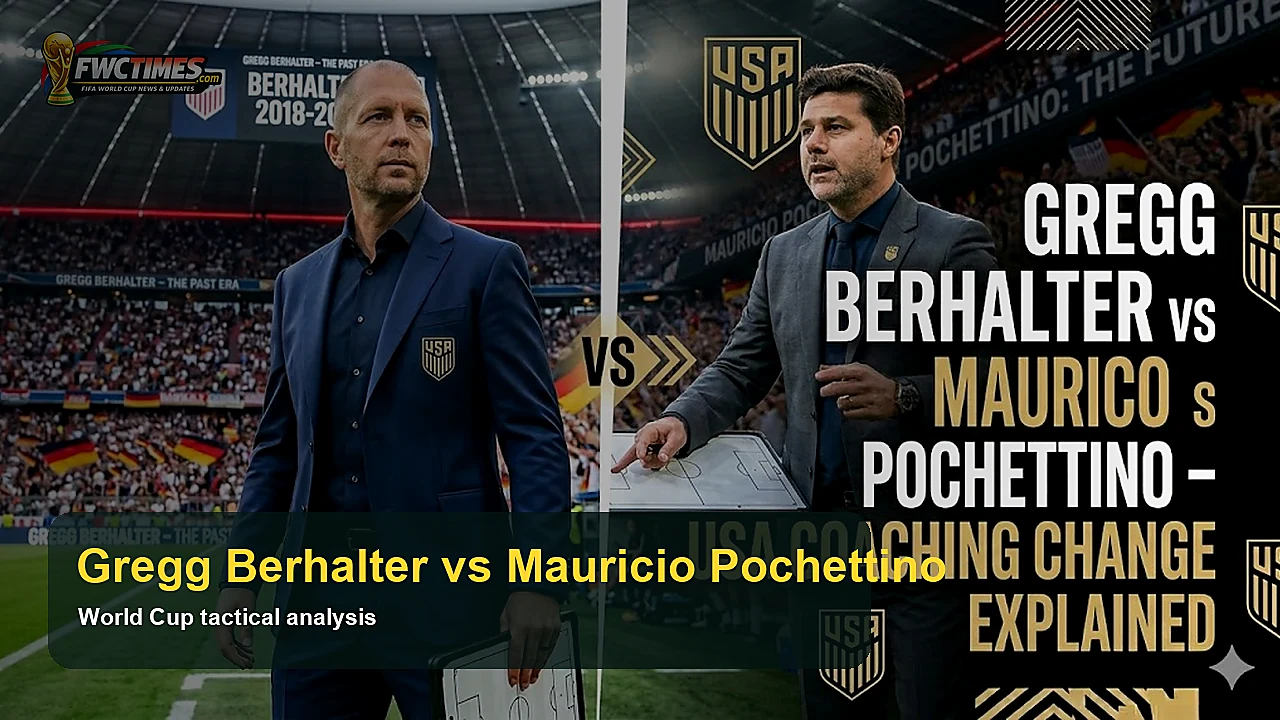
The USA coaching change World Cup 2026 transition is a major shift, replacing Gregg Berhalter with Mauricio Pochettino. The U.S. Soccer Federation hired Pochettino to address a disappointing Copa América exit and prepare for a home tournament. In fact, Pochettino has restructured the team’s playing style to prioritize defensive aggression and vertical transitions. This guide explains how this coaching change impacts the U.S. team’s prospects.
The physical load of the expanded 48-team schedule plays a central role in Pochettino’s tactical preparation. Appointed in September 2024, Pochettino immediately focused on building physical stamina to support his high-pressing style. As a result, the USMNT uses laptops to show real-time video analysis to players during hydration breaks. This technological adjustment helps the squad reset their pressing lines and maintain structure.
The history of the tournament shows that host nations can progress deep when backed by organized, high-energy systems. Pochettino has brought his experience from Tottenham and Chelsea to build a belief in the squad. The coaching staff has designed a fluid system that encourages players to take risks in possession. The USMNT enters the group stage hoping to achieve their best modern result.
From Berhalter’s Possession to Pochettino’s Press
Gregg Berhalter served as the USMNT head coach until July 2024, prioritizing a slow, possession-oriented 4-3-3 system. Under Berhalter, the team focused on building play from the back but often struggled to break down compact blocks. Following the Copa América exit, Berhalter departed. He later took charge of the Chicago Fire in early 2026. This coaching change opened the door for a complete tactical rebuild.
Mauricio Pochettino took charge in September 2024, introducing a Bielsa-influenced high-pressing system that focuses on vertical speed. Pochettino shifted the team away from slow recycling, demanding that players release the ball forward immediately. The USA playing style World Cup 2026 guide explores the details of this high-energy transition system. Pochettino’s arrival has brought a results-oriented pragmatism to the squad.
Roster Selection and Sebastian Berhalter’s Roster Call-up
Mauricio Pochettino has finalized his 26-player roster for the tournament, introducing several tactical adjustments. A notable talking point was the inclusion of midfielder Sebastian Berhalter, the son of former manager Gregg Berhalter. Sebastian earned his place through consistent club performances, demonstrating the depth of the squad. The best managers World Cup 2026 rankings show how Pochettino’s squad selection compares to other coaches.
The system relies on Christian Pulisic and Weston McKennie to lead the attacking transitions in the final third. McKennie functions as a box-to-box midfielder, winning duels and driving forward to support the attack. Pulisic operates on the left flank, utilizing his pace to stretch opposition defensive lines. The high press World Cup guide explores how pressing systems coordinate their forward runs.
Coaching Timeline and Tactical Stats
The coaching timeline shows the transition from Berhalter’s system to Pochettino’s high-pressing system. This shift has delivered a more aggressive defensive structure ahead of the tournament. The change has also renewed player enthusiasm.
| Head Coach | Tenure Start | Core Tactical Style | Roster Focus | | :— | :— | :— | :— | | **Gregg Berhalter** | Dec 2018 (Reset 2023) | Possession 4-3-3 | Positional Play | | **Mauricio Pochettino** | Sep 2024 | High-Press / Vertical | Physical Stamina |
This data shows that the federation executed the coaching change to introduce European tactical discipline. Under Pochettino, the USMNT has focused on vertical efficiency rather than horizontal possession. This tactical clarity makes them a dangerous opponent in the group stages.
Key Vulnerabilities of Pochettino’s USMNT System
The biggest tactical risk is the space left behind the fullbacks when they push high to support the press. Because Pochettino demands overlapping runs, the wide defensive channels are vulnerable to quick vertical passes. If the opponent beats the initial press, the centre-backs are left isolated in 1v1 situations. This vulnerability requires disciplined defensive tracking from the central midfielders.
The system also faces a physical fatigue challenge due to the intense running requirements of the press. If key players suffer from injuries during the group stage, the pressing intensity inevitably declines. The backup players must execute the pressing triggers with the same intensity to prevent defensive breakdowns. The Canada playing style World Cup 2026 guide shows how their neighbors manage similar pressing risks.
Expert Verdict
The USA coaching change World Cup 2026 transition has provided the USMNT with a clear tactical identity and elite leadership. Mauricio Pochettino has created a hard-working, vertical unit that can challenge top-tier opponents on home soil. The high-pressing shape and Pulisic’s individual quality give the USMNT a strong attacking platform. The key to their tournament will be defending wide areas during transition moments.
If they can maintain defensive discipline, the USA will progress from Group A. The opening matches will be a significant test of Pochettino’s physical preparation. Despite media speculation linking him to clubs like AC Milan, Pochettino remains entirely focused on the World Cup. The USMNT has the tools to surprise, but they must protect the space behind their line.