What Is a Clean Sheet in Football? Meaning and Rules

A clean sheet in football means a team completes the measured match period without conceding a goal. A 0-0 draw gives both teams a shutout.
The term often appears beside goalkeeper records, yet the whole team contributes. Defenders, midfielders, pressing forwards, and the goalkeeper all protect the score.
What Is a Clean Sheet in Football?
A team keeps a shutout when its opponent scores zero goals. The team’s own scoring total does not affect that defensive result.
Wins such as 1-0 and 3-0 count, and a 0-0 draw also counts. Competition and statistics providers can apply different player-credit rules.
shutout in Football Meaning and Match Examples
A shutout records zero goals conceded by one team. The team can win or draw while earning it. A loss cannot include a shutout because the opponent must score.
A 0-0 result gives both sides the defensive statistic. A 4-0 result gives it only to the winning team. One conceded goal removes the shutout regardless of the final margin.
Own goals count against the defending team because they change the official score. A deflection credited to the opponent has the same effect. The source of the goal does not protect the shutout.
Penalty shootout kicks remain separate from the match score. A team can finish the match scoreless against its opponent before a shootout decides advancement. Statistical treatment of extra time can vary by competition provider.
How Teams Keep shutouts
Teams protect their goal through compact spacing, pressure, covering runs, and clear communication. The first defender slows the attack while teammates protect dangerous spaces. Good positioning can prevent shots before the goalkeeper acts.
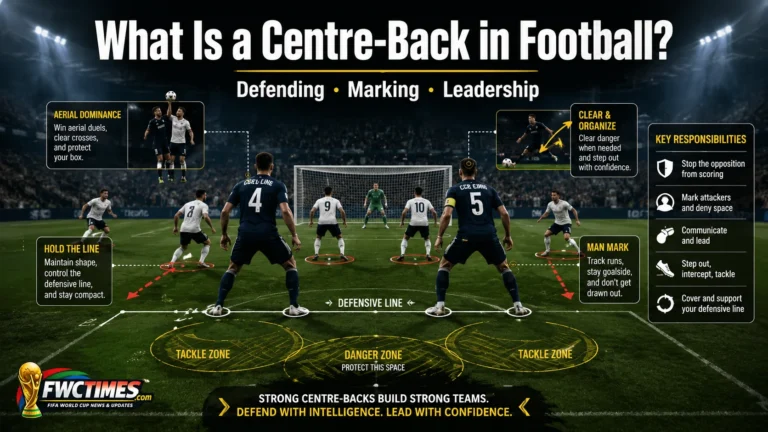
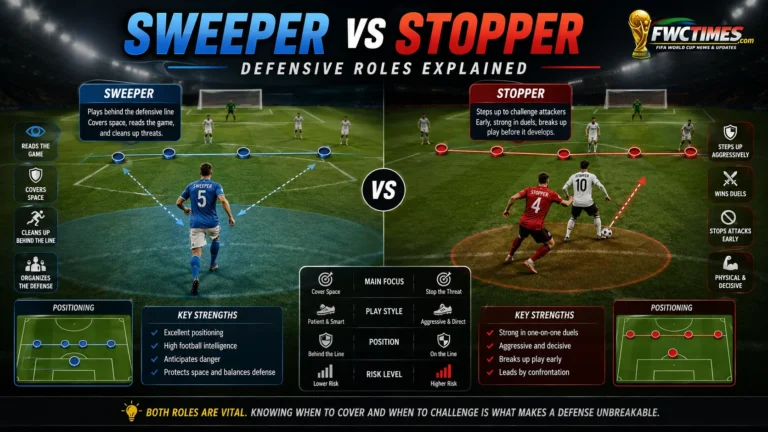
Centre-backs manage crosses, central runs, and space behind the defensive line. Full-backs protect wide areas and recover toward goal. Midfielders screen passes before attackers reach the final line.
Goalkeepers organise defenders, claim crosses, sweep behind the line, and make saves. FWCTimes explains one key decision in its goalkeeper outside the box guide. A keeper’s starting position can stop danger early.
Attackers also contribute by pressing the first pass and protecting possession. A team that controls the ball limits opponent attacks. shutouts usually come from coordinated work rather than one player’s saves.
Why Coaches Value shutouts
A shutout guarantees that one goal will be enough to win. That value becomes greater in knockout football, where one defensive error can end a campaign. Coaches build repeatable habits around that margin.
Defensive stability can also improve attacking confidence. Players can take selected risks when the team protects transitions well. Poor rest defence can turn an attack into a conceded goal.
Some teams defend deeper to reduce space near goal. FWCTimes explains that extreme approach in its parking the bus tactics guide. A deep block still requires pressure on the ball.
Other teams keep shutouts through possession and high pressing. Their defenders spend less time near their own goal. The method changes, but the target remains zero conceded goals.
shutout Scoreline Comparison
| Scoreline | Home Team shutout | Away Team shutout |
|---|---|---|
| 0-0 | Yes | Yes |
| 1-0 | Yes | No |
| 0-2 | No | Yes |
| 3-1 | No | No |
| 2-2 | No | No |
Team and Goalkeeper shutout Statistics
A team shutout describes the final defensive result. Goalkeeper records can depend on the statistic provider’s method. A substituted goalkeeper may receive different treatment across competitions and fantasy games.
Fantasy football often applies minimum-minute rules before awarding player points. Those game rules do not redefine the real team result. Readers should separate fantasy scoring from official match statistics.
A goalkeeper can play well without keeping a shutout. One unstoppable shot can remove the statistic after several important saves. shutouts measure an outcome rather than complete individual performance.
Defensive records need match and competition detail. FWCTimes compares tournament contenders in its best defensive World Cup teams. Goals conceded and chance quality add depth to shutout-sheet totals.
shutouts, Goal Difference, and Tournament Progress
shutouts protect points during league and group competition. A team that does not concede earns at least a draw. One goal at the other end then converts that result into a win.
They also help goal difference because the conceded side of the calculation remains zero. A 2-0 win adds two to goal difference. A 2-1 win adds only one.
Knockout ties place extra value on defensive control. Teams must understand whether extra time forms part of the measured match statistics. Competition reporting methods should guide record comparisons.
Coaches study how opponents create chances before choosing their defensive plan. Crosses, through balls, set pieces, and transitions demand different responses. The shutout comes from solving each threat without losing shape.
What shutouts Do Not Measure
A shutout does not reveal how many chances the opponent created. One team may allow no shots, while another survives several clear chances. Both results still record zero conceded goals.
The statistic also cannot separate defensive control from poor opponent finishing. Analysts review shots, shot locations, saves, and possession beside the final score. Those details explain how the result happened.
Goalkeeper comparisons need similar care. A keeper can make several difficult saves, while another faces no dangerous attempt. Both may receive one shutout in a basic record list.
Coaches value the outcome but study the process. Repeatable positioning and pressure create stronger evidence than one fortunate result. Tournament teams need defensive habits that survive different opponents.
Connection to FIFA World Cup 2026
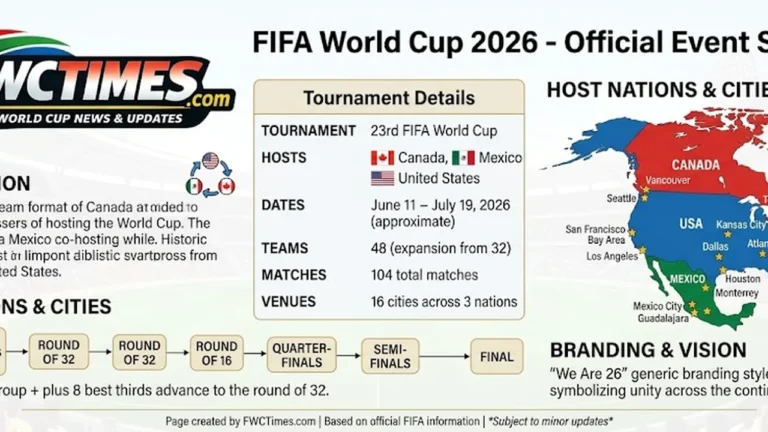
clean sheets can secure group points and protect knockout progress at the FIFA World Cup 2026. The expanded format still rewards teams that manage risk across short tournament periods.
Teams such as France, Argentina, and Morocco can combine strong defenders with dangerous transitions. Their opponents may need patience before committing extra players forward.
One shutout can decide a Round of 32 match or strengthen a third-place group comparison. Defensive organisation will remain a major tournament separator.
Frequently Asked Questions
What does shutout in football mean?
A clean sheet in football means a team does not concede a goal during the measured match period. A 0-0 draw gives both teams a shutout.
Why do coaches value shutouts?
A shutout guarantees at least a draw and lets one scored goal produce a win. It also reflects coordinated defensive work across the team.
Does an own goal remove a shutout?
Yes, an own goal changes the official score and removes the defending team’s shutout. The team conceded even though an opponent did not receive the final touch.
What is the difference between a shutout and a shutout?
Both terms describe preventing the opponent from scoring. shutout is common in football, while shutout appears more often in North American sports language.
Why will shutouts matter at World Cup 2026?
shutouts can protect group points, goal difference, and knockout progress at World Cup 2026. One defensive result can decide a short tournament campaign.
Conclusion
shutouts reward teams that prevent every scoring route across the measured match. The goalkeeper receives attention, but coordinated defending creates the result.
World Cup 2026 contenders will need defensive control beside attacking quality. Stay tuned to FWCTimes.com for the latest FIFA World Cup 2026 updates.
Read Also: What Is a Hat-Trick in Football?