How Goalkeeper Hands Outside the Box Rules Apply

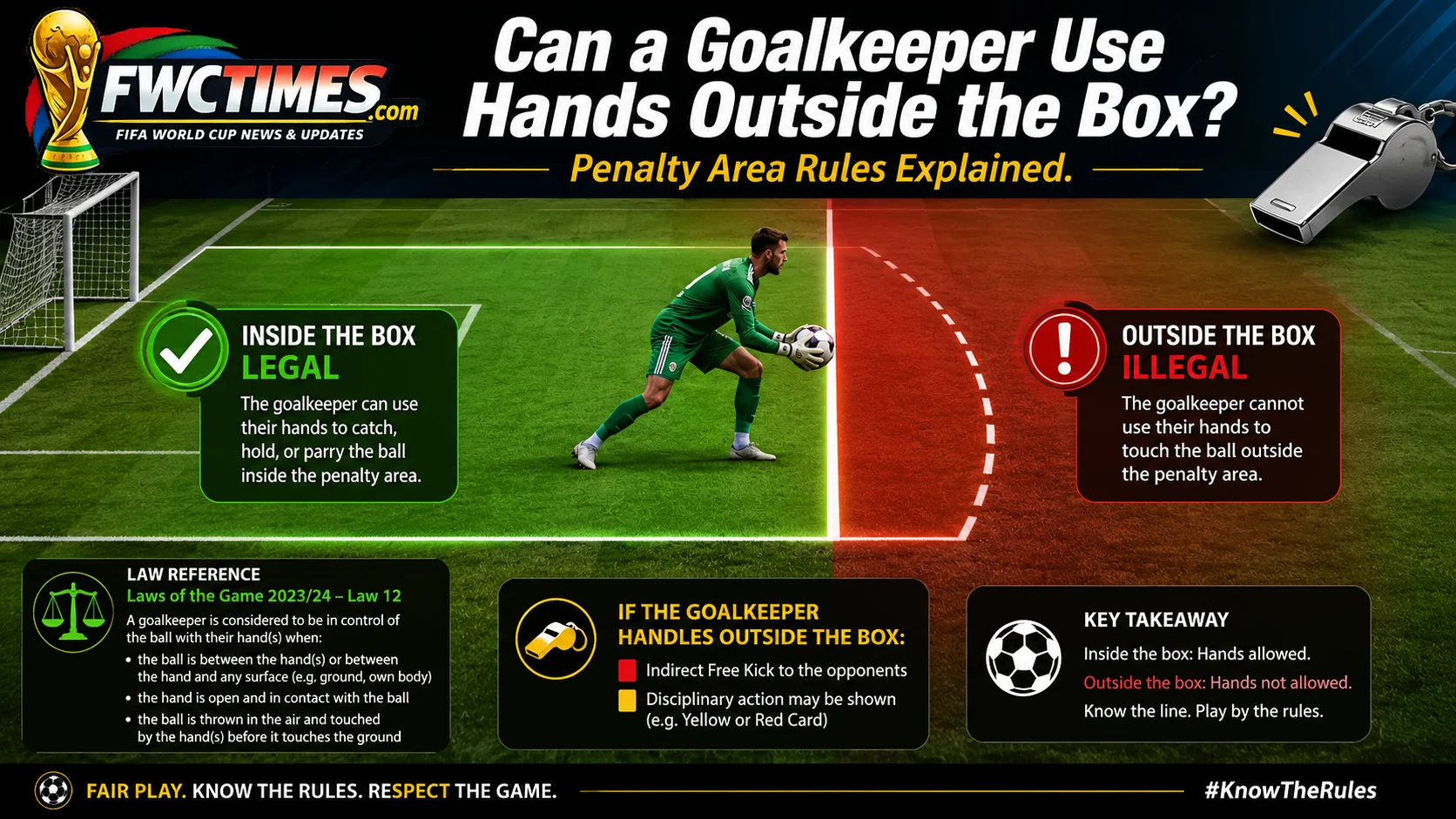
The goalkeeper hands outside the box rule defines where a keeper can handle the football. A goalkeeper has special rights to touch the ball inside the penalty area. The goalkeeper hands outside the box rule dictates that the keeper becomes an outfield player beyond this line. Handling the ball outside this box results in a direct free kick for the opposing team.
Goalkeeper Hands Outside the Box Rules Explained
IFAB Law 12 states that goalkeepers can only handle the ball inside their own penalty area. The line of the penalty box serves as the boundary for this special handling privilege. If any part of the ball is handled outside, the referee must blow the whistle. The goalkeeper hands outside the box rule applies the same handball restrictions as outfield players.
Goalkeepers must monitor their body position relative to the penalty line at all times. They can stand outside the box and play the ball legally with their feet. Problems arise when a keeper attempts to grab the ball while sliding across the boundary. The location of the ball at the moment of contact determines the referee decision.
Why Goalkeeper Hands Outside the Box Is a Penalty Area Limit
The penalty area boundary is the absolute limit for legal handling in football. The exact point of contact between the glove and the ball defines the handball offence. A goalkeeper hands outside the box error occurs even if the feet remain inside the line. The laws judge only the position of the ball and the hand.
What the Referee Gives After the Handball
The standard restart for a goalkeeper handling offence outside the box is a direct free kick. The opposing team takes the free kick from the exact spot where the contact occurred. This position often creates a highly dangerous goal scoring opportunity for the attacking side. Defenders must organize a wall quickly to block the upcoming shot.
When the Goalkeeper Can Play Outside the Box
Goalkeepers have full freedom to play outside the penalty area using their feet. They can pass, tackle, and clear the ball just like normal outfield defenders. Modern tactical trends encourage goalkeepers to participate actively in team possession. This participation helps teams build play and bypass opponent pressure.
Goalkeeper Handling Situations
| Situation | Decision | Disciplinary Action |
|---|---|---|
| Ball and hands inside area | Play continues | No card |
| Ball handled outside area | Direct free kick | Possible yellow card |
| DOGSO handball outside area | Direct free kick | Red card |
| Keeper carries ball over line | Direct free kick | Possible card |
| Playing outside area with feet | Play continues | No card |
Connection to FIFA World Cup 2026
At the FIFA World Cup 2026, these decisions will impact crucial matches. The expanded tournament features forty-eight teams competing across three host nations. Many teams will employ high pressing tactics to dominate their group stage matches. This style forces goalkeepers to sweep far behind their defensive lines.
How Referees Judge the Penalty Area Line
Match officials use assistant referees and video review to judge these close calls. The penalty area line belongs to the penalty area itself. This means the keeper can touch the ball while it rests on the line. The entire ball must cross the outer edge for a handball to occur.
Frequently Asked Questions
What is the goalkeeper hands outside the box rule?
The goalkeeper hands outside the box rule prevents keepers from handling the ball beyond the penalty area. If a goalkeeper touches the ball with their hands outside this zone, they commit a handball offence. The referee will restart the play with a direct free kick for the opponent.
Can a goalkeeper run out of the penalty box?
Yes, a goalkeeper can run out of the penalty box at any time during play. They can touch the ball with their feet, head, or chest like an outfield player. They lose their special handling privileges once they step beyond the boundary line.
Does goalkeeper hands outside the box result in a red card?
A goalkeeper hands outside the box offence can lead to a red card under specific conditions. If the handling denies the opponent an obvious goal scoring opportunity, the referee will send the keeper off. Otherwise, the offence may result in a yellow card or just a free kick.
How do referees judge if the goalkeeper is outside the box?
Referees judge the offence by looking at the position of the ball when contact occurs. The goalkeeper can have their body outside the box if the ball stays inside the boundary. Assistant referees and video assistant review help officials make these precise decisions.
How will the goalkeeper hands outside the box rule impact World Cup 2026?
The goalkeeper hands outside the box rule will play a key role during the World Cup 2026 matches. Teams that use high defensive lines will force their keepers to sweep outside the area frequently. A single misjudgment under pressure could lead to a decisive red card.
Conclusion
The goalkeeper hands outside the box rule remains a critical boundary in football. Keepers must balance aggressive sweeping play with disciplined line awareness. A single mistake can cost the team a player and give away a dangerous free kick. Read our guides on World Cup 2026 groups and the World Cup 2026 schedule PDF.
Read Also: What Happens If a Goalkeeper Gets a Red Card? This related guide explains the exact procedures when a referee sends a keeper off. Understanding these rules helps supporters follow matches with deeper tactical knowledge.