Tactical Guide to Sweeper vs Stopper Football

Fans must understand sweeper vs stopper football to appreciate the history of defensive tactics. These classic defensive positions represent different ways to protect the goal. In fact, many legendary coaches used this partnership to build solid backlines. You can read our main page about the FIFA World Cup 2026 to see modern variants.
Analyzing Sweeper vs Stopper Football in Modern Tactics
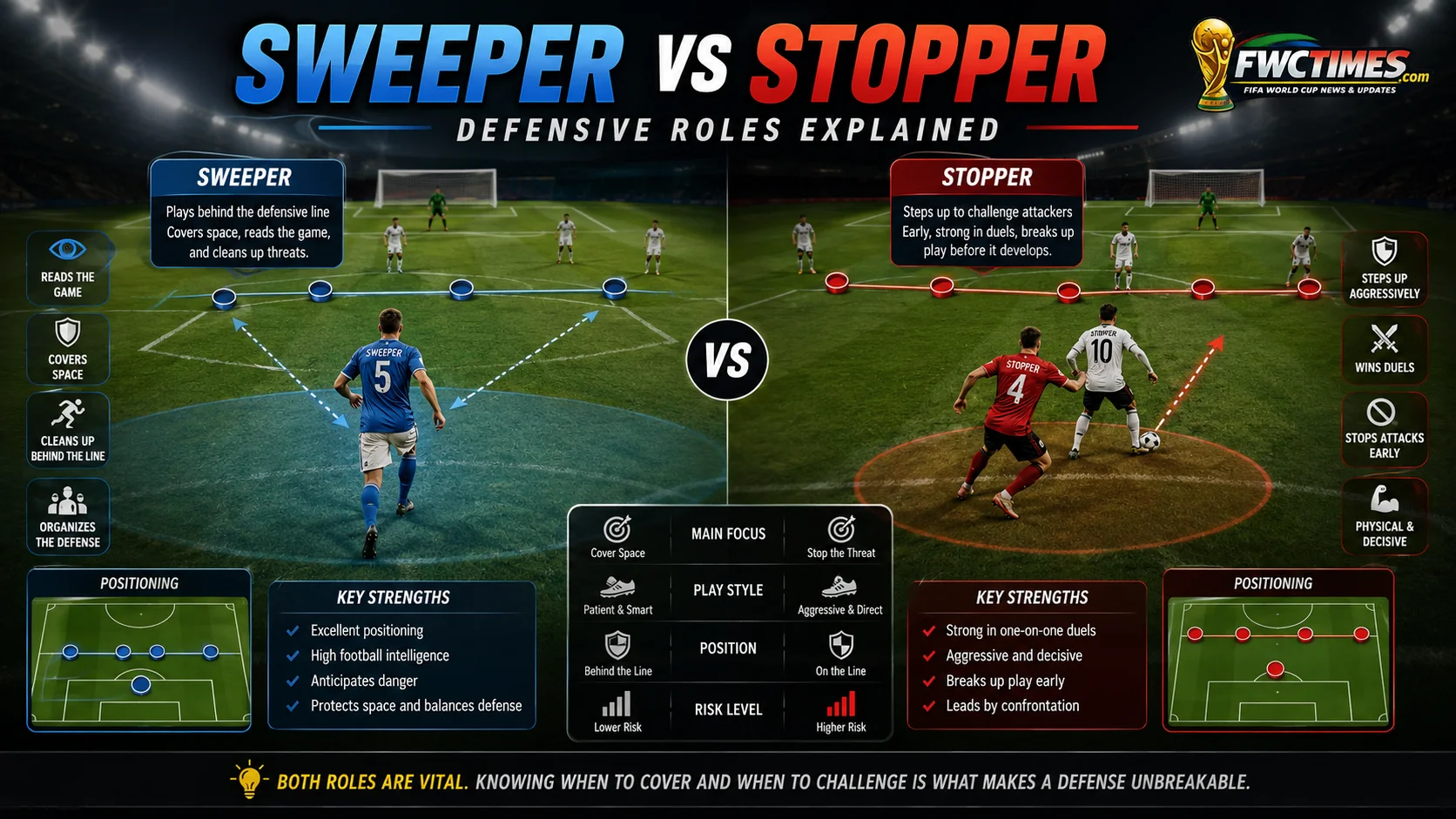
The primary distinction between these roles involves playing depth. A stopper steps forward to challenge attackers directly. Still, a sweeper sits behind the main line to clean up loose passes. This combination creates a strong balance of aggression and safety in the back.
Stoppers need physical power and excellent timing to win duels. Even so, sweepers must read the game well to intercept dangerous passes. Both players must communicate constantly to prevent attackers from finding open space. As a result, their partnership forms the foundation of any successful deep defensive block.
| Role | Positioning | Primary Duty | Key Attributes |
|---|---|---|---|
| Stopper | In or ahead of the backline | Man-marking and challenging attackers | Physical, aggressive, strong in air |
| Sweeper | Behind the defensive line | Covering space and clearing loose balls | Tactical, composed, reading the play |
The Defensive Role of the Sweeper
The sweeper plays as a free defender behind the main back line. Since this player has no marking duties, he can react to loose balls. He must sweep across the pitch to stop runners who break through. So the sweeper provides a vital safety net for the goalkeeper.
This deep role shares many similarities with the famous libero in football. That said, the libero usually enjoys more freedom to carry the ball forward. Franz Beckenbauer defined this attacking style by building plays from deep positions. After all, a pure sweeper focuses more on clearing danger than creating goals.
The Aggressive Role of the Stopper
The stopper plays as the aggressive partner in the defensive pairing. He marks the opposition striker tightly and prevents him from turning. Because he challenges for every high ball, he needs strong heading ability. This active play stops the opponent from building attacks in the final third.
Stoppers often commit fouls if they mistime their aggressive tackles. Yet their presence forces attackers to play with their back to goal. This pressure can disrupt the passing rhythm of the opposing team. So a good stopper must balance aggression with smart positioning.
How Coaches Teach Sweeper vs Stopper Football Today
Youth academies teach these concepts to help young players develop spatial awareness. Coaches use specific drills to show when to challenge and when to drop off. In fact, understanding both roles makes defenders more versatile. As a result, players can adapt to different tactical systems during a match.
Tactical Evolution to Modern Defending
Modern football teams rarely use a classic sweeper in a flat back four. Instead, managers deploy zonal marking systems to control defensive spaces. On top of that, both centre-backs must share marking and covering duties. They must adapt their roles depending on where the ball moves.
The rise of the high defensive line also changed these roles. Now, the sweeper keeper in football covers the space behind defenders. Still, the basic concepts of cover and challenge remain relevant. Coaches still pair one aggressive defender with a more passive partner.
Defensive Roles at the World Cup
Elite nations will prepare detailed plans for every opponent in North America. Historical records show how teams like Germany mastered the sweeper role. Since modern styles require flexibility, defenders must rotate their duties. A player might act as a stopper during one defensive phase.
Even so, the same player may drop deep to sweep in the next minute. National teams will use various defensive systems in the group stage. Their exact defensive lineups and player choices are yet to be confirmed. Still, the balance of stopper and sweeper qualities will decide matches.
Frequently Asked Questions
Many fans ask questions about defensive roles and how they function. You can find answers below to common queries about sweepers and stoppers. In fact, these details help explain why modern systems look the way they do.
Coaches continue to adapt these historical ideas for current tournaments. So these responses highlight the main tactical changes over the years. Yet they also show the lasting value of traditional defensive partnerships.
What is the difference in sweeper vs stopper football?
A sweeper plays behind the defensive line to cover space and clean up loose balls. A stopper plays in front of the sweeper to challenge attackers directly. As a result, they form a balanced partnership of cover and challenge. This tactical division helps protect the penalty area from central attacks.
Does modern football still use outfield sweepers?
Modern teams rarely use a classic outfield sweeper in a flat back four. Instead, they prefer zonal defending where players share covering duties. Yet a middle centre-back in a back three often performs sweeper tasks. So the core concept remains alive in modern tactics.
How does a libero differ from a sweeper?
A libero is a sweeper who has the freedom to join attacks. The player can step into midfield to help build possession. On top of that, a normal sweeper focuses mostly on defending. This distinction makes the libero a more creative playmaker from deep.
What skills does a stopper need to succeed?
A stopper needs physical strength, strong tackling, and excellent heading ability. He must read the movement of strikers to intercept forward passes. Since he challenges attackers early, timing is also a critical skill. These attributes allow him to disrupt opposition plays quickly.
Will teams use outfield sweepers at the 2026 tournament?
Classic outfield sweepers will be rare at the upcoming tournament. Still, teams will use the principles of cover and challenge. Some nations will deploy back-three systems to recreate this tactical balance. So the old concepts will influence matches in North America.
Conclusion
Sweeper and stopper roles show how football tactics have progressed over time. The historic division of defensive work has shaped the modern game. Even so, the fundamental balance between cover and challenge remains vital. Understanding these roles helps fans enjoy the tactical battles on the pitch.
You can stay tuned to FWCTimes for more deep tactical football analysis. Our team publishes regular guides to prepare fans for the upcoming matches. In fact, you can also read about the overlapping full back in football. These resources will help you follow every match with expert knowledge.