
Difference Between a Striker and a Centre Forward

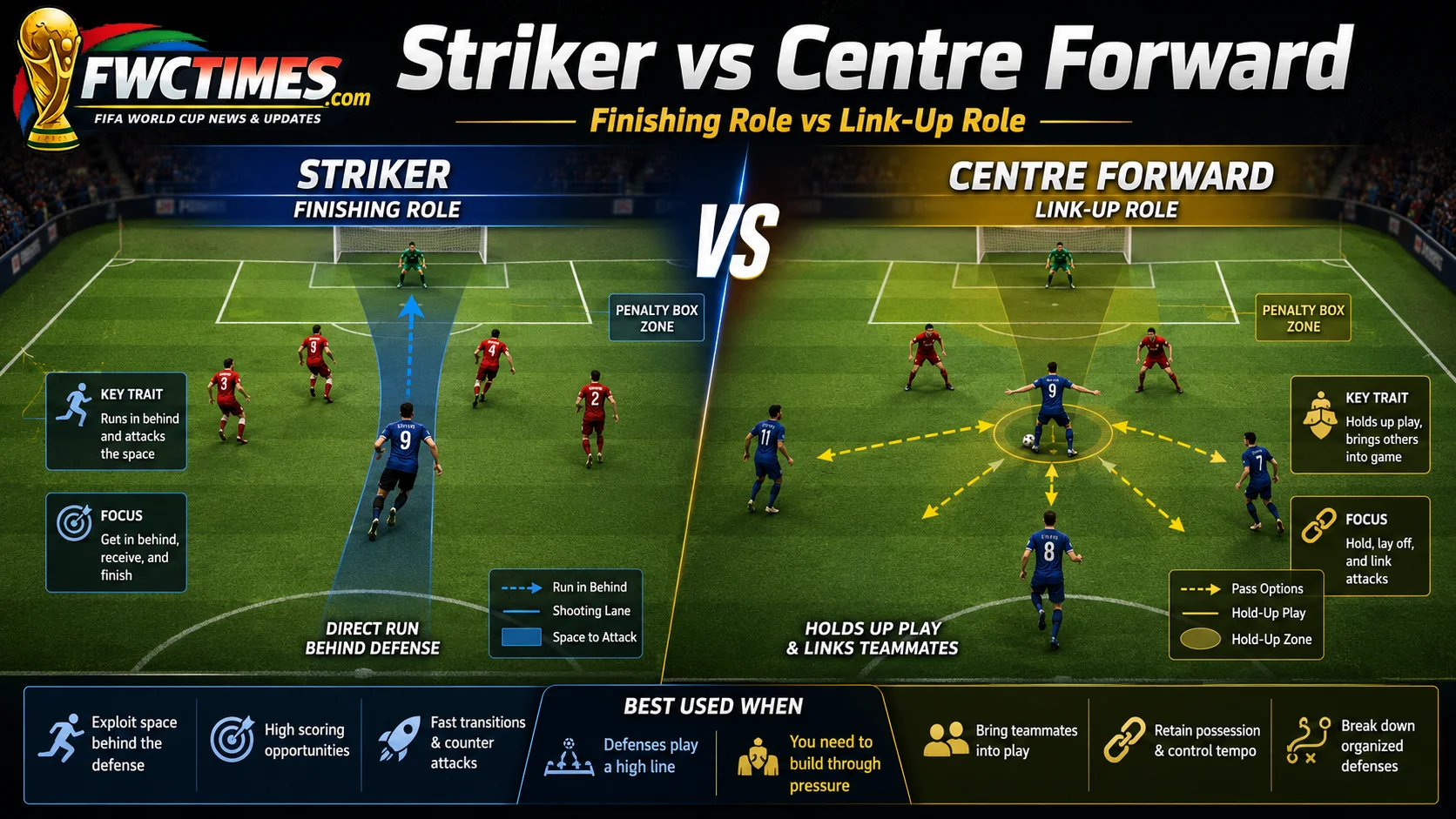
Striker vs centre forward is a common football question because both roles lead attacks. A striker focuses more on finishing, while a centre forward often links play and holds central structure.
The two terms can overlap in normal match talk. Still, coaches separate them when they describe movement, team shape, pressing, and attacking responsibility.
Quick Answer
A striker is usually judged first by goals and shots. A centre forward can score, but he also connects midfield, wingers, and the penalty area.
In many teams, one player performs both jobs. The difference becomes clearer when a team uses two forwards or a specialist tactical plan.
At youth level, the difference helps players understand decisions. A striker learns when to attack goal first. A centre forward learns when to protect the ball.
Striker vs Centre Forward Explained
The striker usually plays as the main finisher. He attacks spaces near goal, reacts to rebounds, and turns chances into shots.
The centre forward usually acts as the central attacking reference. He may receive with his back to goal, hold the ball, and bring teammates into play.
FIFA Training Centre uses centre-forward and number 9 together in tournament analysis. That shows how modern analysts often group these central roles.
Yet role detail still matters. A striker can stay high and chase goals, while a centre forward may drop short to organize attacks.
At Qatar 2022, FIFA identified number 9 players across lone-striker and front-two systems. Those players scored 58 goals, up from 52 at Russia 2018.
That data explains why teams still need a central attacker. They may label him striker or centre forward, but finishing efficiency remains decisive.
How Strikers and Centre Forwards Move
Movement creates the biggest tactical difference. A striker often attacks the last line and looks for through balls behind defenders.
A centre forward can also make those runs. Still, he may drop toward midfield to pull a centre-back out of position.
FIFA coaching material highlights dropping off, lateral movement, and runs behind deep backlines. These actions open passing lanes and scoring angles.
The FA describes forward movement as a game with the opposition centre-half. That battle includes timing, disguise, body shape, and blind-side runs.
These patterns fit many tactical formations. A 4-4-2 may use one scorer and one link forward, while a 4-3-3 needs one central leader.
Coaches also judge the defensive start point. A pressing striker closes passing lanes toward midfield. A centre forward may screen the holding midfielder.
Scoring Duties and Link-Up Play
A striker carries the clearest scoring burden. Fans expect him to finish crosses, attack cutbacks, and punish defensive mistakes.
A centre forward can share that burden with wide forwards. He may drag centre-backs away so a winger can run inside.
That difference matters when a team faces a low block. The centre forward may need to receive under pressure and lay the ball off.
The striker may then attack the second phase. He waits for the rebound, loose ball, or square pass inside the six-yard box.
Some players blend both jobs at elite level. They finish like strikers, yet still help the team progress through central areas.
Set pieces add another small difference. Strikers often attack first contact near goal. Centre forwards may block markers or attack the back post.
Striker and Centre Forward Comparison
| Area | Striker | Centre Forward |
|---|---|---|
| Main job | Score goals | Lead central attacks |
| Movement | Runs behind defenders | Drops, pins, and links |
| Ball use | Fewer touches near goal | More hold-up actions |
| Best support | Creative passers and crossers | Runners from midfield and wide areas |
| Common system | Front two or direct attack | 4-3-3 or 4-2-3-1 |
The table shows why the roles often blur. A coach may ask one player to do both jobs during the same match.
Game state also changes the task. A team protecting a lead may ask the forward to hold the ball instead of chasing runs.
A trailing team may push the same player higher. Then his job becomes closer to a classic striker role.
That flexibility separates reliable forwards from limited finishers. Coaches trust players who can adjust without losing goal threat.
Connection to FIFA World Cup 2026
At FIFA World Cup 2026, the striker and centre forward difference will appear in team selection. Managers will choose forwards based on opponent shape and match rhythm.
Cristiano Ronaldo gives Portugal a clear penalty-box striker profile. FIFA confirmed his Portugal squad place on May 19, 2026.
Portugal at World Cup 2026 can still pair that finishing profile with mobile wide forwards. That mix can stretch defenders across the front line.
Goal races will also highlight the difference. Players who combine box movement with link play should shape the World Cup 2026 top scorers race.
Frequently Asked Questions
What does striker vs centre forward mean?
Striker vs centre forward compares two central attacking roles. The striker usually stresses scoring, while the centre forward adds hold-up play and attacking connection.
Can one player be both striker and centre forward?
Yes, many modern forwards perform both jobs. They score close to goal, then drop short to link play when the team needs support.
Why is the number 9 linked with both roles?
The number 9 has long identified the central attacking player. FIFA also groups centre-forward and number 9 roles together in tournament analysis.
How is a striker different from a centre forward?
A striker usually plays higher and focuses more on scoring actions. A centre forward may drop deeper, hold the ball, and connect runners.
Will World Cup 2026 teams use strikers or centre forwards?
World Cup 2026 teams will use both role types. Some managers will prefer penalty-box strikers, while others will need link forwards against compact blocks.
Conclusion
The striker and centre forward labels overlap, but the tactical difference still matters. One role leans toward finishing, while the other often connects the attack.
Modern forwards need both skill sets because elite teams defend with compact lines. Stay tuned to FWCTimes.com for the latest FIFA World Cup 2026 updates.
Read Also: What Is a Centre Forward in Football?
