How Does the Round of 32 World Cup 2026 Work?

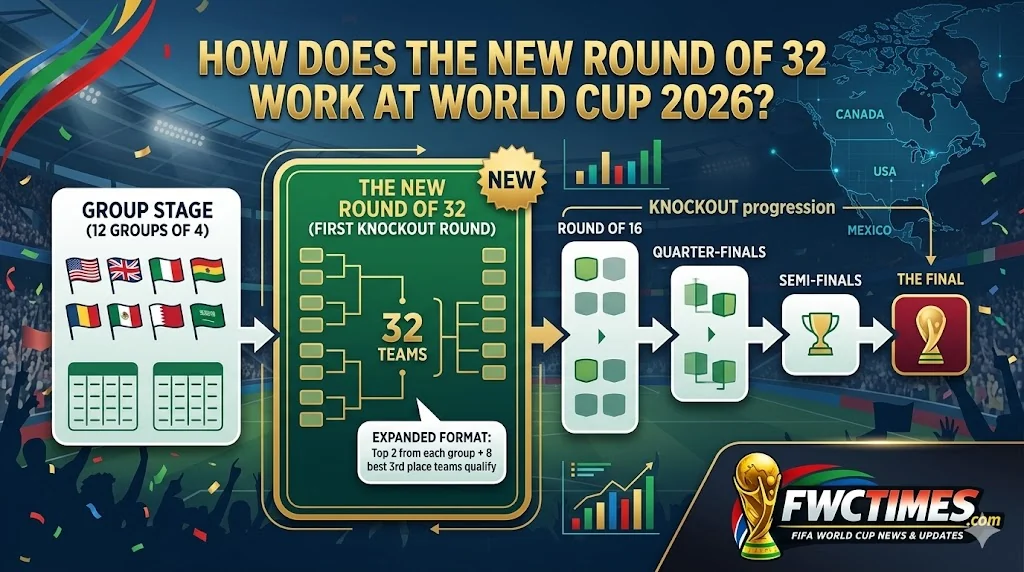
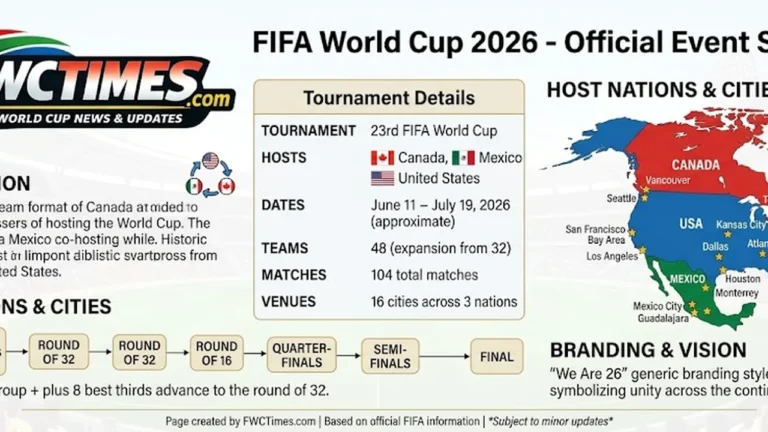
The Round of 32 World Cup 2026 format represents the largest structural change in tournament history. FIFA will move 32 teams into the knockout phase after 48 teams start in 12 groups. The top two teams from each group qualify, and the eight best third-place teams also advance. This change gives more countries a knockout chance during the matches.
The new round sits between the group stage and the Round of 16. Teams that reach the final will play eight matches instead of seven. As a result, squad depth and recovery planning matter much more. Fans following the bracket should understand the qualifying rules before the games begin.
What is the Round of 32 World Cup 2026 format?
The new round includes 24 automatic qualifiers from the 12 groups. It also includes the eight best third-place teams based on group records. From this stage onward, each match follows a single-elimination structure. Winners advance to the next round while losers exit the tournament.

| Stage Item | World Cup 2026 Rule | Fan Takeaway |
|---|---|---|
| Group count | 12 groups of four teams | Each team plays three group matches. |
| Automatic qualifiers | Top two teams in each group | 24 teams advance without third-place ranking. |
| Extra qualifiers | Eight best third-place teams | Group records across all third-place teams decide survival. |
| Knockout entry | Round of 32 | The first knockout round starts after group play. |
| Match rule | Single elimination | Winners advance, losers exit the tournament. |
| Finalist workload | Eight total matches | Finalists play one more match than in the old format. |
Round of 32 World Cup 2026 Qualification Rules
The qualification rules start with the group tables. Each group sends its winner and runner-up into the knockout bracket. That creates 24 confirmed knockout teams before third-place ranking begins. The remaining eight spots go to the best third-place teams from the 12 groups.
This rule changes how teams approach the final group match. A draw may be enough for one team, while another side needs goals. Managers will watch other groups because third-place ranking compares teams outside their own section. The wider group stage picture decides who survives the cut.
How Third-Place Teams Qualify in the Round of 32 World Cup 2026
Third-place qualification rewards teams that collect enough points. FIFA ranks the third-place teams after group play, then sends the best eight forward. Points come first, while standard tournament tiebreakers separate teams level on points. That makes every late goal useful for the teams.
The rule reduces the number of dead matches in the tournament. A team sitting third after two games still has a route if it wins. That keeps more groups competitive until the final whistle. Fans tracking smaller nations should watch the team pages for live updates.
Why FIFA Added a Round of 32
The Round of 32 fits the 48-team expansion. A 12-group structure cannot move straight into a clean 16-team bracket. The new knockout round creates a broader bridge from group play to the final. It also adds more high-stakes matches for fans and broadcasters.
The format gives more countries at least one knockout target. Smaller teams can build a realistic plan around four points and disciplined play. Strong teams still need to win the group to get better seeding. The change gives analysts more material for tactical breakdowns.
How the Knockout Bracket Changes
The knockout bracket now begins one round earlier. Round of 32 winners move into the Round of 16. After that, they play the quarter-finals, semi-finals, and final. A champion must handle more travel, recovery demands, and one extra elimination match.
The bracket makes group placement more valuable. Group winners receive clearer seeding than third-place qualifiers. Pairings depend on the final table combinations. A team that finishes third will likely face a group winner straight away.
What It Means for Coaches and Squads
Coaches must plan for eight possible matches if they target the final. That means rotation choices start during the group stage. A manager cannot rely only on 11 players across a longer tournament. Full squads will matter because fatigue alters pressing and defensive shape.
The format changes risk decisions during matches. A team leading late may protect goal difference. A team chasing survival may attack earlier if they need one more goal. The Round of 32 turns group play into a wider calculation.
How Fans Should Read the Group Tables
Fans should not judge a third-place team only by group position. Four points should be enough, while three points can create pressure. A narrow loss hurts less than a heavy defeat. That makes late stoppage-time goals important even when matches look settled.
The best way to follow the format is to read tables together. A team may look safe, yet still need help from other results. Another team may finish third early and wait for later groups. Knockout planning gets clearer when the final games confirm the field.
Why the Last Group Matches Carry More Pressure
The last group matches carry pressure beyond first and second place. A third-place team will chase one more goal to improve its ranking. A team already out of the top two can play like it is a knockout. Coaches will need live table information and clear plans.
This pressure changes fan viewing habits. Supporters will watch two groups at once because one result affects another team. Late goals in a different city can move teams above or below the line. The new format rewards fans who follow the whole tournament.
Frequently Asked Questions
How many teams are in the Round of 32 at World Cup 2026?
The Round of 32 has 32 teams. It includes 24 top-two group finishers and eight best third-place teams. These teams qualify after the group stage matches finish.
Do third-place teams qualify at World Cup 2026?
Yes, eight third-place teams qualify. FIFA ranks third-place teams after group play and sends the best eight into the knockout bracket. This ranking depends on points and goal difference.
Is the Round of 32 a knockout round?
Yes, it is a single-elimination round. The winner advances to the Round of 16, and the loser leaves the tournament. There are no second chances in this stage.
How many matches can a finalist play in 2026?
A finalist can play eight matches. That is one more than finalists played in the old format. The extra match comes from the new Round of 32 knockout stage.
Why does the Round of 32 matter for fans?
It keeps more teams alive after the group stage. It also creates more knockout matches and makes third-place ranking a major storyline. Fans can enjoy more high-stakes football matches.
Conclusion
The Round of 32 gives World Cup 2026 a wider and more demanding knockout path. The top two teams in each group control their own route, but eight third-place teams can extend their run. Fans should watch points, goal difference, and bracket placement together. Read our guides on World Cup 2026 groups and the World Cup 2026 schedule PDF.
To read more about the tournament, check our other guides. Read Also: When Does FIFA World Cup 2026 End. Our team provides regular updates on tournament news and match schedules.