World Cup 2026 Goal-Line Technology: FIFA Confirms 2.0 Upgrade

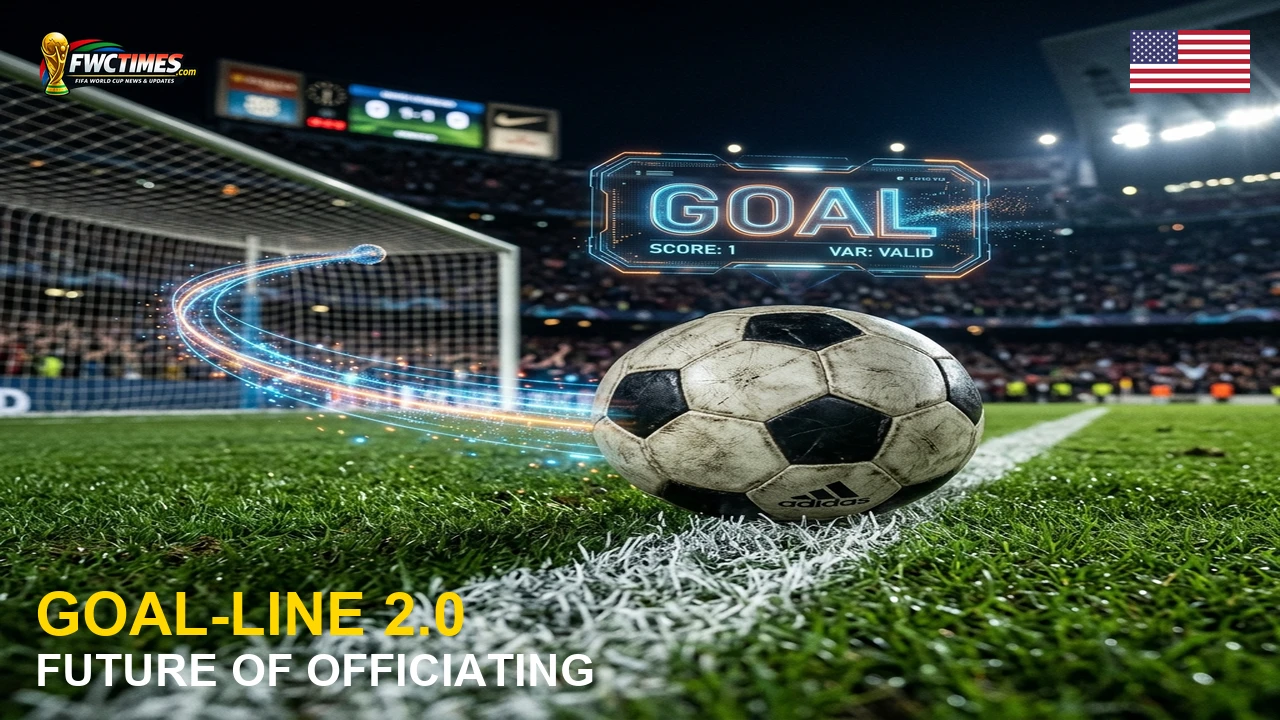
FIFA has officially confirmed a major upgrade to Goal-Line Technology 2.0 for the World Cup 2026, introducing a faster and more precise system to handle the 48-team tournament’s demands.
The upgraded system utilizes a higher-density camera array and advanced AI algorithms to determine the exact position of the ball relative to the goal-line within milliseconds. This technical leap ensures that controversial scoring decisions are resolved with absolute certainty, maintaining the integrity of the championship match. Officials from the Germany national team have already expressed their support for the technological advancement after initial testing phases in Europe. The technology will be fully integrated into all 16 tournament stadiums, providing a consistent standard for every fixture from the group stage through the final.
Enhanced Camera Density and AI Ball-Tracking Capabilities
The core of the Goal-Line Technology 2.0 upgrade lies in its expanded network of 14 high-speed cameras positioned around each goal frame. These cameras capture up to 500 frames per second, allowing the software to create a perfect 3D reconstruction of the ball’s movement. The AI-driven tracking system can filter out player interference and environmental factors, such as heavy rain or snow, to deliver a clear “Goal” or “No Goal” signal to the referee’s watch. This level of precision is critical for teams like Brazil who rely on high-energy offensive plays in crowded penalty areas. The data will also be used to provide fans with instant, high-resolution 3D replays during global broadcasts.

Beyond simple line-crossing detection, the 2.0 system is designed to work in tandem with the recently revealed World Cup 2026 official match ball which contains internal sensors. This dual-validation approach provides a redundant safety net for the most critical match moments. FIFA’s technical committee has conducted extensive trials at high-profile venues to ensure the system is resilient against electronic interference and extreme weather. The goal is to eliminate the “human error” factor from the goal-line while allowing the match to flow without unnecessary VAR delays. Every stadium, including the iconic MetLife Stadium, is currently undergoing the final calibration phase for the new hardware.
Integration With Semi-Automated Offside Technology
Goal-Line Technology 2.0 is just one part of a broader officiating ecosystem that includes Semi-Automated Offside Technology (SAOT). By sharing the same camera network and data processing hub, the systems can provide a holistic view of every scoring opportunity. This integration allows the officiating team to verify both the ball’s position and the players’ limb positions simultaneously. This streamlined workflow is expected to reduce the average VAR review time by over 30 percent compared to the 2022 tournament. FIFA has emphasized that while the technology is “Pro Max” in its capabilities, the final decision-making authority remains with the on-field match officials. The goal is to provide them with the best possible data in real-time.
Training sessions for elite referees are already underway to familiarize them with the faster signal responses and new visual interfaces. The “War-Room” monitoring center in North America will serve as the central hub for all technical data during the event. This centralized approach ensures that every match across the three host nations is managed with the same level of technical scrutiny. Supporters can expect a more transparent experience as these 3D visualizations are shared across stadium screens and social media platforms. The commitment to technological excellence is a cornerstone of the World Cup 2026 mission to deliver a fair and modern tournament for the global football community.
Future Proofing the Officiating Standards for Global Football
The implementation of Goal-Line Technology 2.0 sets a new benchmark for officiating standards across all levels of professional football. By successfully deploying this system in a 48-team environment, FIFA is proving that high-end technology can scale without compromising match quality. The data captured during the 2026 event will be analyzed by sports scientists to further understand ball physics and player dynamics. This focus on long-term data legacy ensures that the tournament’s impact on the sport continues long after the final match is played. Fans can be confident that every goal celebrated this summer is backed by the most rigorous technical verification in sporting history.
As the countdown to the opening kickoff continues, the technical teams are finalizing the stadium infrastructure to support the massive data bandwidth required for the 2.0 system. Each venue has been equipped with dedicated high-speed fiber optics to ensure zero latency between the cameras and the officiating hub. The reliability of this system is paramount for the success of the largest World Cup ever held. FIFA remains dedicated to pushing the boundaries of what is possible on the football pitch, ensuring that the beautiful game remains fair for every player and every fan. This technological leap is a testament to the organization’s vision for the future of international soccer.
Frequently Asked Questions
Stay tuned to FWCTimes.com for the live technical reviews and officiating updates for the World Cup 2026 tournament.
Read Also: World Cup 2026 Official Match Ball: FIFA Reveals Innovative Design