FIFA World Cup 2026 FAQ – Your Questions Answered

Finding a reliable World Cup 2026 FAQ keeps fans updated on the latest tournament regulations and venue details. The expanded 48-team competition introduces major format changes that will impact how supporters watch and travel. This edition marks the first time that three countries will co-host the men’s event. Fans can start their planning journey at the official FIFA World Cup 2026 portal.
What are the most asked FIFA World Cup 2026 questions?
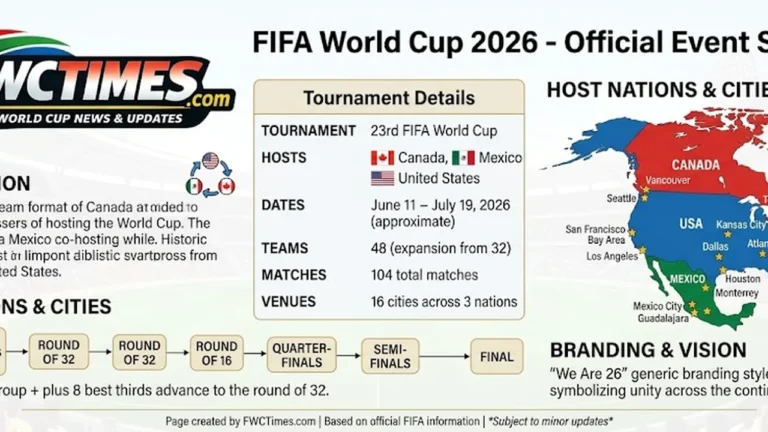
The tournament takes place across Canada, Mexico, and the United States from June 11 to July 19, 2026. A total of 104 matches will be played in 16 host cities during the event. Fans can buy official tickets starting through the official FIFA portal. We recommend checking specific city locations before purchasing matchday accommodation.
World Cup 2026 FAQ Overview
Fans usually ask similar questions about the tournament locations, ticket availability, and format updates. Understanding the hosting split across three countries helps you plan flights and match selections. Our comprehensive guide explains how many cities are hosting World Cup 2026 games. This information provides a solid baseline for your summer travel arrangements.

The expanded format changes the scheduling dynamics compared to previous 32-team tournaments. The first stage will feature 12 groups of four teams competing in a round-robin system. You can explore the updated World Cup 2026 format to see the new bracket paths. The top teams must navigate an extra knockout round to win the trophy.
Common Tournament Basics
The opening match kicks off on Thursday, June 11, 2026, at Estadio Azteca in Mexico City. The tournament concludes on Sunday, July 19, 2026, with the final match in New Jersey. Group stage matches can end in draws after 90 minutes of regular play. Knockout matches require extra periods and penalty shootouts to decide the winner.
Tickets, Times, and Viewing
TV broadcast rights and streaming channels vary significantly depending on your home country. We recommend referencing the official time-zone guide to coordinate kickoff schedules. Local organizers will release ticket resale details closer to the tournament start date. Fans should register on the official ticketing portal to receive alerts.
Tactical Role of World Cup 2026 Faq
| Question | Short Answer |
|---|---|
| How many teams? | 48 teams |
| How many matches? | 104 matches |
| How many groups? | 12 groups |
| How many host countries? | Three |
| When does it start? | June 11, 2026 |
| When does it end? | July 19, 2026 |
| Where is the final? | New York New Jersey Stadium |
| Where is the opener? | Mexico City Stadium |
| How many teams go through from groups? | 32 teams total |
| How many third-place teams advance? | Eight |
Frequently Asked Questions
Where is World Cup 2026 being played?
The matches will take place in Canada, Mexico, and the United States. The tournament features 16 total host cities across North America. The United States hosts 11 cities, Mexico hosts three, and Canada hosts two. Fans can check our city guides for local venue information.
How many teams are in World Cup 2026?
A total of 48 teams will participate in the tournament. This is an increase from the 32 teams featured in previous editions. The expanded field allows more nations to compete on the global stage. It also increases the total match count to 104 games.
When does the tournament start and end?
The opening match kicks off on Thursday, June 11, 2026, in Mexico City. The final match takes place on Sunday, July 19, 2026, in New Jersey. The entire tournament spans 39 days of competitive action. The match calendar is longer than any previous men’s edition.
How many teams reach the knockout stage?
A total of 32 teams will qualify for the knockout stage. The top two teams from each of the 12 groups advance directly. The eight best third-placed teams across the groups also earn qualification. This creates a new Round of 32 single-elimination phase.
Where can I find the official match schedule?
You can view the full schedule on our portal to check dates and locations. The document contains kickoff times adjusted for different North American zones. Having the schedule helps you plan travel between host cities. We update the details regularly as new dates are confirmed.
Conclusion
Having a clear World Cup 2026 FAQ makes it easier to follow the tournament details. The expanded format will provide more matches and cities for fans to explore during the summer. Planning your travel and match tickets early protects your budget. Stay tuned to our website for ongoing updates as the tournament draws closer.