
Gillette Stadium Capacity and Layout Guide

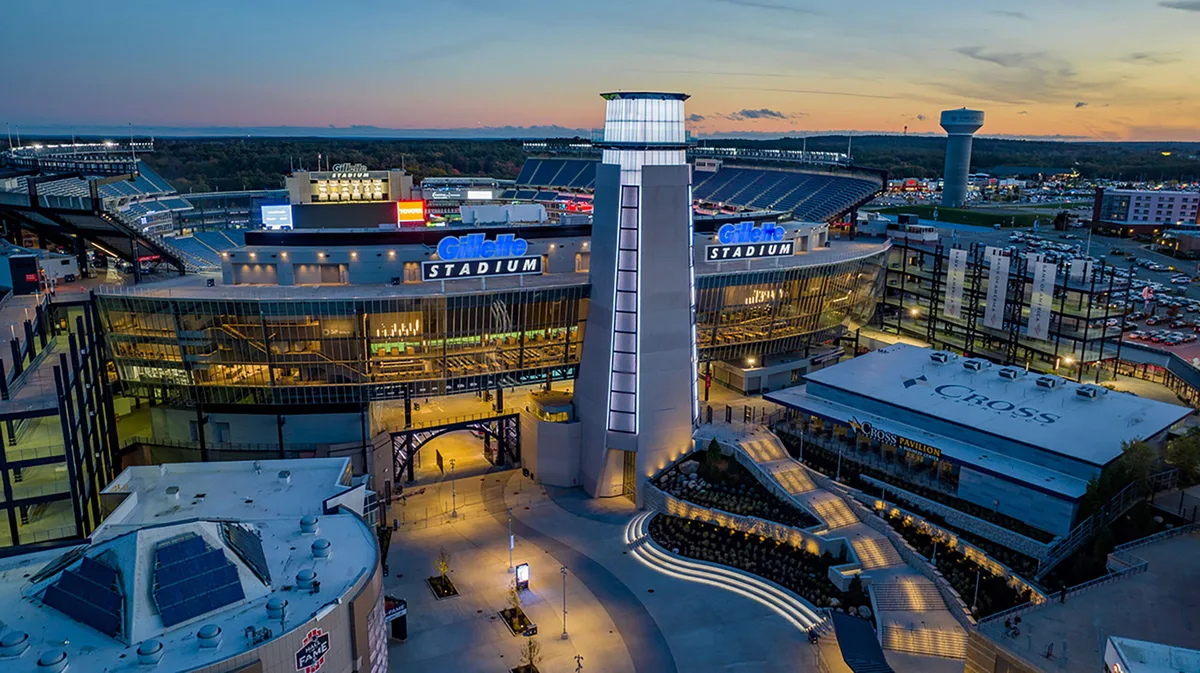
Gillette Stadium capacity is listed at 64,628 for the current football venue setup, making it one of the more compact United States FIFA World Cup 2026 stadiums in the World Cup 2026 lineup. During the tournament, the venue will be called Boston Stadium in official FIFA branding. It will host seven matches, including five group games, one Round of 32 match, and one quarter-final.
Fans should separate stadium capacity from public ticket inventory. FIFA, broadcasters, teams, hospitality operators, security teams, and media crews all need space inside the venue. As a result, the number of tickets released for a match may be lower than the full listed seat count.
Gillette Stadium Capacity Overview
Gillette Stadium opened in 2002 in Foxborough, Massachusetts, and serves as the home of the New England Patriots and New England Revolution. The current listed capacity is 64,628, with club seating, suites, premium areas, and general seating across multiple levels. That number gives fans a useful base for understanding match size and ticket demand.

World Cup 2026 will use the Boston Stadium name because FIFA does not use non-partner sponsored venue names in official tournament branding. The building, location, seating bowl, transport routes, and local access rules remain tied to Gillette Stadium. Fans will see Boston Stadium on match materials and Gillette Stadium in local travel guidance.
| Detail | Confirmed Info | Fan Meaning |
|---|---|---|
| Listed capacity | 64,628 | Useful baseline for ticket demand |
| World Cup venue name | Boston Stadium | Official FIFA naming during 2026 |
| Location | Foxborough, Massachusetts | Not downtown Boston |
| Opened | 2002 | Modern NFL and MLS venue |
| World Cup matches | Seven | Five group games plus two knockouts |
World Cup 2026 Tournament Setup
Tournament setup changes how a 64,628-seat stadium operates. FIFA needs broadcast platforms, team areas, security lanes, accreditation zones, hospitality space, sponsor operations, and media work areas. Those requirements can shift how many seats appear on the official match ticket map.
Boston Stadium will also use stricter access rules than normal event days. Local organizers have said only same-day ticket holders can enter the stadium footprint on World Cup match days. Parking, fan experiences, and the immediate venue area will not function as open public gathering zones for non-ticketed visitors.
Gillette Stadium capacity and public tickets
| Setup Factor | Capacity Impact | Ticket Note |
|---|---|---|
| Broadcast areas | Can remove or block sections | Check sight-line warnings |
| Hospitality inventory | Can reserve premium seats | Sold through separate channels |
| Team allocations | Can hold blocks for federations | Public availability may shift |
| Accessible seating | Can reshape companion inventory | Confirm before purchase |
| Security buffers | Can reduce sellable rows | Depends on match operations |
Boston Stadium 2026 Match Capacity Demand
| Date | Round | Demand Note |
|---|---|---|
| June 13, 2026 | Group stage | Opening local match interest |
| June 16, 2026 | Group stage | Team draw will shape demand |
| June 19, 2026 | Group stage | Travel timing matters |
| June 23, 2026 | Group stage | Late group stakes may raise demand |
| June 26, 2026 | Group stage | Final group game pressure possible |
| June 29, 2026 | Round of 32 | Knockout inventory should move faster |
| July 9, 2026 | Quarter-final | Highest local demand expected |
Ticket Info for Gillette Stadium Capacity
Capacity, Parking and Matchday Access
Ticket holders should expect parking lots to open four hours before kickoff and gates to open three hours before kickoff. Same-day ticket holders can access stadium areas, while non-ticketed fans should use Boston fan events instead. The broader Gillette Stadium World Cup 2026 guide, 2026 FIFA World Cup tickets guide, and FIFA World Cup 2026 hub connect those decisions with schedule and venue planning.
| Capacity Issue | Fan Impact | Best Move |
|---|---|---|
| Limited public inventory | Popular sections sell faster | Choose backup categories |
| Reduced parking supply | Driving needs earlier planning | Book parking in advance |
| Transit crowding | Trains and buses may fill | Buy transport early |
| Security checks | Entry can take longer | Arrive before gate rush |
| Quarter-final demand | Higher ticket pressure | Prepare before sales window |
Frequently Asked Questions
Frequently Asked Questions
Frequently Asked Questions
Frequently Asked Questions
Frequently Asked Questions
Frequently Asked Questions
What is the official Gillette Stadium capacity for World Cup 2026?
FIFA lists the official Gillette Stadium capacity for the tournament in its venue specifications. The tournament configuration may differ from the standard domestic capacity. Fans should use the FIFA figure when planning their ticket purchase.
How does World Cup capacity differ from the standard capacity?
FIFA tournaments require additional space for camera platforms, media operations, and security zones. These areas reduce the seats available to the general public. The tournament seating map from FIFA provides the most accurate fan-facing figure.
How does ticket demand vary by match at this stadium?
Group-stage matches featuring popular nations sell out fastest. Knockout matches attract neutral buyers on top of the original supporter base. Fans should prepare backup ticket categories in case first-choice seats are unavailable.
How do fans travel to Gillette Stadium on matchday?
Taking MBTA Commuter Rail to Foxboro Station is the most reliable matchday travel option. Services increase in frequency on match days across the tournament schedule. Fans driving to the venue must pre-book official parking well in advance.
Conclusion
Gillette Stadium capacity gives fans a 64,628-seat baseline, but World Cup 2026 ticket planning needs a sharper view. Boston Stadium will use tournament-specific seating, access, parking, transport, and security rules. Fans should plan around official ticket maps, match demand, transport capacity, and the extra pressure created by the knockout fixtures.
