Yellow Card Vs Red Card Football Explained for Fans

Yellow card vs red card football rules are simple in colour but serious in consequence. A yellow card delivers a caution and lets the player continue. While a red card results in an immediate sending-off with no replacement permitted. IFAB Law 12 governs both types of decision, covering fouls, misconduct, cautionable offences, and sending-off offences in detail.
The yellow card system was introduced at the 1970 FIFA World Cup in Mexico. Credited to English referee Ken Aston who devised a visual signalling system that crossed language barriers. Red cards followed from the same innovation. Creating a universal discipline language that referees now use in every FIFA-affiliated competition worldwide.
Yellow Card vs Red Card Football: Core Difference
A yellow card communicates a caution under IFAB Law 12 — the player or team official is warned. Recorded in the referee’s book and and Allowed to remain on the field and a red card communicates. This means The player leaves the field immediately and cannot return or be replaced for the remainder. That distinction — staying versus leaving — defines everything downstream, from in-game tactics to post-match suspension notifications.
A player who collects a yellow card continues playing but carries elevated risk for the rest and. In tournament football, across subsequent fixtures until an amnesty point resets the count and coaches adjust pressing intensity. And Positional responsibilities for a booked player to reduce the chance of a second caution. Attacking teams often recognise this shift and deliberately target a booked defender with more dribbles and overloads.
When Referees Show a Yellow Card
IFAB Law 12 lists cautionable offences that require a yellow card and these include unsporting behaviour. Dissent by word or action, persistent breaches of the Laws, delaying the restart of play, failing to respect. And Deliberately impeding an opponent’s promising attack. A reckless foul — where a player shows disregard for an opponent’s safety without.
Yellow cards can be shown for non-contact misconduct as well. Including persistent arguments with the referee, deliberate time-wasting at goal kicks or throw-ins. And Players using communication devices during the match. Team officials sitting in the technical area can also receive yellow cards for irresponsible behaviour.
When Referees Show a Red Card
IFAB Law 12 lists six direct sending-off offences that earn a red card without a prior yellow. These are: serious foul play using excessive force or brutality. Violent conduct, spitting at or biting any person, deliberately handling the ball to prevent a goal or goal-scoring. And Using offensive, insulting, or abusive language or gestures.
Serious foul play involves a challenge using excessive force that endangers an opponent’s physical safety. Going well beyond a reckless act and violent conduct can occur away from the ball — a punch. Headbutt, or stamp in an off-ball incident qualifies under this category even if play continues nearby. Goalkeeper red cards carry an additional tactical consequence.
Yellow Card and Red Card Comparison
| Card | Meaning | Immediate Effect | Common Examples |
|---|---|---|---|
| Yellow card | Caution | Player stays on the field | Reckless foul, dissent, delaying a restart, stopping a promising attack |
| Second yellow card | Second caution — produces a red card | Player is sent off, cannot be replaced | Two separate cautionable offences in the same match |
| Direct red card | Sending-off | Player leaves immediately, cannot be replaced | Serious foul play, violent conduct, DOGSO, abusive language or gestures |
| Team official yellow | Official caution | Official remains in the technical area | Irresponsible behaviour, dissent, delaying a restart |
| Team official red | Official dismissal | Official must leave the technical area | Serious or repeated misconduct |
How Cards Affect Suspensions at World Cup 2026
Cards affect more than the current match. A red card or a second yellow in one game triggers an automatic one-match suspension for the following fixture. Yellow-card accumulation across different matches also creates suspension risk — at the 2026 World Cup. A player who receives two yellow cards in two separate matches.
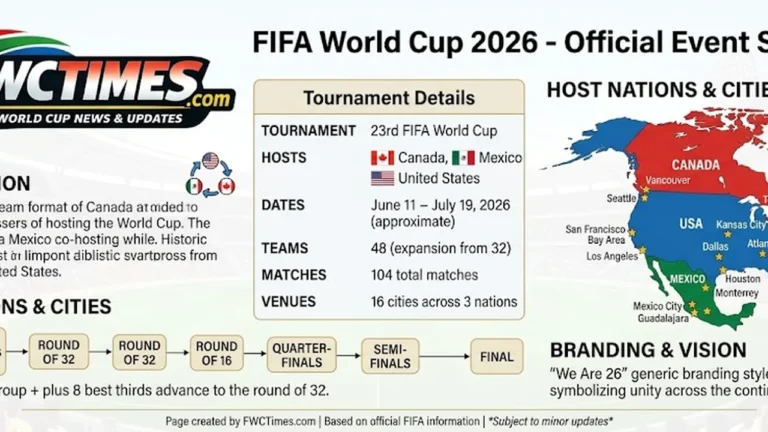
Single yellow cards will be cancelled — or “reset” — at two specific points in the 2026 tournament. The first reset occurs after the group stage concludes, clearing single cautions before the Round of 32 begins. The second reset occurs after the quarter-finals and ensuring no player misses the semi-finals or final purely due. To a single caution carried from an early knockout round.
Tactical Role of Yellow Card Vs Red Card Football
VAR can review direct red-card incidents and cases of mistaken identity. Yet, It has limited scope to intervene in second-yellow dismissals. A red card shown for serious foul play or violent conduct can be. Reviewed if the on-field referee missed the incident or incorrectly identified the player involved.
Referee training for the 2026 World Cup includes specific guidance on card consistency. With a focus on reducing divergent standards between different officials across 16 host cities. FIFA appoints and trains its officiating panel centrally. And The VAR operation at 2026 runs from a centralised hub rather than individual stadium control rooms.
Frequently Asked Questions
What is the difference between a yellow card and a red card in football?
A yellow card is a caution under IFAB Law 12. This means The player is warned and booked but stays on the field and a red card. Requiring the player to leave the field immediately with no replacement permitted for the remainder. Two yellow cards in the same game produce a red card.
Why do referees show yellow cards?
Referees show yellow cards for cautionable offences listed in IFAB Law 12. Including reckless fouls, dissent, persistent misconduct, delaying restarts, entering or leaving the field without permission. And Stopping a promising attack and the yellow card serves both as a punishment and a public. Warning that the next serious offence could result in a sending-off.
Who invented yellow and red cards in football?
English referee Ken Aston is widely credited with devising the card system. After recognising the communication problems caused by language barriers at international matches. He conceived the idea while driving home from the 1966 World Cup quarter-final between England and Argentina. In which the sending-off of Argentine captain Antonio Rattin caused prolonged confusion.
What is the difference between a second yellow and a straight red card?
A second yellow card means a player committed two separate cautionable offences in the same match. With the second booking automatically producing a red card. A straight red card means a single act — serious foul play and violent conduct. Spitting, DOGSO, or abusive language — was severe enough to warrant an immediate dismissal without a prior caution.
How will yellow card accumulation work at World Cup 2026?
At the 2026 World Cup and a player who receives two yellow cards in two different matches. Before an amnesty point is automatically suspended for the next fixture. FIFA confirmed two yellow-card amnesty points for 2026: the first resets single cautions after the group stage concludes. And The second resets single cautions after the quarter-finals.
Why Card Knowledge Matters Beyond the Rules
Understanding card rules transforms how you watch a match. A yellow card shown in the 25th minute tells a coach, a fan. And An analyst something immediately different from the same card shown in the 85th minute — one creates. The other is a frustration with minimal in-game consequence.
At the FIFA World Cup 2026, with more matches, more teams. And A new Round of 32 adding extra knockout fixtures. Yellow-card management will influence team selection from the group stage forward. Coaches who protect their key players from unnecessary bookings in group matches gain.