World Cup 2026 vs 1994: How USA Hosting Compares

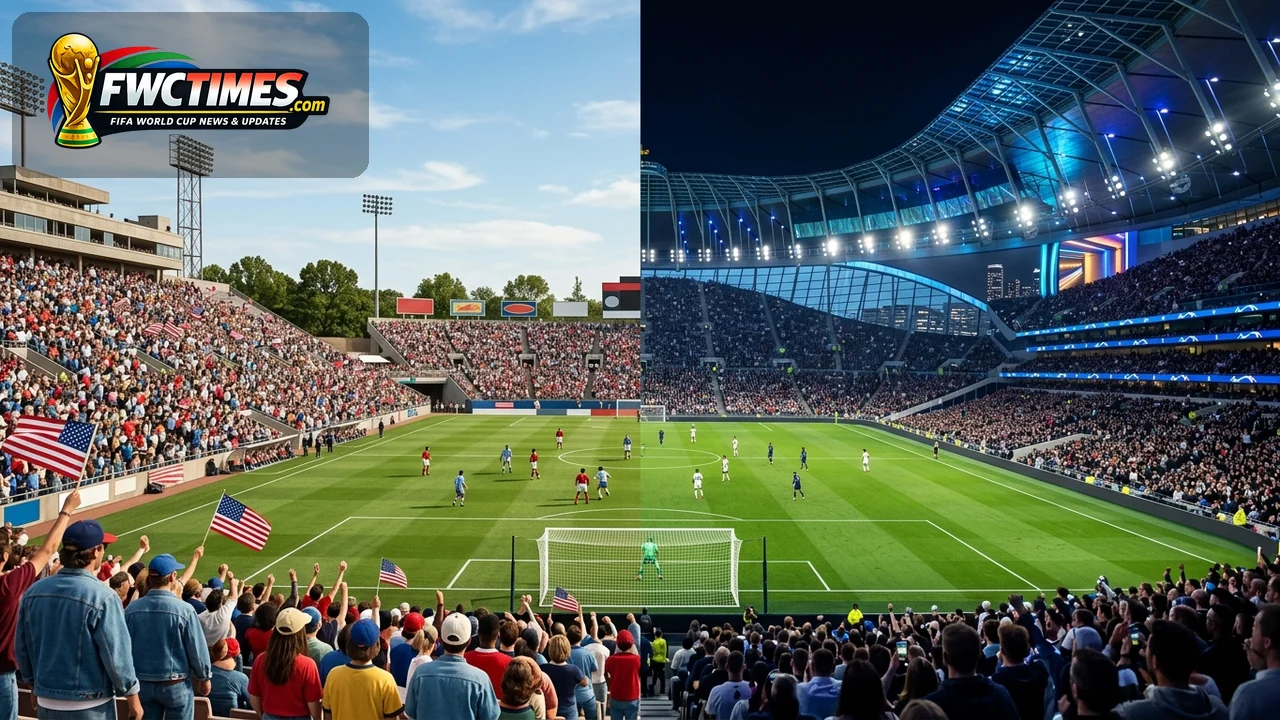
The comparison between World Cup 2026 vs 1994 reveals just. How dramatically football has grown in North America over three decades and the 1994 tournament. Hosted exclusively by the United States. Set the all-time World Cup attendance record with 3,587,538 spectators across 52 matches — an average of 68,991.
The 1994 tournament ran from June 17 to July 17 and 1994. With Brazil lifting the trophy at the Rose Bowl in Pasadena after defeating Italy 3–2 on penalties following. That final remains one of the most-watched football matches ever staged in the US. And The tournament itself played a direct role in creating Major League Soccer, which launched in 1996.
World Cup 2026 vs 1994: Key Tournament Statistics
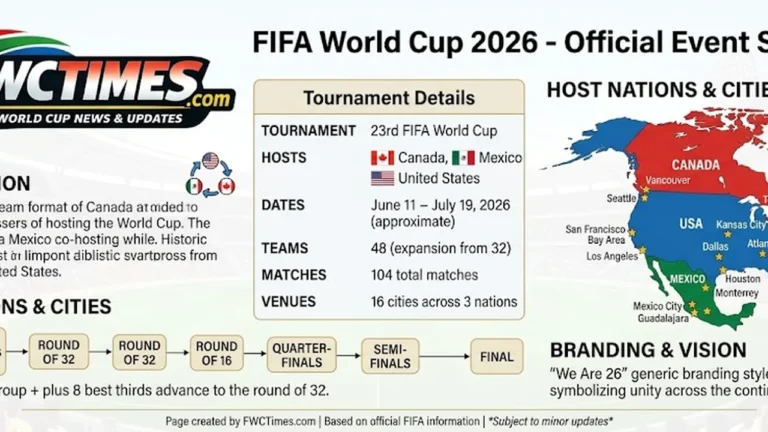
The most visible difference between the two editions is the raw number of teams and matches. In 1994, six groups of four teams produced 52 matches across nine American venues over 30 days. The 2026 version runs 12 groups of four teams across 16 host cities in three countries over 39 days. Producing 104 matches and that extra match volume alone requires a broadcasting infrastructure, logistics network.
| Category | 1994 World Cup | 2026 World Cup |
|---|---|---|
| Host model | United States only | Canada, Mexico, and United States |
| Teams | 24 | 48 |
| Matches | 52 | 104 |
| Host cities/venues | 9 stadiums | 16 host cities |
| Groups | Six groups of four | Twelve groups of four |
| Total attendance (1994 record) | 3,587,538 | yet to be confirmed |
| Average attendance per match (1994) | 68,991 (all-time record) | yet to be confirmed |
| Final venue | Rose Bowl, Pasadena | MetLife Stadium, East Rutherford |
| Champion | Brazil | yet to be confirmed |
Stadium and Infrastructure Differences
The 1994 tournament used nine existing American sports venues, most of which were NFL stadiums converted for football use. The Pontiac Silverdome in Michigan hosted the first-ever indoor World Cup matches. While the Rose Bowl in Pasadena — with a capacity exceeding 90,000 — staged the final. These venues lacked purpose-built football amenities, but the crowds came anyway, setting attendance records that remain unbroken.
The 2026 venues include MetLife Stadium in New Jersey, AT&T Stadium in Dallas, SoFi Stadium in Los Angeles. And Multiple other modern NFL and MLS facilities. These stadiums offer advanced climate control, premium hospitality suites, high-definition video boards. And Far superior fan amenities compared to 1994. and USA host cities including Dallas, Los Angeles, Miami.
Legacy Comparison: What 1994 Built and What 2026 Must Achieve
The 1994 World Cup’s most enduring legacy was creating Major League Soccer. FIFA made the establishment of a professional domestic league a hosting condition. This Drove MLS’s founding in 1993 and its first season in 1996. The US Men’s National Team also advanced from the group stage for the first time since 1930.
The 2026 tournament arrives into a market that 1994 created. MLS now operates in more than 30 markets, the USMNT and USWNT are established global forces. And Broadcasting rights for club football carry real commercial value in the US. Fans from Brazil, Germany, and other powerhouse nations already follow their national teams passionately through North American broadcasts.
Tactical Role of World Cup 2026 Vs 1994
The 1994 World Cup introduced several rules that permanently changed football. Three points for a win replaced the old two-point system, incentivizing attacking play rather than cautious draws. The back-pass rule. Prohibiting goalkeepers from handling deliberate passes from teammates, also came into full international effect at this tournament.
Squad sizes also expanded significantly and the 1994 rosters carried 22 players. The 2026 edition allows 26, giving coaches more flexibility to manage fatigue across a longer schedule and hotter climates. The 1994 tournament ran during a particularly hot North American summer. With matches in cities like Dallas and Orlando reaching extreme heat during afternoon kickoffs.
Frequently Asked Questions
How does the 2026 World Cup differ from the 1994 edition?
The 2026 World Cup features 48 teams playing 104 matches across 16 host cities in three countries. The 1994 edition used 24 teams, 52 matches, and 9 venues all located within the United States. The 2026 format also introduces a new round of 32, squad sizes of 26 players. And Technology including VAR and semi-automated offside that did not exist in 1994.
Did the 1994 World Cup lead to the creation of MLS?
Yes and FIFA made the creation of a sustainable professional league a condition. To support granting the 1994 World Cup hosting rights to the United States. This requirement drove the founding of Major League Soccer in 1993. With the league’s first season beginning in April 1996.
Does the 1994 World Cup still hold the attendance record?
Yes, the 1994 World Cup holds the all-time record for total tournament attendance, with 3,587,538 spectators across 52 matches. The average of 68,991 per match also remains an all-time record. The large capacity of American NFL stadiums — particularly the Rose Bowl, Giants Stadium. And Stanford Stadium — made this possible despite having fewer teams and matches than any tournament after 2002.
Which stadium hosted the 1994 World Cup final?
The Rose Bowl in Pasadena, California hosted the 1994 final on July 17, 1994. Brazil defeated Italy 3–2 on penalties after a 0–0 draw through extra time. Giving Brazil their fourth World Cup title. The match drew a crowd of 94,194 spectators, making it one of the highest-attended finals in history.
How many host cities does World Cup 2026 use compared to 1994?
The 2026 World Cup uses 16 host cities spread across the United States (11), Mexico (3), and Canada (2). The 1994 edition used nine stadiums. All located within the United States, covering cities including Los Angeles, New York, San Francisco, Chicago, Dallas, Orlando. And Washington D.C and the expanded city count in 2026 reflects both the larger team and match volume.
Two Tournaments, One Continent, and Thirty-Two Years of Growth
The 1994 World Cup was a gamble that paid off spectacularly — a country with no professional soccer. League proving it could host the world’s biggest sporting event and break every attendance record in the process. The 2026 version starts from a different position, with established clubs, growing TV audiences. And A national team that qualified with Mexico and Canada as genuine co-stakeholders in the tournament’s success.
Fans who attended or watched 1994 will recognize the excitement of. A North American summer tournament but will find almost everything else transformed. The logistics of following one team across three countries and 16 host. Cities are genuinely challenging in ways that 1994’s single-country format never demanded.