What Is a Walkover in Football? Meaning, Rules and Scores

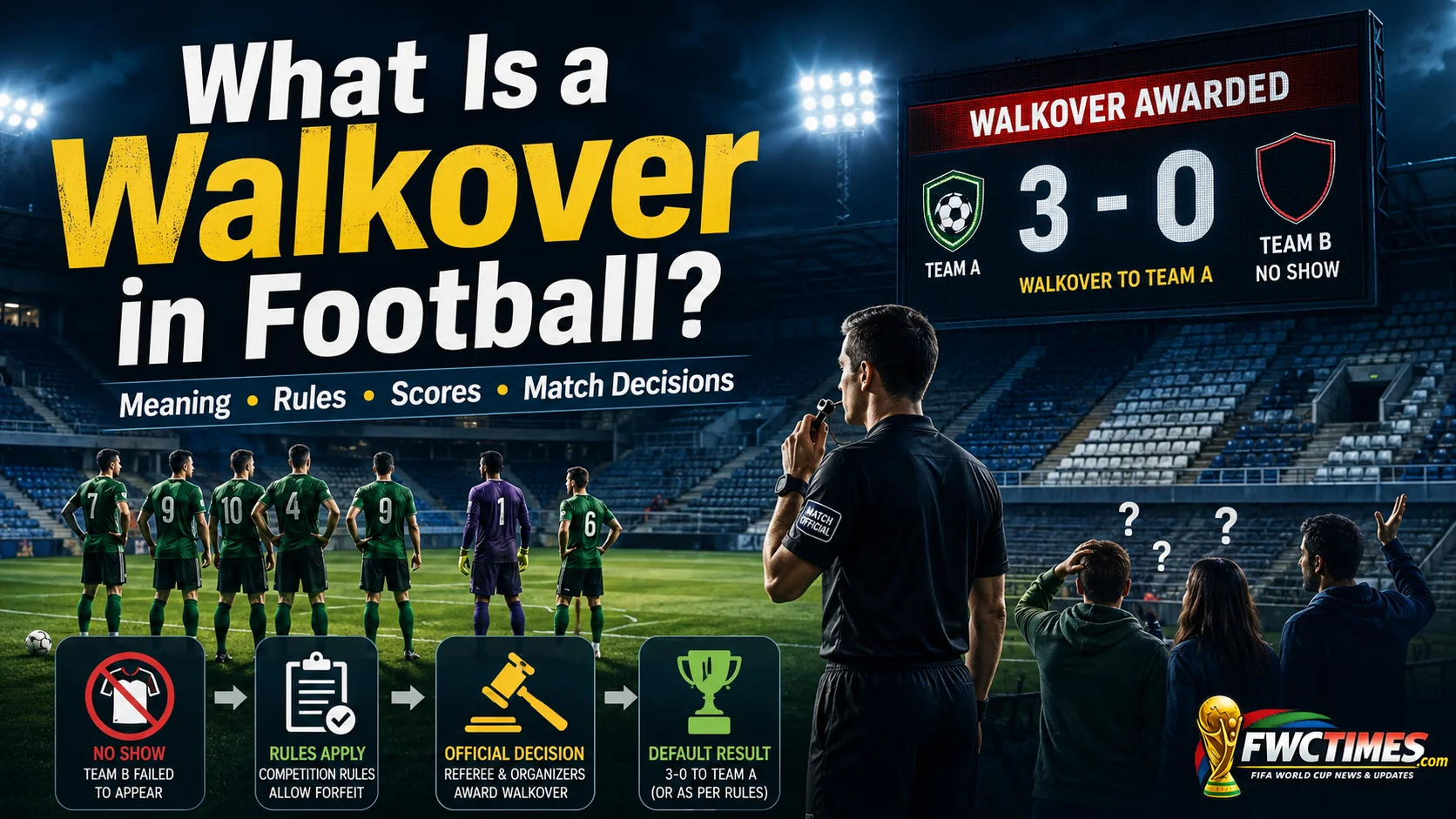
A walkover in football is an automatic victory awarded when the opponent cannot or does not fulfil the fixture. Football authorities often record the outcome as a forfeit.
The Laws of the Game do not set one universal walkover score. Competition regulations and disciplinary bodies decide the result and any extra sanctions.
What Is a Walkover in Football?
A team receives a walkover or forfeit win without completing the scheduled match normally. The opponent may fail to appear, withdraw, field an ineligible player, or lose eligibility.
Many competitions use a 3-0 result, but that score is not universal. The relevant organiser must apply its written regulations.
Walkover in Football Meaning and Common Causes
An automatic victory removes the need for a normal sporting result because one team cannot meet the fixture requirements. The organiser awards the opponent the win. Official records then show the regulated outcome.
Failure to appear can create a forfeit win. Withdrawal, refusal to play, ineligible players, or serious regulation breaches can also cause forfeiture. The facts and rules determine the final decision.
A team that lacks enough eligible players may be unable to start or continue. IFAB Law 3 requires at least seven players. The competition authority decides the match consequence after the referee reports the situation.
An automatic victory and forfeit often describe closely related outcomes. Some organisers use one term in public communication and another in legal rules. The written decision provides the controlling meaning.
Who Awards a Walkover in Football
The referee records events at the venue but does not invent a competition result. A league, federation, organising committee, or disciplinary body applies the regulations. That authority can request evidence before deciding.
Teams may need to explain travel problems, safety concerns, player eligibility, or force majeure. The organiser reviews responsibility and any available exception. A genuine emergency can receive different treatment from an avoidable failure.
The decision can award a score, points, advancement, or elimination. It can also add fines, point deductions, or other discipline. Appeal rights depend on the governing regulations.
Official notices matter because rumours can misstate the outcome. Fans should wait for the organiser’s decision. The recorded score can affect standings, goal difference, and future fixtures.
Minimum Players, Red Cards, and Abandoned Matches
IFAB Law 3 says a match cannot start or continue with fewer than seven players on either team. A side can fall below that number through dismissals, injuries, or departures. The referee then follows the law and reports the match.
A red card does not permit a replacement. FWCTimes explains dismissals in its red card football rules guide. Several dismissals can place the minimum-player threshold at risk.
An abandoned match does not automatically produce one universal score. Weather, crowd trouble, lighting failure, player numbers, and team responsibility create different cases. Competition regulations decide whether to replay, resume, or forfeit.
An automatic win can also occur before kick-off when a team cannot fulfil the fixture. The referee may never start play. The organiser still needs a formal decision before standings change.
Forfeit and Match Outcome Comparison
| Situation | Who Decides Outcome | Possible Result |
|---|---|---|
| Team fails to appear | Competition authority | Forfeit or default victory |
| Ineligible player used | Disciplinary body | Forfeit and possible sanction |
| Team drops below seven | Referee reports, organiser decides | Abandonment and possible forfeit |
| Severe weather | Officials and organiser | Delay, resume, replay, or other ruling |
| Normal completed match | Score on field | Sporting result |
Why Forfeit Scores Can Differ
IFAB governs match laws, while competition regulations govern many administrative consequences. That separation explains why no single score applies everywhere. Organisers publish their own forfeiture rules.
A 3-0 forfeit appears often in FIFA decisions. FIFA declared DPR Korea’s unplayed World Cup 2026 qualifier against Japan lost by forfeit 3-0 in 2024. The decision also included a fine.
FIFA also declared South Africa’s 2025 qualifier against Lesotho forfeited 3-0 after an ineligible player case. That example shows a completed match can later receive an administrative result.
The awarded score can alter standings and tie-breakers. FWCTimes explains those effects in its World Cup tiebreaker rules guide. Teams must protect eligibility and fixture compliance.
How Teams Avoid Forfeits and Penalties
Teams maintain accurate player registration, suspension, and eligibility records. Administrative staff must check every squad before submission. One overlooked sanction can change a result after full-time.
Travel planning and communication also matter. Teams should report disruptions early and follow organiser instructions. Silence or late withdrawal can weaken any request for relief.
Squad depth protects the minimum-player requirement. The World Cup players coverage reflects how teams build eligible options. Injuries and discipline still require careful planning.
Competition officials need clear written procedures and consistent decisions. Published rulings help teams understand the standard. They also protect standings from informal or unequal treatment.
Forfeit, Bye, and Abandonment Rules
An automatic win or forfeit assigns a result because a team cannot satisfy fixture requirements. The authority applies competition rules and may add sanctions. Public wording can vary between organisers.
A bye advances a team without treating an opponent as responsible. Draw structure or participant numbers usually create it before a match. No failed fixture needs a disciplinary decision.
An abandoned match starts or reaches the venue process before stopping. Weather, crowd trouble, player numbers, or safety can cause abandonment. The organiser then decides whether to resume, replay, or award a result.
A postponement moves the fixture to another time without assigning a winner. The reason can include weather, safety, or scheduling problems. These distinctions protect accurate standings and disciplinary records.
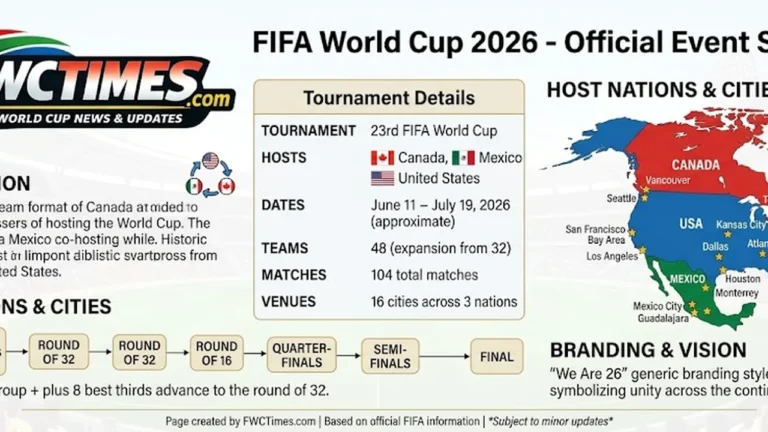
Connection to FIFA World Cup 2026
At the FIFA World Cup 2026, eligibility and fixture compliance remain essential before every match. A forfeit can change points, goal difference, and knockout qualification.
Recent FIFA World Cup preliminary decisions show that 3-0 forfeits can follow unplayed matches or ineligible-player cases. Each decision still depends on the applicable regulations.
Teams need strong administration beside tactical preparation. One paperwork failure can erase an on-field result.
Frequently Asked Questions
What does walkover in football mean?
A walkover in football is an automatic win awarded when the opponent cannot or does not fulfil the fixture. Organisers often record it as a forfeit.
Who decides a football forfeit?
The relevant competition authority or disciplinary body decides the outcome. The referee reports match events but does not create an administrative score alone.
Why is a forfeit often recorded as 3-0?
Many competitions use 3-0 as their regulated forfeit score, and FIFA has used it in recent decisions. No universal IFAB default score applies applies to every competition.
What is the difference between a forfeit victory and an abandoned match?
An automatic result awards a win because one team cannot fulfil the fixture requirements. An abandoned match starts or is scheduled normally but stops before completion, with the organiser deciding the outcome.
Could a forfeit affect World Cup 2026 standings?
Yes, an awarded result can change World Cup points, goal difference, and qualification positions. FIFA regulations and disciplinary decisions control that effect.
Conclusion
An automatic victory protects competition progress when a team cannot meet its fixture obligations. The organiser must apply written regulations and publish the resulting score or sanction.
World Cup 2026 teams need administrative accuracy as much as match preparation. Stay tuned to FWCTimes.com for the latest FIFA World Cup 2026 updates.
Read Also: What Is a Friendly Match in Football?