
US Government Allocates $625 Million for World Cup 2026 Security

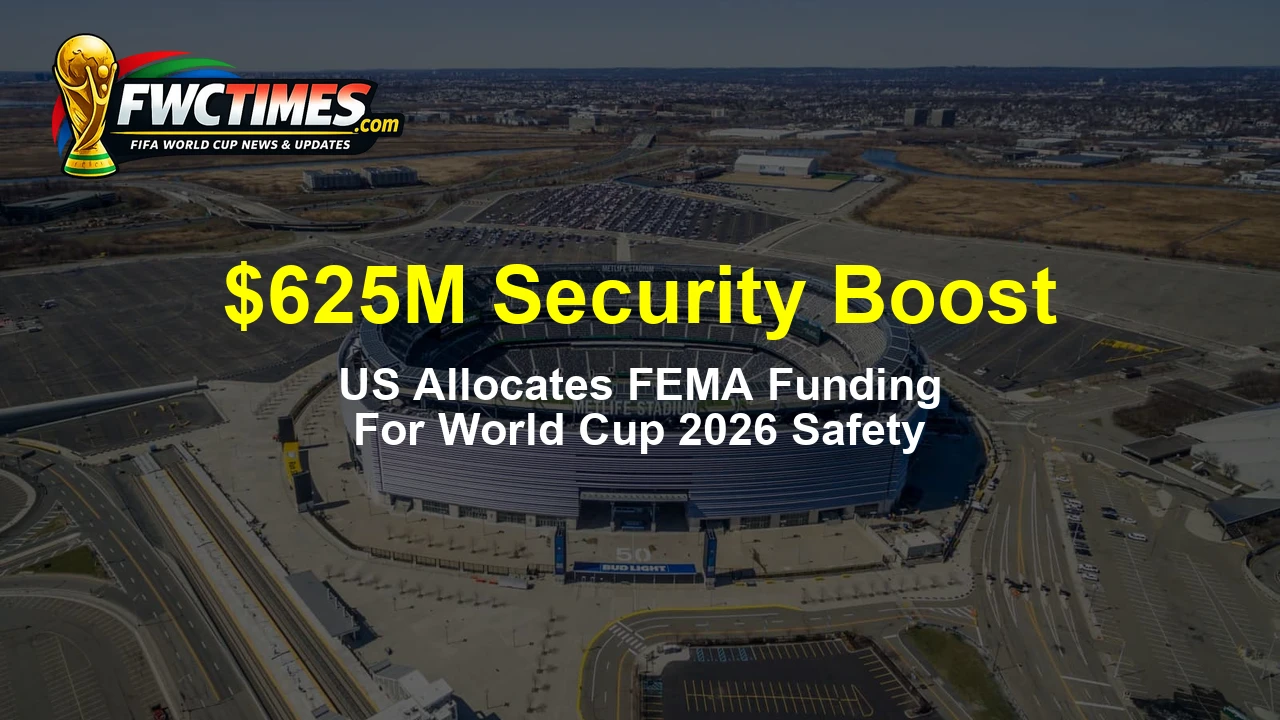
The United States government has officially allocated $625 million in Federal Emergency Management Agency (FEMA) funding to bolster World Cup 2026 security and emergency preparedness. This massive financial injection is designed to support the 11 U.S. host cities in managing the complex logistical and safety challenges of the 104-match tournament. The decision comes amid heightened geopolitical tensions and a ruthless commitment to ensuring a safe environment for millions of international visitors.
Technical experts from the Department of Homeland Security and the FBI have been coordinating for months to identify potential “soft target” vulnerabilities across the 16 host cities in North America. The funding will be used to enhance surveillance infrastructure, deploy advanced crowd-management technologies, and conduct large-scale training exercises for local law enforcement. This proactive measure ensures that the United States remains at the forefront of global sporting event security.
Strengthening Host City Infrastructure
Each of the 11 U.S. host cities will receive a portion of the FEMA grant based on their match count and specific risk assessments. Major hubs like Dallas and New Jersey, which are set to host high-profile knockout matches including the final, are expected to receive significant allocations for stadium-specific security upgrades. The goal is to create a seamless security perimeter that protects both fans and athletes without disrupting the celebratory atmosphere of the tournament.
Furthermore, the funding covers the implementation of emergency medical services and rapid-response units capable of handling large-scale incidents. Host cities are currently in the final stages of refining their logistical networks to accommodate the influx of supporters. The federal government’s involvement provides a level of professional oversight and financial stability that is essential for a tournament of this unprecedented scale.
Tactically, the security plan involves a multi-agency approach, blending local, state, and federal resources into a unified command structure. This ensures that intelligence sharing and incident response times are optimized across multiple borders. The administrative focus remains on creating a resilient framework that can adapt to evolving threats while maintaining a high standard of professional excellence in public safety.
Addressing Geopolitical Risks and “Soft Targets”
The $625 million allocation also addresses specific concerns regarding the treatment of national teams and the security of transportation hubs. With 48 nations participating, the administrative complexity of managing diverse diplomatic and security requirements is immense. Security experts are working ruthlessly to mitigate risks associated with airports, fan zones, and hospitality centers away from the primary match venues.
The “Earth Shaker” scale of the 2026 World Cup requires a defensive strategy that transcends traditional sports security. FIFA and the host nations are committed to using advanced biometrics and real-time data analysis to monitor high-traffic areas. This investment in technology is a signal of the scale and seriousness with which the organizers are approaching their duty of care for the global football community.
Anticipation for the tournament remains high, and the confirmation of federal financial support provides a significant boost to the confidence of sponsors and broadcasters. The economic impact of a safe and successful World Cup is projected to be in the billions of dollars, making the security investment a vital component of the tournament’s overall legacy. FWCTimes will continue to provide verified updates on all administrative and security developments as opening night approaches.
FEMA’s Role in Tournament Logistics
FEMA’s involvement extends beyond traditional security to include comprehensive emergency preparedness for natural disasters and public health concerns. The agency is working with host city organizers to develop robust contingency plans for diverse scenarios. This level of professional readiness is a testament to the strategic planning that has gone into the 2026 project over the last several years.
As the final countdown begins, the focus will shift to the practical execution of these security protocols. Training exercises and “dry runs” are scheduled across the host cities to ensure that every agency is aligned with the federal standards. Supporters are encouraged to familiarize themselves with the fan safety guides provided by official tournament channels and FWCTimes to ensure a smooth and enjoyable matchday experience.
Ultimately, the success of the World Cup 2026 depends on the seamless integration of sporting excellence and professional security management. The stage is set for a historic event, and the United States government’s financial commitment ensures that the foundation of the tournament remains solid. The world is watching, and the host nations are ready to deliver a safe and unforgettable celebration of football.
Frequently Asked Questions
Read Also: Neymar Makes Brazil’s Preliminary 55-Man Squad for World Cup 2026