How to Watch World Cup 2026 Tactically: Tactical Guide

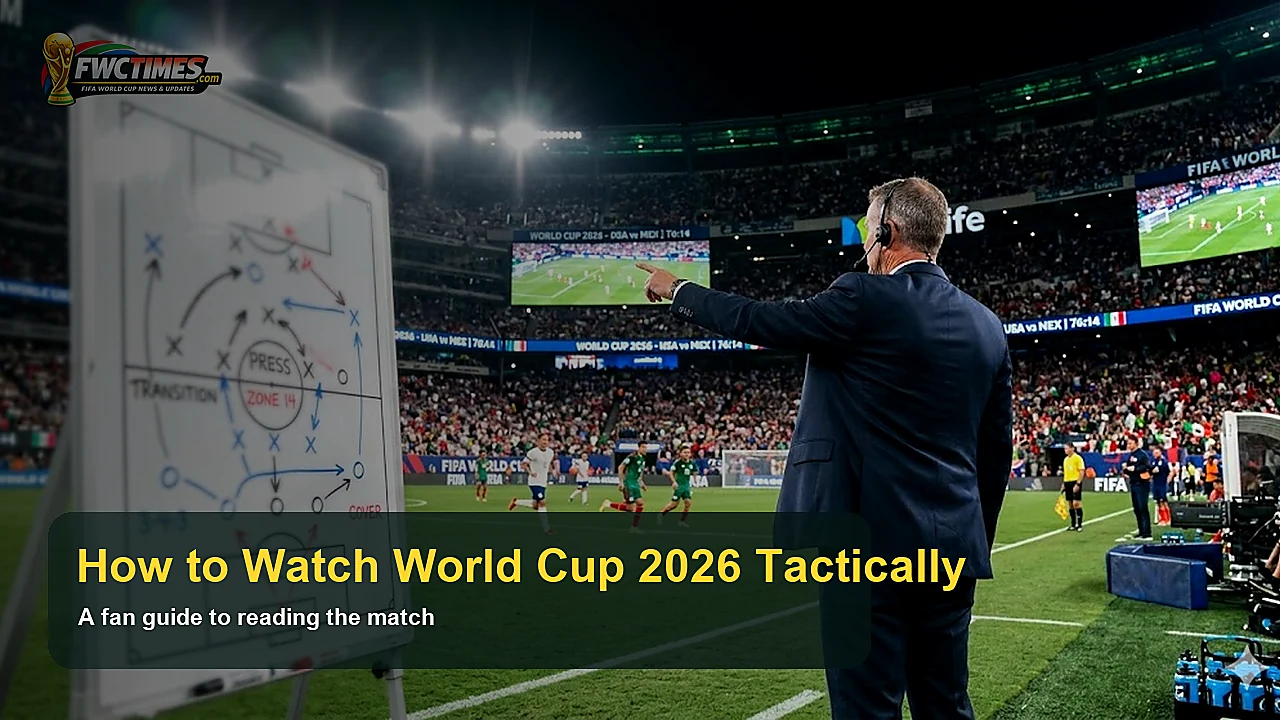
The How to Watch World Cup 2026 Tactically guide helps fans shift their focus from following the ball to observing the structural patterns, spaces, and movements that decide matches. In a tournament expanded to 48 teams, understanding tactical shifts is key to enjoying the games. In fact, modern international football relies on fluid shape-shifting systems that morph based on the phase of play. This guide explains how to identify these patterns to watch the World Cup like a professional analyst.
The physical load of the expanded schedule dictates how teams manage their tactical shapes. With travel across multiple host nations and varying climates, coaches must choose between high-intensity pressing and deep defensive blocks to preserve player stamina. As a result, observers should watch how teams adapt their defensive line height as matches progress. This physical adaptation is what determines whether a team can sustain their tactical approach across 90 minutes.
The history of the tournament shows that matches are decided by subtle adjustments in transition phases rather than individual magic. Spain won the 2010 title through positional play and immediate recovery, which became the blueprint for modern possession football. The coaching staff of the top-seeded nations has designed highly vertical shapes to exploit spaces behind the opponent’s line. The tactical fan prepares for kickoff by analyzing starting lineups and key player positions.
Training Your Eyes to Look Beyond the Ball
To watch a match tactically, you must train your eyes to ignore the ball and observe the surrounding spaces instead. The ball-carrier is only one element on the pitch, and the most critical actions occur off the ball. Pay attention to how teammates offer passing lanes and how the defensive line shifts to close gaps. This off-ball observation helps you anticipate passes before they are executed.
Watch the defensive, midfield, and attacking lines to see if they remain compact or become stretched. A well-organized team keeps the distance between these lines short to prevent the opponent from playing through them. If the lines stretch, it opens pockets of space for creative midfielders to exploit. The possession football World Cup guide explains how teams maintain compact lines to dominate central areas.
Identifying the Four Phases of Play
Every football match operates in a continuous cycle of four distinct phases that dictate team behavior. Try to identify which phase a team is in to understand their immediate tactical goals:
- **Possession (Attacking):** How the team builds play from the back, using short passes or direct vertical balls.
- **Transition (Attack to Defense):** The moment possession is lost, where teams either counter-press or drop deep.
- **Out of Possession (Defending):** How the team organizes their block, pressing high or sitting in a low block.
- **Transition (Defense to Attack):** The moment the ball is won, launching rapid counters or recycling possession.
Analyzing these phases helps you understand how coaches react to different match situations. The counter attack World Cup 2026 guide shows how transition efficiency decides tight tournament fixtures.
Shape-Shifting and Inverted Fullbacks
Watch for shape-shifting systems where teams defend in one formation but attack in another. Many modern sides defend in a flat 4-4-2 block but morph into a 3-2-5 shape during possession. This transition occurs when one fullback tucks inside to form a back three, while the opposite winger pushes high. The 4-3-3 formation World Cup guide compares these shape-shifting systems to traditional setups.
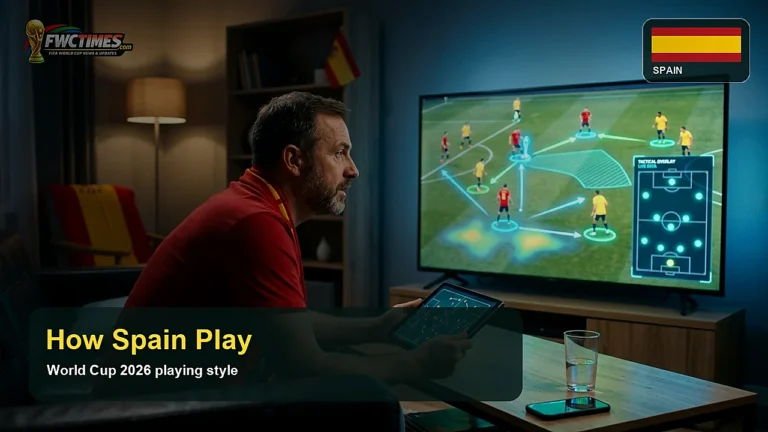
Inverted fullbacks are a baseline requirement for modern tactically advanced teams. These defenders step into the central midfield during possession, creating midfield triangles to recycle the ball. This movement provides extra cover in the center, preventing the opponent from launching counterattacks through transition. The Spain playing style World Cup 2026 guide shows how inverted fullbacks support vertical attacking play.
Practical Tips and Tactical Broadcast Feeds
To improve your tactical viewing, utilize the overhead or tactical camera feeds offered by streaming services. These wide-angle broadcasts display all twenty-two players on the pitch, making it easy to observe team shapes and spacing. Muting the television commentary also forces your brain to focus on structural patterns rather than media narratives.
| Viewing Tip | Tactical Purpose | | :— | :— | | **Tactical Feed** | Observe complete team shapes and spacing between lines | | **Mute Commentary** | Focus on raw match events rather than narrative storylines | | **Pick a Player** | Watch one player’s off-ball movement for ten minutes | | **Track the Pivot** | Observe how the holding midfielder screens the back four |
This approach allows you to analyze how teams manage their rest defense while committing players forward. The high press World Cup guide explores how defensive lines coordinate their height during pressing phases.
Key Vulnerabilities to Observe During Matches
The biggest tactical vulnerability to watch for is the space behind a high-pressing team’s defensive line. If the defending team coordinates their press poorly, the opponent can bypass the midfield with a single vertical pass. This pass forces the centre-backs into 1v1 duels with fast runners in open space. Observing this space helps you identify when a pressing system is beginning to fail.
You should also look for mismatches in wide areas when fullbacks are left isolated against fast wingers. Many attacking systems seek to isolate their wingers in 1v1 situations by overloading the opposite side of the pitch. If the defending midfielders fail to shift over and support, the fullback is easily beaten. This tactical battle on the flanks is where most goalscoring opportunities originate.
Expert Verdict
Watching the 2026 World Cup through a tactical lens reveals the complex battle of wits between coaches. The physical load of the expanded bracket will force managers to adapt their tactics from match to match. Spain and France possess the most flexible systems, shifting shapes fluidly to control different phases. The key to analyzing matches is identifying how teams manage their transition moments.
If you focus on off-the-ball movement, you will anticipate the decisive tactical adjustments before they lead to goals. The matches in the high altitudes of Mexico will showcase how teams conserve energy in compact blocks. Coaches who adjust their pressing heights during hydration breaks will dominate the tactical battles. The fan who understands these structural patterns will appreciate the tournament at a much deeper level.