Why Goalkeeper Height Football Stature Matters in Play

The goalkeeper height football standard is not set by any official rulebook. Stature remains a key physical trait that coaches evaluate during talent recruitment. This article analyzes how height impacts player performance on the pitch. Reach and jumping ability can often offset a lack of raw height in professional play.
Understanding Goalkeeper Height Football Standards
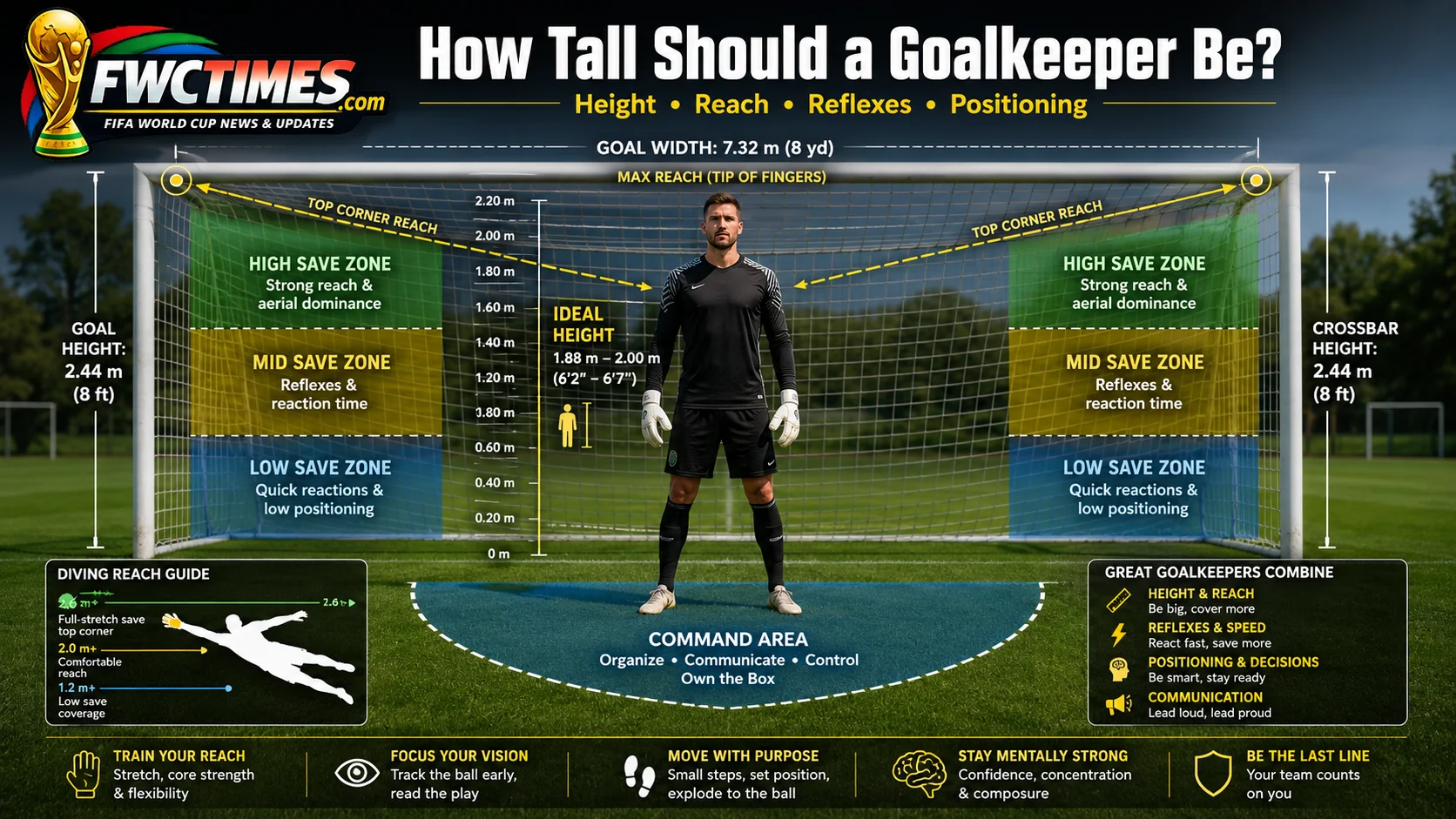
Official football governing bodies do not regulate physical size for any position on the pitch. A goalkeeper needs only to cover the standard goal frame which stands eight feet high. This physical task makes height a highly desirable trait for scouts seeking new talent. Taller keepers can tip high shots over the crossbar with less physical effort.
Many academy systems search for players with high projected physical growth. They want prospects who can eventually reach at least six feet two inches. Young players still develop at different speeds during their teenage years. Coaches must evaluate basic technical abilities alongside simple physical growth markers.
The Average Height of Professional Keepers
Elite professional football leagues show consistent physical trends among starting goalkeepers. The average stature for keepers in major leagues ranges between 188 and 190 centimetres. This height translates to approximately six feet two inches in standard imperial measurements. Most top clubs prefer to sign players who fit into this physical bracket.
Some historical legends have achieved massive success despite being shorter than the average. Yann Sommer stands at 183 centimetres yet remains a top international goalkeeper. Spain legend Iker Casillas won major trophies standing at 185 centimetres tall. These examples prove that elite reflexes and positioning can overcome physical height limitations.
Why Reach and Agility Matter More Than Stature
A goalkeeper reach depends on arm length and vertical jump power. A shorter player with long arms can match the reach of a taller competitor. Agility allows a keeper to adjust their footwork quickly before diving. Quick lateral movement helps players cover the bottom corners of the goal effectively.
Reflexes can save a team when close-range shots catch the defence off guard. A tall goalkeeper might struggle to drop down to the grass for low drives. Compact shot-stoppers often possess lower centers of gravity which aids fast diving actions. Elite keepers combine physical agility with smart positioning to make difficult saves look simple.
Does Goalkeeper Height Football Training Change for Shorter Players?
Shorter keepers must focus heavily on their positioning and vertical jump during goalkeeper height football practice. They need to read the flight of the ball earlier to intercept deep crosses. Footwork drills help these players move across the goalmouth with maximum speed. Coaches design specific sessions to maximize the physical range of compact players.
How Stature Impacts Modern Tactical Systems
Modern tactics require goalkeepers to participate actively in team possession sequences. Sweeper keepers must sprint outside the penalty area to clear long opponent passes. A smaller goalkeeper often possesses better acceleration to win these foot races. Tactical intelligence helps players make correct decisions under intense opponent pressure.
Aerial dominance remains the main advantage for tall defensive players. Taller keepers can claim high crosses in crowded penalty areas. This presence relieves pressure on the central defenders during corners and free kicks. Teams must balance physical size with passing skill when choosing their starting goalkeeper.
Key Goalkeeper Stature Metrics
Different physical attributes influence how a goalkeeper protects the net. Keepers must develop these traits to succeed at the highest levels. Physical dimensions must align with technical training to produce consistent clean sheets. Coaches use these metrics to build specialized training programs for their squads.
| Physical Attribute | Average Elite Range | Impact on Performance |
|---|---|---|
| Male Height | 188cm to 195cm | Improves aerial reach |
| Female Height | 175cm to 183cm | Assists with high shots |
| Arm Span | Matches height or more | Expands overall dive coverage |
| Vertical Jump | 60cm to 80cm | Compensates for shorter stature |
Connection to FIFA World Cup 2026
At the FIFA World Cup 2026, physical matchups will play a key role. The expanded tournament features forty-eight teams competing across three host countries. Teams will face varied tactical setups in different host cities. Goalkeepers must adapt to these physical challenges to help their nations advance.
A goalkeeper height football debate will likely emerge during intense knockout matches. Fast attackers will test the agility of tall defensive units. Shorter keepers will need to command their boxes against physical forward lines. The matches will highlight how different physical profiles succeed on the global stage.
Frequently Asked Questions
What is the average goalkeeper height in football?
The average height for elite male goalkeepers ranges between 188 and 190 centimetres. This height translates to around six feet two inches. Many professional clubs prefer to sign players within this physical range. Shorter keepers can still succeed by developing superior agility and reflexes.
Does FIFA have a goalkeeper height football limit?
FIFA does not enforce any height rules for football players. Anyone can play in goal regardless of their physical size. The official goal dimensions remain the same for all levels of play. Coaches select keepers based on their performance rather than height alone.
How does a goalkeeper compensate for being short?
Shorter goalkeepers can compensate by improving their positioning and foot speed. They must train to increase their vertical jump power. Developing elite reading of the game helps them anticipate opponent actions. Excellent communication with defenders also reduces the need for emergency saves.
Why do scouts look at arm span for goalkeepers?
Scouts measure arm span because it represents the actual reach of a player. A long arm span can make up for a lack of height. This physical metric is often called the wingspan of a player. Reach allows keepers to touch balls that seem out of range.
Will goalkeeper height football stats impact World Cup 2026?
Goalkeeper height football profiles will influence tactical decisions during the tournament. Tall keepers will help defend against physical aerial attacks on set pieces. Quick movements will be required to defend against speedy counter-attacks. Teams will choose keepers who fit their defensive strategies best.
Conclusion
Physical size is a useful tool but does not guarantee success for a goalkeeper. Reach, jumping power, and positioning determine how well a player protects the goal. Players should focus on technical skills that they can control. Consistent training will help goalkeepers perform at their highest level.
Read Also: Can a Goalkeeper Use Hands Outside the Box? This linked article explains the rules for handling the ball outside the area. Understanding these rules helps players avoid costly mistakes during matches. Keeping up with these regulations is essential for every football fan.