How Goalkeeper Red Card Football Rules Impact the Match

A goalkeeper red card football incident instantly changes the tactical balance of any match. The referee ejects the starting goalkeeper from the field for a serious rule violation. The team must play with ten players for the rest of the game. This guide explains how teams manage this difficult situation under official rules.
Goalkeeper Red Card Football Rules Explained
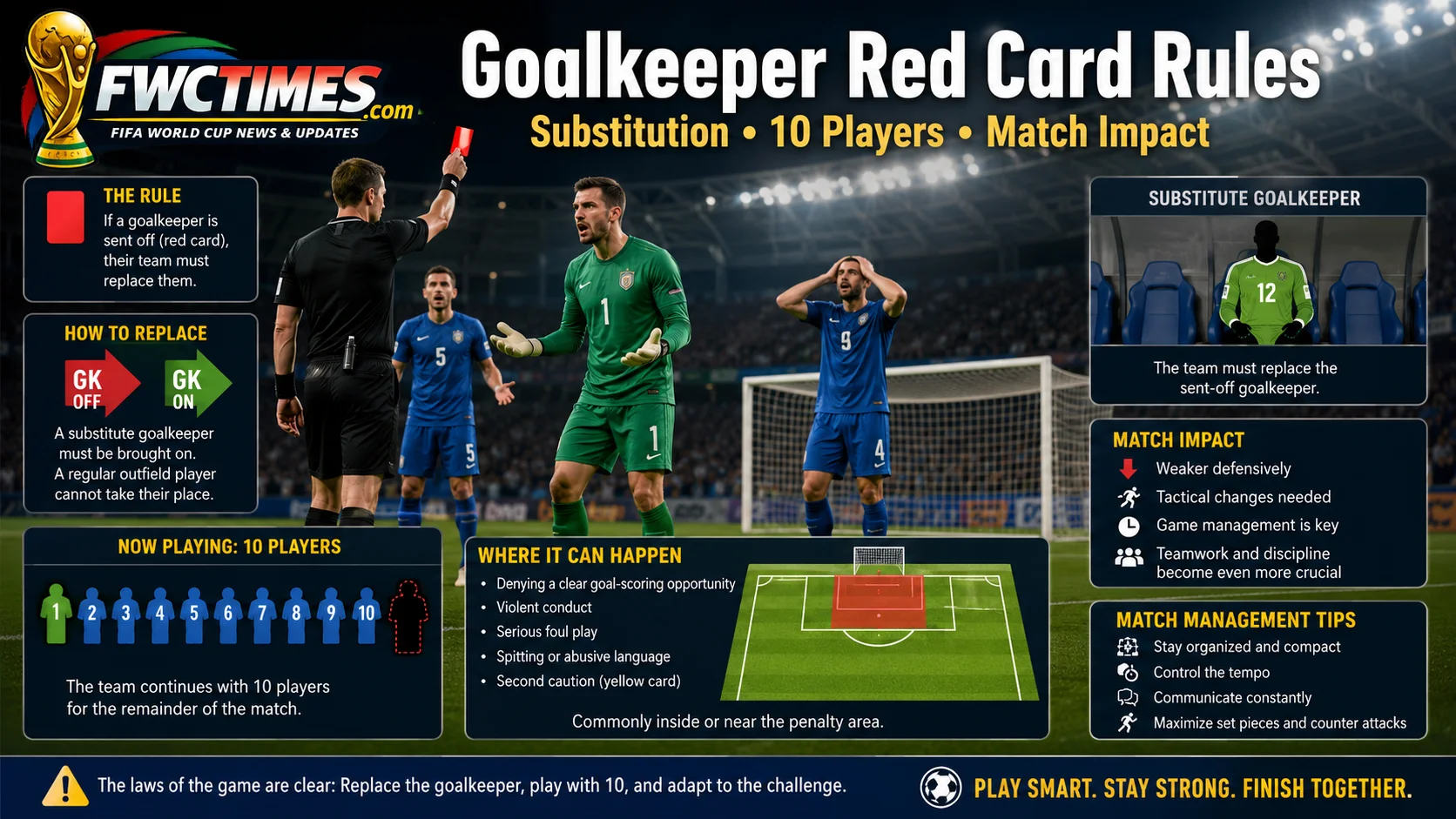
Official IFAB laws state that any player shown a red card must leave the pitch. The dismissed player cannot return to the field or sit on the bench. The team must continue playing with ten players for the remainder of the match. The head coach must make a quick tactical adjustment to replace the goalie.
A goalkeeper can receive a direct red card for several specific offences. A common cause is denying an obvious goal scoring opportunity outside the penalty area. Violent conduct and serious foul play will also result in an immediate sending off. A second yellow card in the same match carries the same penalty.
How Goalkeeper Red Card Football Decisions Shape History
Famous matches in international tournaments have been decided by goalkeeper red card football events. These moments test the depth of the squad and the preparation of the coaches. Fans remember when outfield players had to put on gloves in critical games. These historical incidents show why backup planning is vital for every team.
What Happens Immediately After the Ejection
The head coach has two choices depending on the remaining substitutes. If the team has not used all replacements, a backup goalkeeper can enter. The coach must substitute an outfield player to allow the backup keeper onto the pitch. The team will defend with nine outfield players for the remaining minutes.
The situation becomes more complicated if the team has used all substitutes. Outfield players must take over the goalkeeping duties for the team. This player wears a different colored jersey to identify their special role. The designated player faces a massive challenge to defend the goal without professional training.
Key Red Card Scenarios for Goalkeepers
Rules differentiate between fouls committed inside and outside the penalty box. A foul inside the box that attempts to play the ball yields a yellow card. The referee will award a penalty kick instead of a direct ejection. This double jeopardy rule protects teams from receiving both penalties in mild cases.
| Offence Type | Foul Location | Referee Decision | Direct Consequences |
|---|---|---|---|
| Handling Outside Box | Outside penalty area | Direct free kick | Red card if denying obvious goal |
| Foul Inside Box | Inside penalty area | Penalty kick | Yellow card if playing the ball |
| Violent Conduct | Anywhere on field | Direct card | Red card and multi-match ban |
| Second Yellow | Anywhere on field | Red card ejection | Team plays with ten players |
Connection to FIFA World Cup 2026
At the upcoming FIFA World Cup 2026, teams must prepare for these dramatic situations. The expanded tournament features forty-eight nations playing in multiple host cities. Coaches will use their five allowed substitutions to manage squad energy. A sudden goalkeeper red card football incident would test these resources immediately.
National teams must select three goalkeepers in their final squad list. This requirement ensures that teams have enough cover for suspension or injury problems. The high stakes of knockout matches will force keepers to take major risks. Sweeping outside the box could lead to a decisive red card on the field.
Frequently Asked Questions
What happens if a goalkeeper gets a red card?
A goalkeeper who receives a red card must leave the pitch immediately. The team must play the rest of the match with ten players. If replacements are available, the coach will sub in the reserve goalkeeper. An outfield player must leave the pitch to make room for the new keeper.
Can a team substitute a goalkeeper after a red card?
Yes, a coach can bring on the backup goalkeeper if substitutions remain. This change requires sacrificing one of the active outfield players on the pitch. The team cannot replace the sent-off player directly to keep eleven players. They must play with ten players for the rest of the game.
What happens if a team has no goalkeeper substitutes left?
If a team has no substitutes left, an outfield player must go in goal. This designated player must wear a distinct jersey to identify their position. The team must play with ten players and face a major tactical challenge. The game continues under standard football rules with this player in net.
Can a goalkeeper receive a red card inside the penalty box?
A goalkeeper can receive a red card inside the box for specific offences. If they commit a foul that does not attempt to play the ball, a red is shown. Examples include pushing, holding, or committing violent conduct against an opponent. If they make a genuine attempt to play the ball, a yellow card is shown.
How will goalkeeper red card football rules apply at World Cup 2026?
The standard IFAB goalkeeper red card football rules will apply throughout the tournament. Teams can use up to five substitutes to replace a dismissed player with a backup. A red card shown in a knockout match will result in a suspension for the next game. Coaches must prepare emergency plans for their outfield players to go in goal.
Conclusion
A goalkeeper red card football ruling remains one of the most severe punishments in the sport. Teams must quickly adapt their formations and make tactical sacrifices to survive. Understanding these rules helps supporters appreciate the high stakes of modern match management. Read our guides on World Cup 2026 groups and the World Cup 2026 schedule PDF.
Read Also: What Does a Goalkeeper Do in Football? This guide provides a full description of the standard responsibilities of the position. Knowing these basic duties highlights how much a team loses after an ejection. Supporters can follow the tactical changes with greater clarity during the tournament.