World Cup 2026 vs 1994: How USA Hosting Compares

World Cup 2026 vs 1994

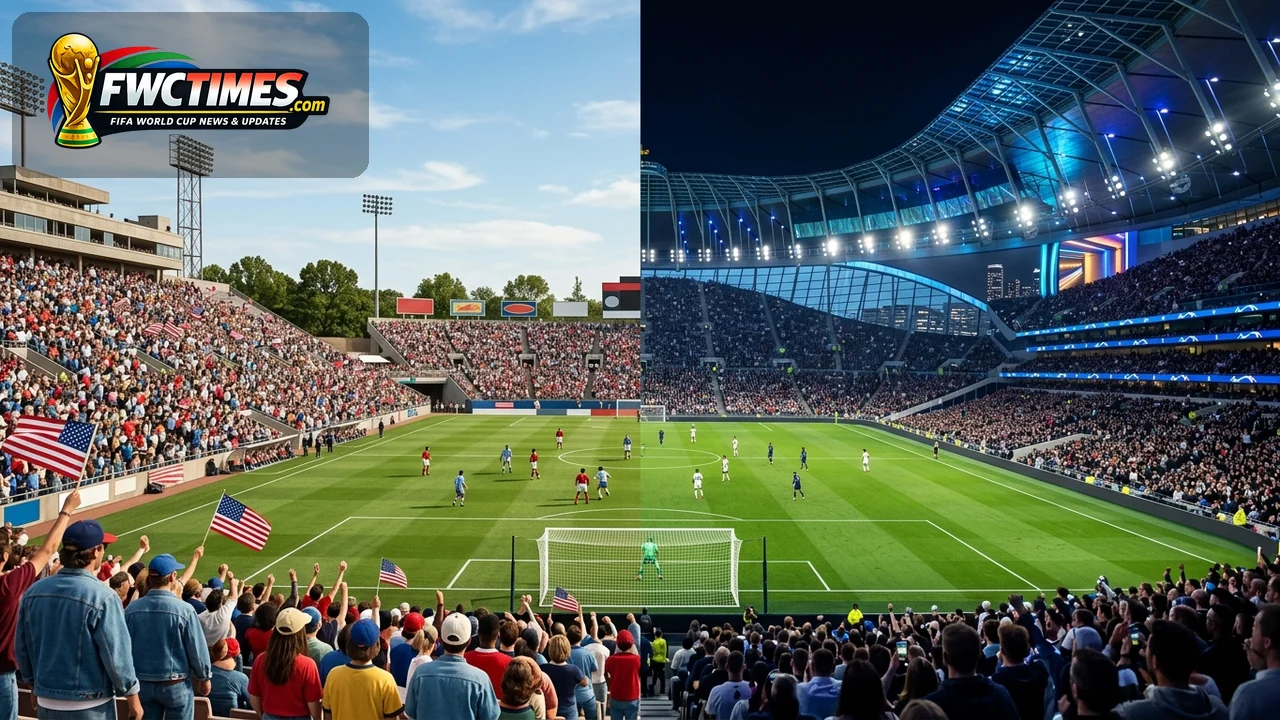
World Cup 2026 vs 1994 is a real test of how much soccer in the United States has changed. The 1994 tournament proved Americans would fill huge stadiums for the world game. The 2026 edition asks a bigger question: can North America run the largest World Cup ever without losing the fan feel that made 1994 special?

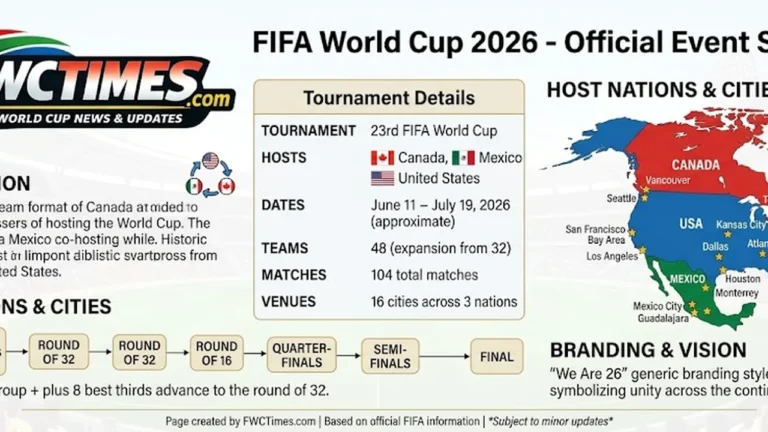
The answer starts with scale. The 1994 World Cup had 24 teams, 52 matches, one host country, and nine American venues. The 2026 tournament has 48 teams, 104 matches, three host countries, and 16 host cities across Canada, Mexico, and the United States.

Quick Answer: 1994

The 1994 World Cup was smaller, tighter, and still owns the tournament attendance record. It gave American soccer a national stage and helped create the professional base that followed.

Quick Answer: 2026

The 2026 World Cup is larger, more digital, and harder to plan. It turns the United States from a first-time host into the central hub of a three-country tournament.

World Cup 2026 vs 1994 Key Comparison

The main difference is not only the number of games. The 1994 tournament felt like one country proving soccer could work in American stadiums. The 2026 version treats North America as a full tournament region with different borders, climates, time zones, and fan routes.

Fans should read the comparison through two lenses. One lens is history, because 1994 changed American soccer in visible ways. The other lens is logistics, because 2026 will test transport, tickets, heat planning, broadcast windows, and stadium operations across a much wider map.

Category 1994 World Cup 2026 World Cup
Host model United States only Canada, Mexico, and United States
Dates June 17 to July 17, 1994 June 11 to July 19, 2026
Teams 24 48
Matches 52 104
Host cities 9 U.S. areas 16 host cities across three countries
Final venue Rose Bowl, Pasadena New York New Jersey Stadium
Opening venue Soldier Field, Chicago Mexico City Stadium
Format Six groups of four, then knockouts Twelve groups of four, then Round of 32
Attendance marker 3,587,538 total fans Final total yet to be confirmed
U.S. soccer impact Helped launch MLS in 1996 Tests a mature soccer market with MLS, NWSL, academies, and global fan bases

How the 1994 World Cup Really Worked

The 1994 World Cup arrived in a country that still treated soccer as a growing sport. The United States had hosted big international friendlies and youth tournaments, yet the men’s professional game lacked a stable top league. Many foreign observers wondered whether American crowds would understand the event beyond its novelty.

The answer came through the gates. More than 3.58 million fans attended the tournament, with an average crowd near 69,000 per match. That record still defines the 1994 edition, because the tournament reached those numbers with only 52 matches.

The stadium list also explained the success. Organizers used large American football venues, including the Rose Bowl, Giants Stadium, Soldier Field, Stanford Stadium, the Cotton Bowl, Foxboro Stadium, the Pontiac Silverdome, Citrus Bowl, and RFK Stadium. Those buildings were not built for soccer first, yet their capacity gave the event a giant matchday look.

The Rose Bowl became the final image of the tournament. Brazil and Italy finished 0-0 after extra time, then Brazil won on penalties. It was the first World Cup final decided by a shootout, and it gave the United States a historic closing scene.

How the 2026 World Cup Is Built Differently

The 2026 tournament starts from a different place. The FIFA World Cup 2026 already arrives with a mature U.S. soccer audience, packed club stadiums, global streaming habits, and a larger international fan base. The issue is no longer whether Americans will attend.

The bigger issue is whether fans can move through the tournament cleanly. The event runs across 16 host cities, including 11 in the United States, three in Mexico, and two in Canada. That map creates more access, but it also adds border crossings, time-zone decisions, flight planning, and hotel pressure.

The tournament format also doubles the work. Forty-eight teams create 12 groups of four, which means more national fan bases and more group-stage variety. The knockout stage starts earlier through a Round of 32, so more teams stay alive after the group stage.

Fans planning city routes need a full venue view before they choose tickets. The FWCTimes World Cup 2026 hosts guide explains the three-country setup, while the World Cup 2026 stadium list breaks down venue capacity and matchday scale.

Host Cities: One Country in 1994, Three Countries in 2026

The 1994 layout kept everything inside the United States. Fans moved between American cities, dealt with one currency, one immigration system, and one domestic travel network. The distances were still large, yet the planning rules stayed simple.

The 2026 layout spreads the World Cup across Canada, Mexico, and the United States. Mexico City opens the tournament, Toronto hosts Canada’s first match, and Los Angeles hosts the first U.S. match. The final then lands at New York New Jersey Stadium on July 19, 2026.

This shared model gives the tournament a wider North American identity. Mexico brings deep World Cup memory through 1970 and 1986. Canada adds its first men’s World Cup hosting role, while the United States carries the largest match load.

Area 1994 Host Role 2026 Host Role
United States Hosted the full tournament Hosts 11 cities, including the final
Mexico Did not host in 1994 Hosts Mexico City, Guadalajara, and Monterrey
Canada Did not host in 1994 Hosts Toronto and Vancouver
Opening match Chicago Mexico City
Final Pasadena New York New Jersey

Stadiums and Playing Conditions

Stadiums shaped the 1994 story. American football venues created huge crowds, but many needed soccer adjustments. The Pontiac Silverdome made history as the first indoor World Cup venue, and grass had to work inside a building designed for another sport.

The 2026 stadium list still leans on huge multi-use venues. The difference is that many buildings now have better event operations, club areas, video boards, roof systems, and broadcast infrastructure. Several host venues also carry experience from NFL, MLS, international friendlies, and major cup finals.

Heat and comfort remain major issues. The 1994 tournament had famous afternoon kickoffs in tough summer conditions. The 2026 schedule tries to balance player welfare, climate, local attendance, and global broadcast windows across a bigger map.

Fans should pay attention to roof, shade, and kickoff time. A match in Houston, Dallas, Atlanta, or Vancouver can feel different from an open-air afternoon elsewhere. That is why stadium choice matters almost as much as the opponent.

Tournament Format and Match Count

The 1994 World Cup used 24 teams and 52 matches. Six groups of four produced a familiar but smaller rhythm. The knockout stage started at the Round of 16, so the tournament moved from group football to elimination matches quickly.

The 2026 tournament doubles the match count to 104. The World Cup 2026 match count guide explains the split across the group stage, Round of 32, Round of 16, quarterfinals, semifinals, third-place match, and final. That structure gives fans more games, but it also makes the tournament longer to follow.

The 2026 format gives smaller and emerging football nations more room. A third-place route means a team can survive the group stage without finishing first or second. That creates more late group-stage tension than the old 24-team model.

It also changes how favorites manage squads. Coaches must prepare for one extra knockout round before the quarterfinals. Depth, recovery, rotation, and travel plans will matter more than they did in 1994.

USA Soccer Culture: 1994 Spark vs 2026 Test

The 1994 World Cup gave American soccer proof. The U.S. men reached the knockout stage after a draw with Switzerland, a win over Colombia, and a loss to Romania. The run ended against Brazil, yet it gave the home team credibility on a global stage.

The tournament also helped create the conditions for Major League Soccer. MLS launched in 1996, giving the United States a stable top division after years of uncertainty. That legacy is one of the clearest real-world outcomes from the 1994 event.

The 2026 edition will not need to introduce soccer from scratch. MLS has teams across the country, NWSL has grown, youth academies feed player pathways, and global clubs already tour U.S. cities. Many American fans now follow European leagues, Concacaf competition, Copa America, and Champions League football.

That makes 2026 a harder test in one way. Fans will not judge the event as a novelty. They will expect better matchday transport, clear ticket systems, strong broadcast access, quality fields, and a tournament feel worthy of the World Cup name.

Tickets, Prices, and Hospitality

Ticket culture has changed more than many fans realize. In 1994, fans bought access in a less digital environment, and the secondary market worked through different channels. Many supporters remember the tournament through big crowds and relative simplicity.

In 2026, fans face digital ticketing, timed sales phases, hospitality products, resale rules, dynamic demand, and a huge travel market. Demand will rise sharply for host-nation games, Argentina, Brazil, Mexico, England, France, and late knockout matches. Final tickets will sit in the hardest demand tier.

The public ticket route and premium route also feel more separated now. Standard tickets suit fans chasing value and multiple matches. Hospitality suits fans who want certainty, lounges, premium seats, and less matchday friction.

Fans comparing prices should start with the World Cup 2026 ticket guide before buying. Fans considering premium access can compare options in the World Cup 2026 hospitality packages guide.

Travel and Time Zones

Travel was already a serious issue in 1994. The United States is large, and fans who followed teams across cities had to plan long domestic trips. Still, the tournament stayed inside one national system.

The 2026 tournament adds more moving parts. A fan could attend matches in Mexico City, Dallas, Toronto, and New York New Jersey across the same tournament. That plan may sound attractive, but it needs flight buffers, border checks, hotel timing, and local transport research.

Time zones also matter more in 2026. Eastern, Central, Mountain, and Pacific viewing windows affect fans inside North America and abroad. European, Asian, African, and South American viewers will see a wide spread of kickoff times.

The best planning habit is simple: choose a base city first, then add nearby matches. Fans watching from home can use the World Cup 2026 time zones tool to convert every kickoff into local time.

Broadcasting, Digital Media, and Fan Coverage

The 1994 World Cup belonged to television, newspapers, radio, and highlight shows. Fans waited for coverage windows, printed schedules, and next-day analysis. The event still reached huge audiences, but the media experience was slower.

The 2026 World Cup will live across TV, streaming, social platforms, live-score apps, short clips, and official alerts. Viewers will follow goals, lineups, injury updates, VAR checks, and travel information in real time. That speed changes how fans experience even neutral matches.

Broadcast rights also look more fragmented by country and language. A fan in the United States may choose English or Spanish coverage. A fan abroad may need a local broadcaster, streaming app, radio feed, or highlights platform.

The FWCTimes World Cup 2026 broadcasting rights guide helps fans check TV and streaming options. Social users can also follow the World Cup 2026 social media accounts guide for official teams, host cities, and broadcasters.

What 1994 Did Better

The 1994 tournament had a clean story. One country hosted, crowds were huge, and the event felt like a national arrival for soccer. Fans could understand the map quickly, even if the distances were long.

It also had a powerful legacy line. American soccer needed proof, and 1994 supplied it through attendance, visibility, and the MLS launch that followed. The tournament changed the sport’s business path in the United States.

That simplicity may be hard for 2026 to match. A three-country tournament can feel grand, yet it can also feel scattered if travel and communication fall short. The 1994 World Cup had fewer moving pieces, which helped fans focus on matches.

What 2026 Should Do Better

The 2026 tournament should give more countries a true World Cup moment. Forty-eight teams means more players, more supporter groups, and more national stories. That matters in regions that had limited qualifying paths in earlier tournaments.

Stadium operations should also feel more advanced. Modern venues can handle security checks, premium areas, digital screens, media zones, and broadcast demands at a higher level. Several stadiums offer roof or climate protection that 1994 could not match.

Digital planning should make the event easier for prepared fans. Mobile tickets, transit alerts, match apps, live scores, and city updates can reduce confusion. The challenge is making those tools simple enough for international visitors.

Biggest Real-World Difference for Fans

The biggest fan difference is planning pressure. In 1994, a fan mainly needed a ticket, travel, a hotel, and local transport. In 2026, the same fan may need app access, account verification, cross-border routes, resale checks, and time-zone planning.

The benefit is choice. Fans can build a city-based trip, a team-following trip, a hospitality trip, or a broadcast-first viewing plan. The tournament gives more entry points than 1994, even if it asks more from supporters.

Cost will decide how many fans feel that benefit. Hotel rates, flights, ground transport, and premium ticket demand can make 2026 harder for families. The best value may come from group-stage matches in less crowded windows.

Final Verdict: World Cup 2026 vs 1994

The 1994 World Cup remains the cleaner American soccer landmark. It filled massive stadiums, created a record attendance figure, lifted the U.S. men’s profile, and helped build the modern domestic game. Its legacy is already proven.

The 2026 World Cup will be bigger in almost every measurable way. It has more teams, more matches, more cities, more countries, more digital coverage, and more commercial layers. The United States no longer needs to prove soccer can draw a crowd.

The real 2026 test is execution. If transport, ticketing, scheduling, and fan services work, the tournament can become North America’s biggest soccer moment. If they do not, 1994 may still feel more loved despite being smaller.

Frequently Asked Questions

How is World Cup 2026 different from the 1994 World Cup?

World Cup 2026 has 48 teams, 104 matches, and three host countries. The 1994 World Cup had 24 teams, 52 matches, and one host country.

Did the 1994 World Cup help create MLS?

Yes. The 1994 tournament helped push the United States toward a stable top professional league. Major League Soccer launched in 1996 and became the clearest domestic legacy.

Will World Cup 2026 break the 1994 attendance record?

The final attendance total is yet to be confirmed. The 2026 tournament has twice as many matches, so it has a strong chance to pass the 1994 total.

Are any 1994 U.S. stadiums being used again in 2026?

No U.S. stadium from the 1994 World Cup is part of the 2026 venue list. Several host areas return, including Dallas, Boston, Los Angeles, and New York New Jersey.

Which tournament is bigger, 1994 or 2026?

The 2026 World Cup is bigger by teams, matches, cities, and host countries. The 1994 tournament still owns the historic attendance record until the 2026 final total is confirmed.

Conclusion

The World Cup 2026 vs 1994 comparison shows two different American soccer moments. The first proved the sport could fill U.S. stadiums. The second must prove a larger North American tournament can serve fans with the same clarity.

The 1994 World Cup changed American soccer from the outside in. The 2026 World Cup will test the sport from the inside out, because the audience, leagues, players, and expectations already exist.

Read more: World Cup 2026 injury news tracker

Sharing is Caring

Similar Posts

Leave a Reply

Your email address will not be published. Required fields are marked *