How Many Matches in FIFA World Cup 2026

The total number of Matches in FIFA World Cup tournaments is set to increase dramatically in the upcoming edition. FIFA has expanded the competition field to include forty-eight nations in North America. This historic change creates a larger schedule for players and supporters worldwide. Fans can expect a massive celebration of football across the host nations.
Each host city coordinates its own stadium schedules and safety guidelines. Some venues feature retractable roofs, while others rely on natural ventilation systems. Early planning has already generated huge interest among traveling fans. Supporters are tracking official announcements to see where the opening games will take place.
This guide explains the event structures and schedule details for the upcoming matches. We cover the main group layouts, knockout rounds, and team paths. Our analysis helps you navigate the exciting tournament calendar.
How many matches are in FIFA World Cup 2026?
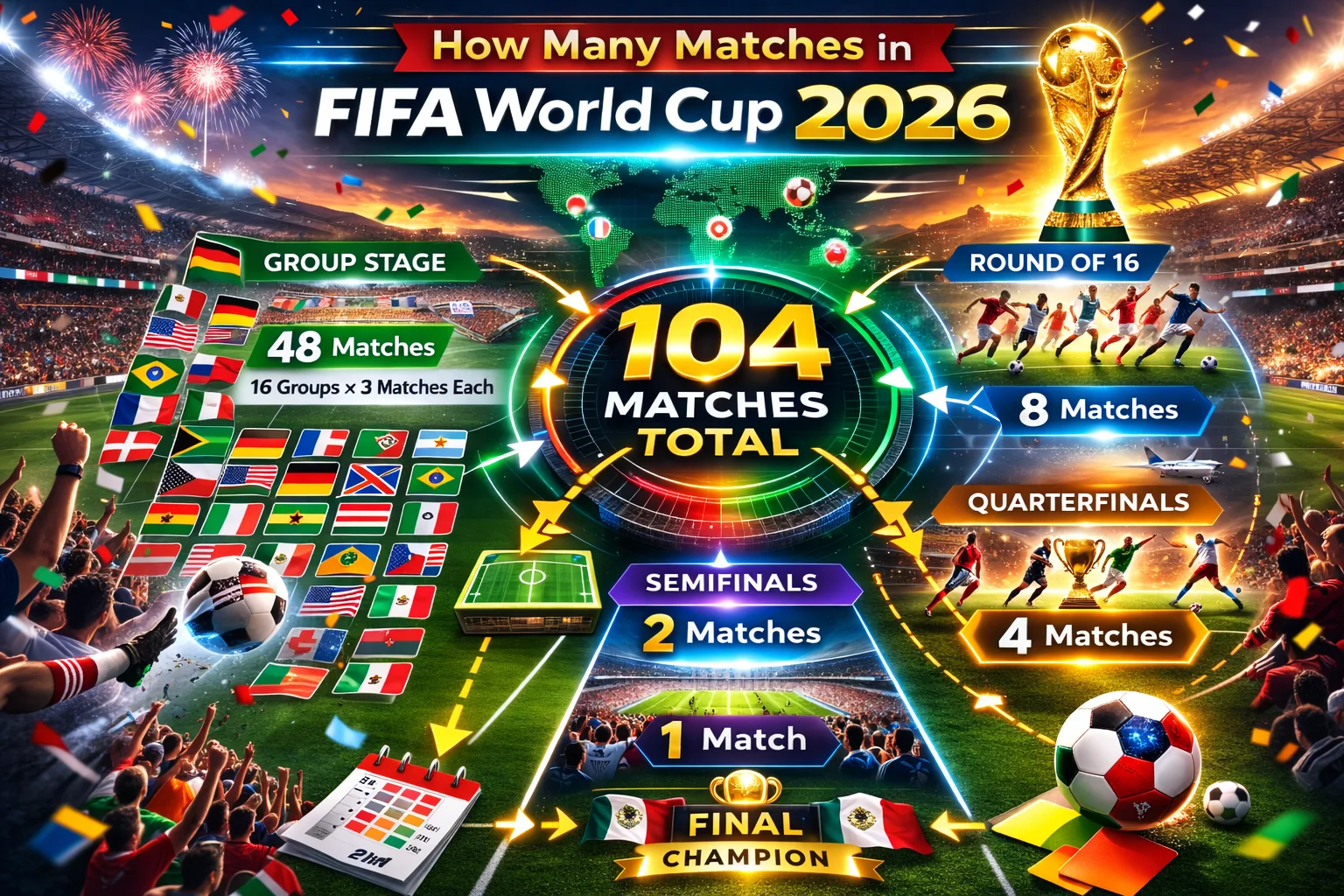
There are exactly 104 Matches in FIFA World Cup 2026, representing a major increase from previous editions. The group stage features seventy-two fixtures, followed by thirty-two knockout stage matches. The finalists will play a total of eight games during the summer tournament.
Supporters can check the FIFA World Cup hosts venue map to see where teams play. Read the FIFA World Cup group stage matches guide to track schedules. You can also view live results on the FIFA World Cup standings page.
| Tournament Phase | Total Number of Matches | Matches Played per Team |
|---|---|---|
| Group Stage Phase | 72 matches | 3 matches |
| Round of 32 | 16 matches | 1 match (if qualified) |
| Round of 16 to Final | 16 matches | Up to 4 matches |
| Total Tournament | 104 matches | 8 matches (for finalists) |
Format changes for Matches in FIFA World Cup 2026
The addition of sixteen extra teams changes the opening phase structure completely. The twelve groups consist of four teams playing in a round-robin format. The top two teams in each group automatically qualify for the knockout rounds. The eight best third-placed teams join them to complete the next round. This structure ensures that almost every group match remains highly competitive.
The group stage will feature seventy-two games completed over a sixteen-day period. This rapid schedule requires careful rotation from national team coaching staffs. Teams must manage player workloads to avoid muscular fatigue during hot summer days. The expanded schedule will test the depth of every participating nation.
Coaches will prioritize squad recovery during the intense travel schedule. Medical teams use advanced data systems to track player fatigue levels. Having larger official rosters helps managers rotate their starting lineups. These measures are essential to maintain high-quality play throughout the group phase.
The match scheduling process aims to minimize travel fatigue for the competing squads. Teams will play their group games within specific regional clusters to reduce flight times. Stadium managers are coordinating security protocols to ensure safety at all events. These plans help maintain order across the multi-country tournament.
Knockout round matches in FIFA World Cup 2026
The introduction of the Round of 32 adds another elimination hurdle for the contenders. Winners of these matches advance directly to the round of sixteen fixtures. The single-match elimination format leaves no room for defensive errors on the pitch. Referees will use assistant video systems to monitor critical penalty box decisions. The knockout phase represents the ultimate test of tactical discipline.
The total knockout matches increase from sixteen in past editions to thirty-two in 2026. This change doubles the amount of high-pressure football for global television audiences. Broadcasters have adjusted scheduling slots to maximize global viewing figures. Supporters will enjoy a month-long celebration of elite knockout action.
Impact of more fixtures on host cities and logistics
The expanded tournament puts extra physical demands on municipal transit systems. Host cities are upgrading infrastructure near stadiums to handle supporter travel. Local security teams work alongside international agencies to manage the fan crowds. Security checkpoints are established around all public viewing areas and stadium gates. These security measures help maintain a peaceful environment for everyone.
The logistics coordinators have planned flight routes to minimize travel fatigue. Teams are assigned regional training bases to reduce cross-country journeys during groups. Still, the travel distances across North America represent a major challenge for squads. Having organized itineraries is crucial to maintaining team performance.
Local businesses expect record-breaking revenue during the month-long tournament. Hotels and restaurants are hiring extra staff to accommodate traveling supporters. City planners are organizing cultural festivals to showcase regional heritage to visitors. These community events add great value to the spectator experience.
Roster guidelines and substitution rules for the matches
FIFA permits larger tournament squads to help managers handle the expanded calendar. Coaches can select up to twenty-six players for their official tournament rosters. The standard five substitutions rule remains active during all regular match periods. Managers receive a sixth substitution option if matches enter extra time. These parameters protect athlete safety during intense summer matches.
Medical teams monitor pitch-level temperatures constantly before the daily kickoffs. Referees can implement mandatory hydration breaks if heat conditions exceed standard safety thresholds. Training staff prioritize recovery protocols, using cold tubs and customized nutrition plans. These efforts ensure players remain healthy through the long matches.
Frequently Asked Questions
How many total Matches in FIFA World Cup 2026 are scheduled?
There are exactly 104 matches scheduled across the entire tournament. This represents a major increase from the 64 matches played in past editions.
What is the structure of the group stage?
The forty-eight teams are divided into twelve groups of four. Each team plays three group games, resulting in seventy-two matches total.
How many matches does a team play to win the trophy?
The final teams will play eight matches to decide the champion. This is one match more than the seven games required in previous formats.
When do the knockout stage matches begin?
The knockout rounds start immediately after the group stage ends in late June 2026. The matches begin with the newly introduced Round of 32.
Conclusion
The increased number of fixtures will make this tournament the largest in football history. Having 104 Matches in FIFA World Cup 2026 ensures more matches, goals, and drama. Plan your transit schedules early to catch your favorite teams live.
Read Also: Why FIFA World Cup 2026 has 48 teams