Estadio Azteca Concerns Grow Before World Cup 2026 Opener

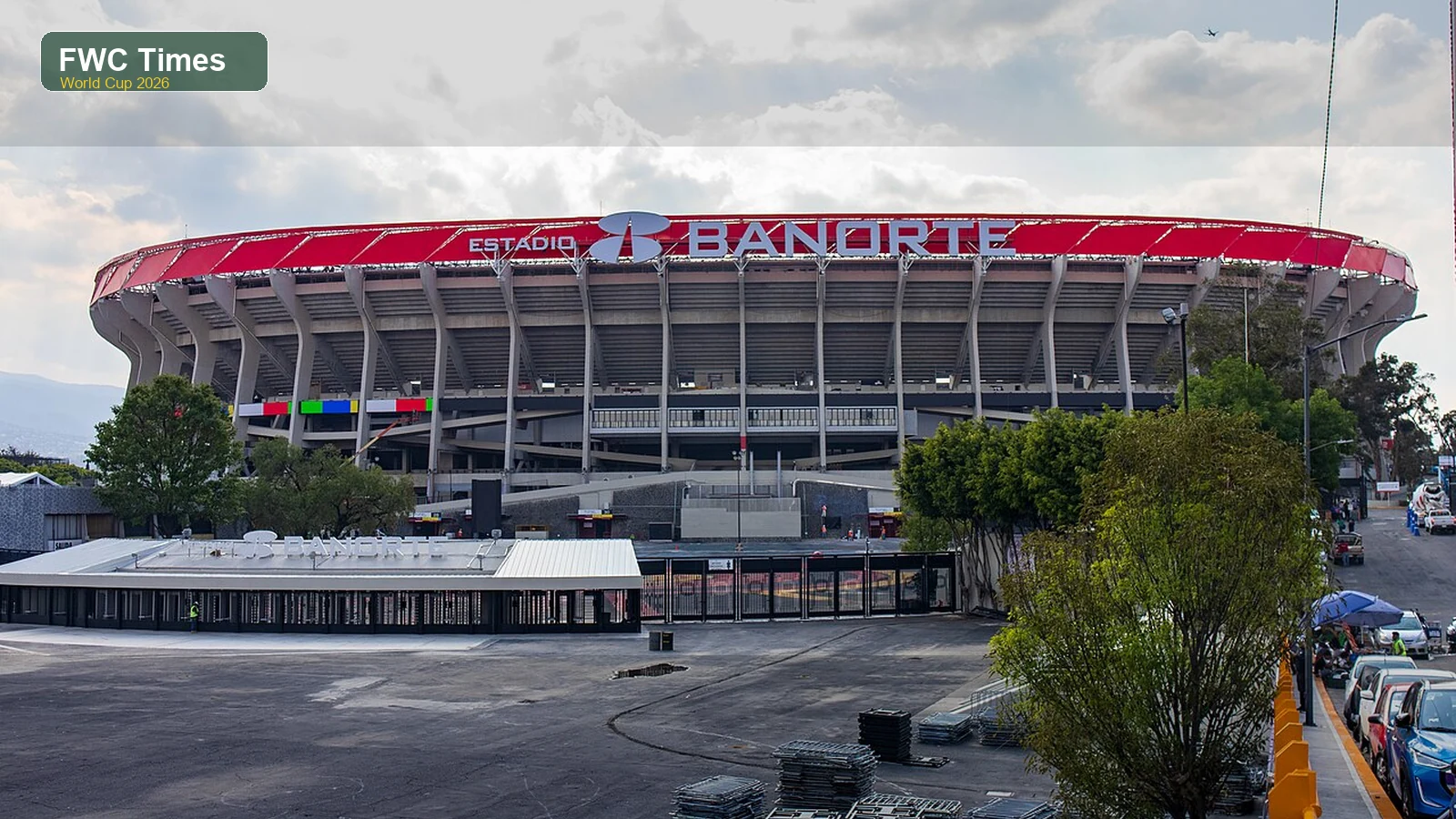
Estadio Azteca World Cup 2026 concerns have moved from rumor to a serious host-venue story. New reporting out of Mexico says fans have raised complaints about unfinished works, blocked views, and matchday access problems less than a month before the opening game. That matters because Mexico City is due to stage the first match of the FIFA World Cup 2026 on Thursday, June 11, 2026. It also matters because the stadium is supposed to symbolize confidence, not late operational stress.
The pressure is higher here than at a routine host ground. Estadio Azteca is not just another venue on the map. It is the site expected to carry the opener and one of the most watched early moments of the whole tournament. Readers tracking the full local program can also review the confirmed FIFA World Cup 2026 matches in Mexico City, because every readiness issue now lands against that wider schedule.
StadiumDB reported this week that recent test events exposed flaws in the renovation project, while El Pais described supporter frustration around seat views, unfinished bathrooms, poor mobile signal, and weak ticket scanning. Those are not cosmetic complaints when the handover window is already tight. They cut directly into crowd flow, visibility, and basic event delivery.
The concern is not only construction but whether matchday systems are actually ready
Large stadium rebuilds often look incomplete right until the final stretch, so bare concrete or visible work zones do not automatically mean failure. The problem in Mexico City is that the complaints now sit alongside real operational issues from live test events. Supporters have reportedly described front rows with obstructed views, internet failures that made digital ticket checks harder, and facilities that were still not fully finished. That combination shifts the story from visual delay to functional doubt.
El Pais said front rows near the field had to be removed after the new barrier setup blocked sightlines. The same report said some bathrooms remained unfinished and mobile connectivity struggled under crowd conditions. In a World Cup opener, those are not small defects. They affect entry speed, fan comfort, and the credibility of every later assurance.
There is also a timing problem. The stadium was expected to move into a FIFA-controlled phase soon after the recent reopening cycle, which leaves little room for repeated correction. Anyone comparing venue context can also look at the broader Mexico City stadium 2026 capacity and seating overview, because the value of this ground depends on more than its history. It depends on whether the modernized version can actually process a World Cup crowd cleanly.
| Readiness issue | Confirmed report | Why it matters now |
|---|---|---|
| Blocked front-row views | El Pais reported some rows were removed after new barriers affected sightlines | A World Cup opener cannot carry visible seat-view problems after renovation. |
| Unfinished bathrooms | El Pais said some restroom areas were still not fully complete | Basic fan services are part of minimum venue readiness. |
| Ticket scanning and internet issues | Recent test events reportedly exposed weak mobile signal and access friction | Digital entry systems must hold up under opener-level crowd pressure. |
| Late construction flaws | StadiumDB said test use brought construction concerns into the open | Late fixes reduce the margin before FIFA operational takeover. |
| High-stakes host role | Mexico City is due to host the World Cup opening match on June 11, 2026 | The first game raises scrutiny far beyond a normal venue launch. |
Azteca’s history raises the standard rather than lowering it
There is a temptation to assume Estadio Azteca will be fine because the ground has already lived through football history. That is the wrong lens now. A stadium with this profile is judged more harshly, not more softly, because the event expects iconic delivery from the first whistle. The venue carries memory from earlier World Cups, but memory does not solve transport flow, scanning reliability, or fan comfort in 2026.
That is why the latest complaints have landed so strongly across local coverage. Mexico has already built opener-week excitement around the city and the ceremony buildup. FWCTimes readers who followed the entertainment side can also revisit how Mana joined the Mexico City World Cup 2026 opening ceremony plans. Those celebratory angles now sit beside a tougher question: can the venue infrastructure match the scale of the show around it?
StadiumDB also noted transport adjustments around the site, including a new Metrobús support line aimed at helping event access. That is a useful sign because mobility planning is part of tournament readiness, not a separate issue. Still, transport additions alone do not erase what test-event feedback has already exposed. They only show that organizers know the stadium district must function as a full event zone, not just as a bowl with a famous name.
What FIFA and local organizers need next is a clean proof event, not more reassurance
The next phase of this story is simple. Officials do not need another vague promise that everything is under control. They need a clean demonstration that seating, bathrooms, access systems, and crowd handling work under genuine stress. Without that, every public statement will sound lighter than the evidence already seen on the ground.
That is why this remains a legitimate World Cup news angle even without a formal crisis declaration. The opener is too close, the venue is too symbolic, and the complaints are too specific to dismiss as background noise. Mexico City can still get the building where it needs to be. But from an editorial view, the burden has now shifted from proof of progress to proof of readiness.
If organizers solve the issues quickly, the story will cool down just as fast. If they do not, Azteca could become one of the last major pre-tournament stress points in North America. For a stadium expected to open the competition and carry global focus, that is a pressure line worth taking seriously.
Frequently Asked Questions
Mexico City now needs one convincing full-scale proof point to turn a nervous venue narrative back into a confident opener build.
Stay tuned to FWCTimes.com for the latest FIFA World Cup 2026 updates.
Read Also: Mana Joins Mexico City World Cup 2026 Opening Ceremony