Which Teams Are Overrated at World Cup 2026

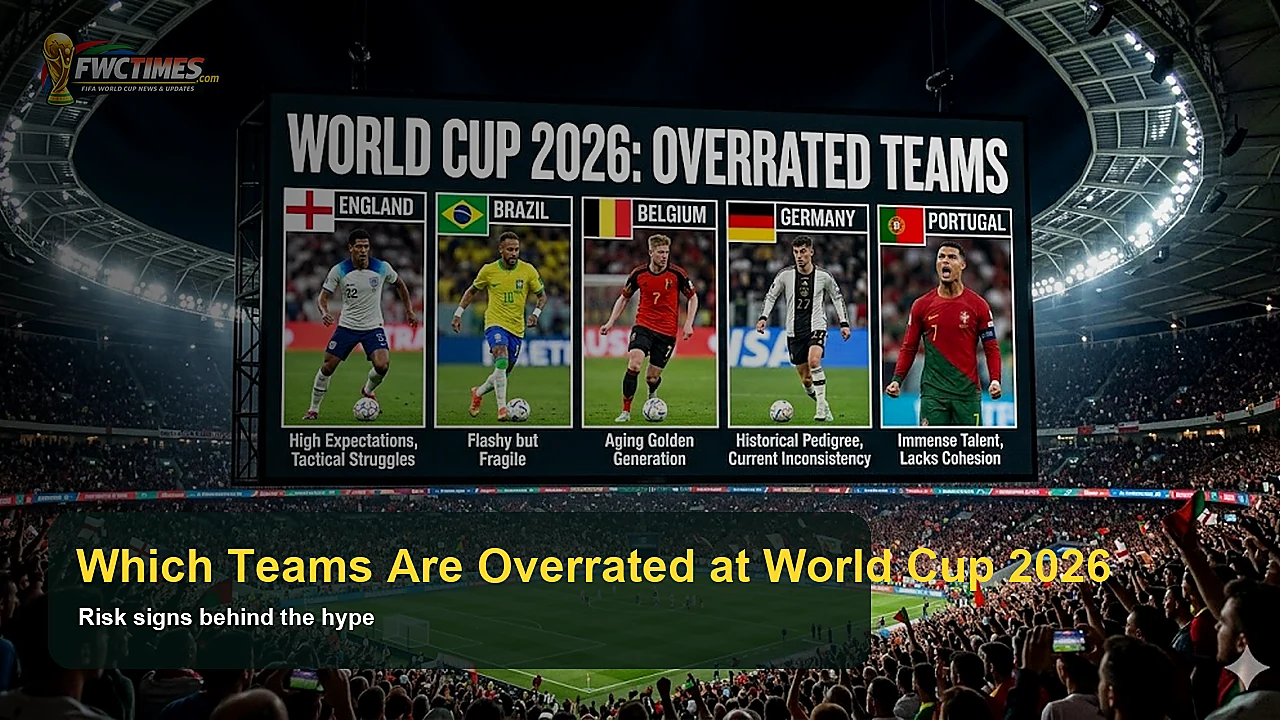
Overrated teams World Cup 2026 analysis should focus on tactical red flags, not fan noise. Even England, Brazil, and Portugal can carry risk if roles are unclear. The wider FIFA World Cup 2026 field makes tactical depth more important than reputation.
Overview of Overrated Teams World Cup 2026
A team becomes overrated when public reputation runs ahead of tactical reliability.
Warning signs include weak rest defense, unclear striker roles, and overreliance on one creator.
This does not mean the team is bad. It means the path is riskier than the headline suggests.
How Teams Use This Approach
Top pressing teams do not chase every pass. They set traps, close passing lanes, and choose moments when the opponent’s body shape is poor.
The best versions press in waves. A team may attack the first 15 minutes, then drop into a compact block to save energy.
Defensive Shape and Structure
The back line must stay connected to midfield. If defenders drop too early, the press leaves a huge gap between units.
The holding midfielder decides whether pressure becomes safe. He collects second balls and stops direct passes into the striker.
Goalkeepers also matter because high pressing leaves space behind defenders. A brave sweeping goalkeeper protects the system.
Attacking Patterns and Transitions
Pressing creates the shortest route to goal. A high regain can become a shot within two passes.
Wide traps are common because full backs receive facing their own goal. The winger, full back, and midfielder can close together.
Central regains are more dangerous but harder to control. They need tight spacing and quick support.
Overrated Teams World Cup 2026 Key Ranking Factors
Spain rank high because their counter-press connects with possession. They recover the ball and already have passing options nearby.
Germany and Uruguay rank high because they can turn pressure into vertical attacks. Their midfield runners make regains feel dangerous.
Japan and USA rank high because their collective energy can unsettle stronger possession teams.
| Role | Main Job | Tournament Demand |
|---|---|---|
| England | Creator congestion | Role clarity |
| Brazil | Attack-defense balance | Midfield cover |
| Portugal | Ronaldo role debate | Pressing balance |
| Germany | High-line risk | Transition defense |
Strengths of This Approach
Pressing can decide matches before possession settles. It forces hurried passes and creates chances close to goal.
The approach also energizes crowds and players. That matters for host teams and high-emotion games.
It exposes weaker buildup teams. Defenders who cannot pass under pressure quickly become targets.
Weaknesses and Vulnerabilities
The risk is space behind the press. A single broken line can create a clear counterattack.
Energy management is difficult across a long tournament. Pressing teams need rotation and tactical patience.
Experienced opponents can bait pressure and switch play. Pressing must stay controlled rather than emotional.
How It Could Play Out at World Cup 2026
Pressing will appear in bursts rather than constant waves. The teams that control timing should benefit most.
The high press World Cup guide explains the broader tactical pattern. This ranking focuses on who can execute it best.
Overrated teams often look strong in possession but fragile after losing the ball. If the midfield cannot protect the centre, elite opponents will attack before the defense resets.
Another warning sign is unclear role balance. A team with too many creators in the same lane can slow attacks and weaken counter-pressing.
Game management separates real contenders from reputation teams. The best sides know when to press, when to slow the match. When to protect zones near their own box.
A weak bench can expose an overrated team across a longer tournament. The starting XI may look strong, but the drop-off after 60 minutes can change tight matches.
Another issue is set-piece defending. Teams with big names still concede if markers switch off, blockers go unchecked, or the goalkeeper gets crowded.
Watch how a team reacts after losing a lead. True contenders slow the match and protect central space; fragile teams rush attacks and invite pressure.
Another warning sign is poor spacing around the striker. If the forward receives alone, attacks break down and the opponent can counter from clearances.
Teams built on reputation also struggle when the first plan fails. The coach must have a second route that players trust under pressure.
Fans should also check whether the team protects the edge of the box. Loose clearances and unmarked midfielders in that zone turn ordinary pressure into high-value chances.
That detail separates hype from reliable tournament control.
Tournament Management Detail
The ranking also depends on how teams handle the final half hour. Strong tournament sides keep structure when legs tire and emotions rise. That separates a dangerous team from a complete one.
Bench profiles matter in those moments. A defensive midfielder, fast winger, or target striker can change the match without changing the identity. As a result, squad balance carries real tactical value.
Set pieces should sit inside the same plan. Delivery, second balls, and recovery spacing must connect with open-play roles. Tight matches often reward the team that repeats those details.
The strongest candidates combine one clear weapon with reliable control. They can attack quickly, then protect space when the attack breaks down. That mix gives them a better path through pressure games.
That detail also helps analysts compare teams beyond formations. The stronger side usually protects space before chasing the next attack.
Frequently Asked Questions
How are pressing teams ranked?
They are ranked by tactical fit, squad depth, recent performance level, player profiles, and tournament conditions.
Can the ranking change before World Cup 2026?
Yes. Injuries, squad announcements, form, and group-stage matchups can change the ranking.
Does this ranking predict the winner?
No. It explains tactical strength and risk. Knockout football can still turn on one moment.
Which factor matters most tactically?
Balance matters most. The best teams can attack, defend transitions, and manage different match states.
Conclusion
Spain, Germany, Japan, USA, and Uruguay stand out as strong pressing teams.
The winner will not be the team that runs most. It will be the team that presses with the clearest structure.
Read more: World Cup 2026 Favorites – Top 10 Teams Ranked by Chance of Winning